Editor’s note: This account is by Don Hooper, northeast regional representative for the National Wildlife Federation.
In anticipation of world leaders from 120 countries convening this week at the United Nations to confer on global warming, concerned citizens from across the United States took to the streets of New York in unprecedented numbers Sunday. In conjunction with demonstrations and marches in 166 other countries, the NYC climate marchers showed the magnitude of their “time-is-running-out concern” that the species of planet Earth are in grave peril. Last week the National Oceanic and Atmospheric Administration announced that the summer of 2014 was the hottest on record for the globe.
Marchers boarded more than 500 busses to attend the world’s largest global warming demonstration to date. Organizers estimate that 400,000 people from around the nation walked in the march, according to Time Magazine. Conservationist Jane Goodall, former vice president Al Gore, and Ban Ki-Moon, the UN secretary general who will lead the UN’s climate change summit this week, participated in the demonstration.
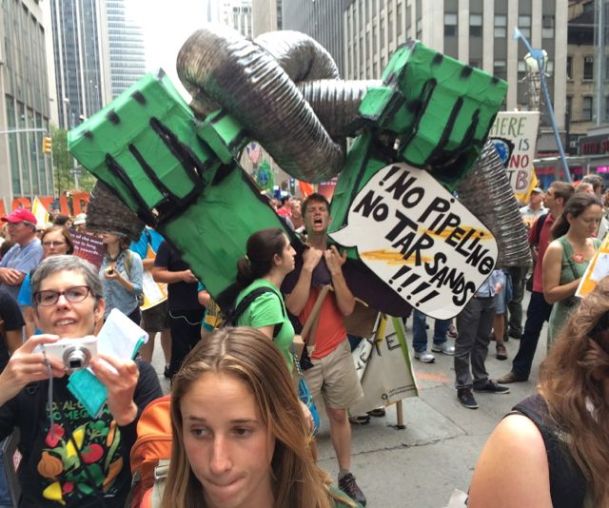
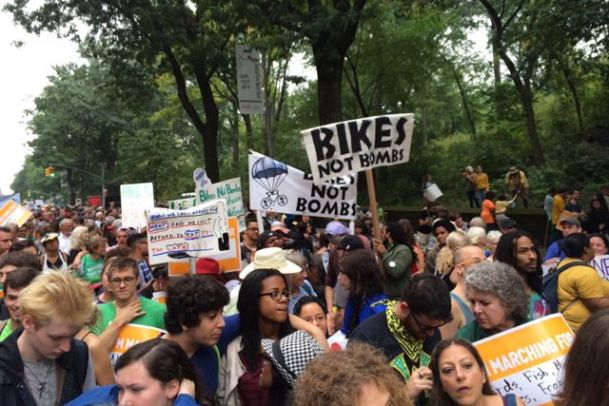
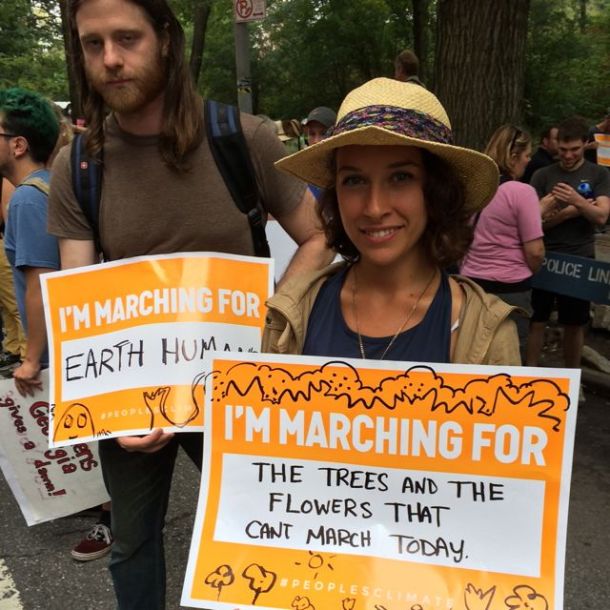
Waving homemade signs, clanging cow-bells, singing, chanting, dancing, and chatting with friends, climate marchers trekked six hours along a 2.2-mile route from 92nd Street to 34th St in midtown Manhatten. The march went down Central Park West, then Sixth Avenue, repeatedly came to a standstill as additional participants poured in from side streets.
More than 2,000 Vermonters participated, many riding the more than 20 full Saturday and Sunday buses from the Green Mountains. Ben & Jerry’s, along with donations from more than 60 additional benefactors, made the round-trip possible at less than $20.
Glover, Vermont-based Bread and Circus puppeteers performed caribou die-ins, falling to the pavement to symbolize the boreal forest habitat havoc wrought by Alberta, Canada strip mining to get at subterranean Tar Sands oil.
Twice, at noon and at 2 p.m., the miles-long sea of participants halted, and went still, close to absolutely quiet. Marchers, hands in the air, acknowledged and paid respectful tribute to the worldwide victims of human-made greenhouse gas emissions, sea-level rise, and the chaotic redistribution of rainfall around the globe. Each time, after the minute of silence, the crowd roared back to life and the parade resumed.
Whole families, including ours, embraced the hazy, warm day, together making a statement about a world increasingly wracked by floods, droughts, wildfires, and violent weather. For such a serious, must-win global issue, the People’s Climate Marchers were surprisingly relaxed, upbeat, even ebullient. Everyone appeared proud to be doing her and his part to get the attention of world’s policy makers.
Gus Speth, a resident of Strafford and founder of the Natural Resources Defense Council, confided how moved he was by the power, solidarity, and respectfulness of the historic march.
The trip to New York was filled with a “can we pull this off and make a difference?” anticipation. The return home was marked by tired relief, a renewed commitment to the climate struggle, and a sense of next steps necessary as passengers shared their satisfaction that the day had rekindled a sense of personal hope.