

Since 2008, Vermont has been significantly impacted by the Great Recession. Over a four-year period, state budget-writers have had to contend with budget gaps that have totaled nearly $1 billion — $753 million from 2009-2011, $150 million in 2012 and $75 million in 2013, according to data from the Joint Fiscal Office. Though federal stimulus funds ameliorated the gaps to an extent, demand for government services, particularly food stamps, housing and temporary aid to needy families has been on the rise as Vermonters faced the highest unemployment rates in two decades. As a result of these factors, the state has made year-over-year cuts to government services, including a 10 percent reduction in the state’s workforce and double-digit spending reductions for community mental health programs.
Gov. Jim Douglas held the line on new spending and found support for some of his policies from the Democratic majority in the legislature (with the notable exceptions of the budget veto override in 2009 and changes to the statewide education property tax system). Newly elected Gov. Peter Shumlin, a Democrat, carried forward Douglas’ no new income-taxes-for-the wealthy line and proved his fiscally conservative mettle by rejecting proposals to reform the state’s tax system. Instead, Shumlin imposed about $5.85 million in new provider taxes on hospitals and a $11.82 million insurance claims assessment. He also agreed to a 38-cent hike in the cigarette tax.
The big debates in the Legislature have been about how to maintain services to the state’s most vulnerable and, at the same time, find new revenues without raising broad-based taxes. This year will likely be no different as the federal stimulus support has come to an end, and the state faces a $25 million budget adjustment for fiscal year 2012 and a $75 million budget gap for fiscal year 2013.
Meanwhile, cuts to human services have led to problems in programs for the elderly and the disabled, including Adult Protective Services, which is responsible for investigating allegations of abuse, neglect and financial exploitation, and the Choices for Care program, which is designed to provide services to seniors who want to stay in their homes. Advocates for the elderly and the disabled pushed for additional funding for the programs. A backlog in the number of applicants for the Choices for Care program who were not approved for support from the state grew last year, in spite of the fact that the program saves the state about $40,000 per individual. The Legislature restored money to the program for fiscal year 2012.
Meanwhile, a backlog of elder and disabled abuse cases continued to mount. The state hired temporary investigators, but the new hires didn’t stay long and the churn exacerbated long-running problems in the Adult Protective Services program. Vermont Legal Aid and Vermont Disability Rights sued the state this month, demanding that the Shumlin administration hire more full-time investigators to address what they view as a growing issue associated with Vermont’s aging population. (We are the second grayest state in the nation, after Maine.)
The new governor invested more resources in the eligibility benefits center for food stamps, Temporary Aid to Needy Families, and Medicaid after the Douglas administration reorganized the center and cut staff in 2010, which resulted in hundreds of Vermonters losing access to benefits. Vermont Legal Aid threatened a lawsuit last year. About 20 new employees were hired to eliminate the backlog.
Damage to state infrastructure from Tropical Storm Irene will have an impact on the General Fund budget, Capital Bill and Transportation budget in fiscal year 2013, but recent news that the federal government will pay more for roads and a higher percentage share of replacement costs for the Vermont State Hospital and the Waterbury State Office Complex, significantly lowered the pressure on all three spending bills for the upcoming legislative session.
Groups sue state for failure to investigate hundreds of cases of alleged abuse, neglect and financial exploitation of disabled and elderly Vermonters
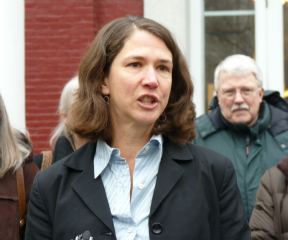
Advocacy groups say the state has not done enough to protect elderly and disabled Vermonters from harm.
Vermont Legal Aid and Disability Rights Vermont have filed a lawsuit in Washington Superior Court against the state for failing to adequately investigate cases of reported abuse, neglect and financial exploitation of vulnerable adults.
As of last month, more than 700 cases were under some form of review by Adult Protective Services, a division of the Department of Disabilities, Aging and Independent Living, charged with investigating allegations of abuse, neglect and financial exploitation.
Under the law, the state has 48 hours to begin a review of a valid complaint, and if it warrants investigation, less than two months to substantiate allegations. Vermont’s response times to complaints are among the slowest in the country, according to advocates, and the state has among the lowest rates of substantiation of cases in the country.
State office complex could cost as much as $85.4 million to replace; Shumlin administration urges lawmakers to expedite plans for state hospital

Shumlin administration officials say they want to work with lawmakers to expedite plans for the flood-damaged Vermont State Hospital and the Waterbury State Office Complex during the coming legislative session.
About 50 severely mentally ill patients and 1,500 office workers were displaced when Tropical Storm Irene flooded the Waterbury complex on Aug. 28. The state has been scrambling since to re-locate state workers. Patients at the hospital have been farmed out to regional hospitals that are ill-equipped to handle patients with acute psychiatric problems.
Lawmakers and the administration will be working together during the upcoming legislative session to develop plans to replace the hospital and the 700,000 square foot office complex.
Even if that process goes smoothly, it could be at least two years before state employees are relocated to permanent office space in Waterbury and possibly other Central Vermont communities.
Money bill redux: Capital spending set for Vermont State Hospital, Montpelier biomass plant
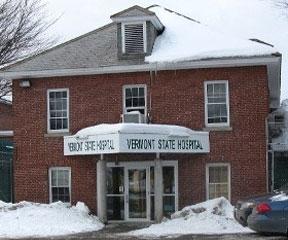
Democratic lawmakers compromised with little difficulty on their few disagreements over specific expenditures in the capital bill last week. The sticking points — money for a Montpelier biomass plant, funding for replacement plans for the Vermont State Hospital and a commitment to give the Vermont Telecommunications Authority significant funding for broadband — came down to details, all of which were easily surmountable.
The biggest change, proposed by Gov. Peter Shumlin, was a practical consideration that lawmakers embraced. Instead of passing a budget that is good for one year, as had been the practice for many years, Shumlin proposed a two-year capital budget. The first year is front-loaded with $92 million so that construction on new projects can continue unimpeded by changes in the political landscape. The second year budget, about $61 million, will be based on a capital budget adjustment that with the exception of a few “fenced off” projects will be subject to re-evaluation in the fiscal year 2012 budget cycle.
“I think it’s a very good bill that is the result of very hard work throughout the session,” said Sen. Bob Hartwell, D-Bennington.
After late night histrionics, Senate OKs 53 cent cig hike

The headline on Friday was: Senate approves tax bill, hits smokers with an additional 53 cent tax per pack.
How the Senate got there? That’s another story.
Thursday, Senate Democrats splintered over the issue in a floor vote to suspend the rules. Tempers flared, harsh words were uttered and lawmakers left the building fed up, exhausted or in a snit.
A chorus of Kumbaya was sung in a Democratic caucus on Friday morning, and by the time senators took up the miscellaneous tax bill, all sins were forgiven. The legislation passed 20-8 along party lines, with the Senate’s most liberal members, Dick McCormack and Anthony Pollina, who argued for an amendment that would have placed a surtax on the wealthy, joining the Republicans in the eight-vote dissent.
State cuts may lead to “musical beds” for frail, elderly Vermonters

The Senate Appropriations Committee is poised to vote the Big Bill out Monday afternoon. Sen. Jane Kitchel, D-Caledonia, said she will not make significant changes to the House version of the budget, which was largely based on recommendations from Gov. Peter Shumlin’s office.
Kitchel said the cuts to human services programs will not be altered by the Senate, with one the exception: the Senate Finance Committee has placed a 0.8 percent assessment on dental claims that will raise between $300,000 and $400,000 in tax revenues. The money would be used to pay for substance abuse counselors in local high schools. Under Gov. Peter Shumlin’s original budget proposal, the positions were eliminated.
The House split the baby on the deepest human services cuts. Programs for the developmentally disabled and the mentally ill were slated to be cut by 5 percent; the representatives cut these programs by 2.5 percent. The reductions come on top of previous reductions of $17 million (including matching Medicaid funds) over the last three years, according to advocates.
Tax reform, Part 1: Where policy meets politics
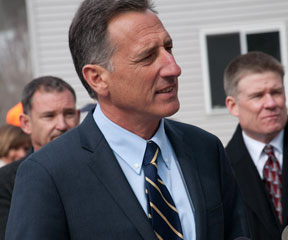
Taxation is the third rail of politics in Vermont, regardless of which party is in power, and that fact hasn’t changed since Democrats seized control of the executive branch in November and held their majorities in the Vermont House and Senate. Though few Democratic lawmakers in the Statehouse are enthusiastic about Gov. Peter Shumlin’s proposed budget (even the governor himself, in his address, said: “My administration takes no pleasure in delivering this budget”), raising income taxes is not a part of the equation at the moment.
Shumlin took a no-new-taxes pledge in the General Election, and he has made it plain in repeated interviews that he has no intention of reneging on that promise — though he has proposed new taxes on insurers, home health agencies, dentists and hospitals in his budget.
“I am not one of those Democrats who feel that Vermont’s biggest challenge is that taxes are not high enough,” Shumlin said shortly after he was elected. “I think they’re too high. I do think they discourage economic growth. I don’t want to raise taxes.”
Tax reform, Part 4: Solving the “PR” problem

Gov. Peter Shumlin described this year’s budget as “as sobering as it is necessary.” Two-thirds of the speech was devoted to his plan for resolving the state’s $176 million budget gap.
The governor’s budget address, which he delivered to lawmakers in the House Chambers on Jan. 25, was long on budget cuts ($83 million worth) and changes to the state’s burdensome health care system and short on happier thoughts about new programs to improve pre-kindergarten education, energy efficiency, Lake Champlain clean up, broadband deployment and workforce development.
So you may have missed the two-paragraph reference to taxes (which followed one sentence about the $18.6 million in “assessments” on hospitals), in which Shumlin explained why the state cannot raise rates this year to alleviate some of the most difficult cuts to mental health services and programs for developmentally disabled Vermonters.
