

Editor’s note: Video footage of Professor Paul Hines’ overview of UVM’s smart grid research is available at the end of this story.
Thanks to technology, consumers are keenly self-aware. The Internet tracks our purchases, our favorite websites and our “friends.” The web gives us constant updates on the weather, sports events and instant access to the intimate musings of complete strangers via Facebook and Twitter.
What if you could track your electricity use in real time? Would you be more apt to turn off the lights and power down your computer if you knew it would save you a couple of bucks each day? Would information about just how much juice it takes to run the clothes dryer spur consumers to hang their laundry on a drying rack?
Those are the kind of hypothetical questions interdisciplinary energy scientists and utilities are attempting to answer as part of an initiative yet to be implemented known as “smart grid” technology.
The “smart grid” is a digital communication system designed to allow utilities to follow consumption patterns and gauge power outages in real time. Data would be collected from consumers – commercial enterprises, manufacturers, farms or residences — through a “smart meter,” a wireless device that tracks electricity consumed by appliances, computers, lightbulbs – anything that needs power to operate.
Utilities would “read” this digital information, use it to study energy consumption trends and change the power generation flow into the system as needed. The “smart grid” is designed to save on energy consumption and costs.
At a two-day conference in Burlington, “Powering the Future: The Vermont Smart Grid and Beyond,” experts from the U.S. Department of Energy, Sandia National Laboratories in New Mexico, the University of Vermont, utilities and state agencies came together to talk shop about research, development and implementation of a “smart grid” project that could revolutionize the way power is consumed and delivered in the state of Vermont. About 100 utility experts attended the invitation-only event on Tuesday; the symposium included a full slate of plenary panels and discussions on Wednesday.
The federal government awarded $69 million to the state for the development of a “smart grid” system in Vermont. The state’s 20 utilities are matching those funds and are deploying “smart meters” to 85 percent of electricity customers in the state.
Sen. Bernie Sanders, I-Vt., who spoke at the conference, is the prime mover behind the federal-state partnership. Sanders approached Sandia National Laboratories three years ago and asked them to consider working with Vermont utilities on a “smart grid” system.
Vermont is the first state to develop an integrated electricity system for all its utilities, according to Richard Stulen, vice president of energy, climate and infrastructure security for Sandia National Laboratories. (In other areas of the country, a single utility is taking the lead.)
The collaboration between the University of Vermont and Sandia will help the federal government leverage its investment in Vermont, Stulen said.
Stulen said the level of collaboration between academia, utilities and the state is very rare. In New Mexico, he said, utilities compete with one another for smart grid projects. Stulen, who called Sanders the “sparkplug for all of it,” said the senator is the only member of Congress to lead such an effort.
“I have never seen anything like this in the country,” Stulen said. “I’ve never seen the galvanization of the state, industry and a university – with a senator behind it.”
Sanders’ original vision would have led to the foundation of a national energy laboratory in Vermont. Instead, Sandia agreed to create a “center for excellence” at the University of Vermont. The two institutions have created an exchange for experts and academicians. Together, the team of experts will develop plans to help the state deploy the system.
“What is unique here is the state’s fierce independence and desire to do something progressive,” Stulen said.
Vermont’s small size helps, too. Stulen, who called the smart grid project a “human experiment,” commeded the collaborative nature of the state’s project.
The state’s role
Gov. Peter Shumlin is an enthusiastic supporter of smart grid technology. He sees deployment of the system as a way to enable Vermonters to curb their energy use. The benefits of a more responsive electric system are twofold, he said: Residents of the state will save money on electric costs and reduce their contribution to the carbon in the atmosphere that is causing global climate change.
Shumlin, who also announced his Vermont Climate Cabinet on Tuesday, described his commitment to abating climate change through a familiar story about his family’s farm where buckthorn is thwarting the regeneration of an ancient maple grove and a pond that was once teeming with frogs is now nearly sterile.
“We are leading in the race to get off our addiction to oil, to capture jobs and to keep this planet livable for future generations,” Shumlin said. “The planet is going to be fine. It’s the folks who live in it that are in trouble.”
Shumlin told conference attendees that the state has to figure out how to make the power grid work with a more intermittent supply that includes a much larger amount of renewable energy from solar panels, biomass, methane from cows and hydro.
“The challenge of the Sandia partnership is to take the infrastructure of the past and transform it into the power of the future,” Shumlin said. “We will show the rest of the nation how to get it right. We cannot move fast enough.”
Key members of his administration – Elizabeth Miller, commissioner of the Department of Public Service, Karen Marshall, director of ConnectVT, the broadband initiative, and Lawrence Miller, the secretary of the Agency of Commerce and Community Development – spoke at the conference about how the state will implement the new system.
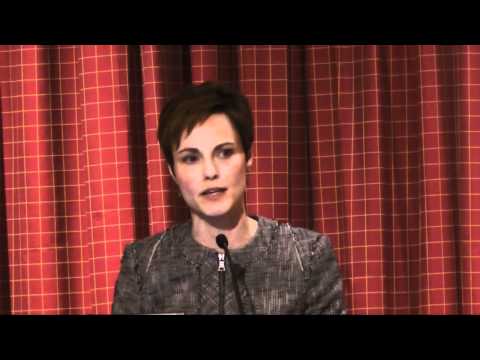
Commissioner Elizabeth Miller described several key issues around effective deployment of the smart grid, including public opposition to the installation of smart meters.
“We want to avoid that resistance here in Vermont because we truly believe that this new advanced meter is an infrastructure upgrade, really, and it’s an important upgrade for Vermont to compete in the energy future in front of us,” Miller said.
Miller said initially the department had a “mandatory mentality.” In other states, where the smart meters have met with strong public resistance, the meter installations were proposed as required infrastructure upgrades. Miller said Vermont’s consumer behavior working group is considering an alternative approach to smart meter installation.
“We’re looking at whether narrow targeted opt-out programs that specifically both describe benefits to consumers and appropriately describe the costs … would allow consumers a choice that frankly tamps down concern and increases acceptance statewide,” Miller said.
Vermont is also looking to marry broadband and smart grid technologies, she said.
“In order for the meter system to communications to the utilities, you have to have a communication system,” Miller said. “One way to think of smart grid is just an overlay of the communication system on the electric system we already have.”
Utilities lay groundwork for deployment
Mary Powell, the CEO of Green Mountain Power, said the smart grid system will increase reliability, shrink the state’s carbon footprint and contain energy costs.
“Vermont was the first state to put together a whole systems approach,” Powell said. “That’s why we got our funding.”
The state’s 20 utilities will match the $69 million in federal stimulus finding for the $138 million smart grid project. Eighty-five percent, or 300,000 Vermont households, will receive smart meters (at a cost of $125 apiece).
The federal money is being administered by VELCO, Vermont’s statewide transmission utility, and it will be distributed to utilities throughout the state once the installation of smart meters and other upgrades are complete, according to Allen Stamp, program manager for VELCO.
The goal is to improve the overall reliability of the electrical distribution system through better two-way communication between utilities and power consumers, Stamp said. The state’s utilities plan to leverage the existing cell and radio tower infrastructure for communication devices, he said.
As part of the research and development phase of the smart grid project, Central Vermont Public Service and Vermont Electric Co-operative have received money from the U.S. Department of Energy to study the relationship between consumer behavior and energy efficiency.
Powell said the smart grid system will profoundly improve utilities’ customer service. “You’ll never have to pick up the phone again (in the event of a blackout),” she said. “We will instantly know you’re out of power.”
The smart grid will increase energy conservation and possibly enable utilities to avoid building new power generation plants, Powell said.
Editor’s note: This story was updated with add-in posts at 10 a.m. May 18, 2011.
