

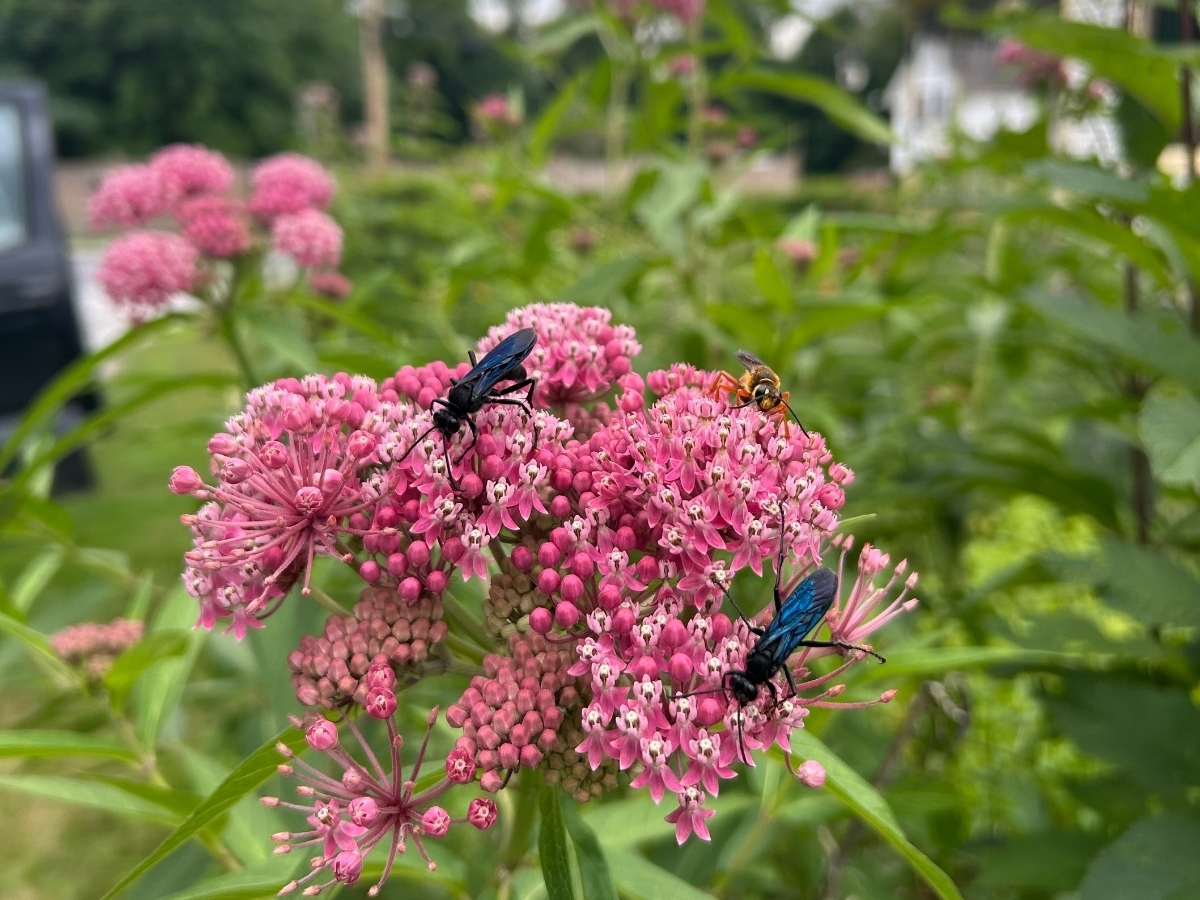
Grace Glynn said she’s still haunted by the barberry hedges she ripped out when she moved into her current home. Years after the massive undertaking to remove them, she keeps finding more of their roots.
Yet Glynn has both a personal and a professional grudge against the ornamental shrub, which is not native to Vermont. As the state botanist for the Vermont Fish and Wildlife Department, she’s passionate about turning lawns into havens for native plants.
Conventional lawns are typically dominated by a single species of grass, like Kentucky bluegrass, which provides little sustenance for local pollinators and wildlife, Glynn said. The practice of “No Mow May” suggests letting lawns grow shaggy for a month, on the theory that bees and other pollinators will find food there. But a national movement is encouraging homeowners to go farther and rip up their lawns, or at least supplement them with native species.
Glynn gave the example of the oak tree, native to Vermont, which can meet the food and shelter needs of more than 550 species of butterflies and moths alone. A ginkgo tree, native to East Asia, can support only five.
Here’s a starter kit on how you can introduce native plants to your yard.
Finding native plants
Amid a budding interest in native plants, online nurseries have cropped up to offer items labeled “native wildflower seed mixes” and similar fare. Glynn cautioned that while that trend may be well-meaning, many of those sources are actually offering seeds that aren’t native species or local varieties that wildlife needs.
She suggested starting by understanding what’s around you. Apps like Seek can help Vermonters identify what’s already growing in their yard or nearby natural areas. Sites like Go Botany can help you figure out whether a given species is native to your area.
Glynn said the Wild Seed Project, although based in Maine, is a reputable source for native New England seeds.
The Vermont Pollinator Working Group has put together a list of nurseries that specialize in native plants, although some are open only seasonally or provide plants only wholesale.
Full Circle Gardens in Essex is one such nursery, set to open Wednesday. Owner Sarah Salatino said she became interested in offering native plants after attending a conference about the dire situation for pollinators nationwide.
Some pollinator insects, particularly bees, have dropped in numbers in recent years. Experts say that’s due to a combination of several threats: habitat loss, climate change and pesticide usage among them. That has later effects on other plants and animals in the ecosystem and on agriculture, which relies on pollination for its produce.
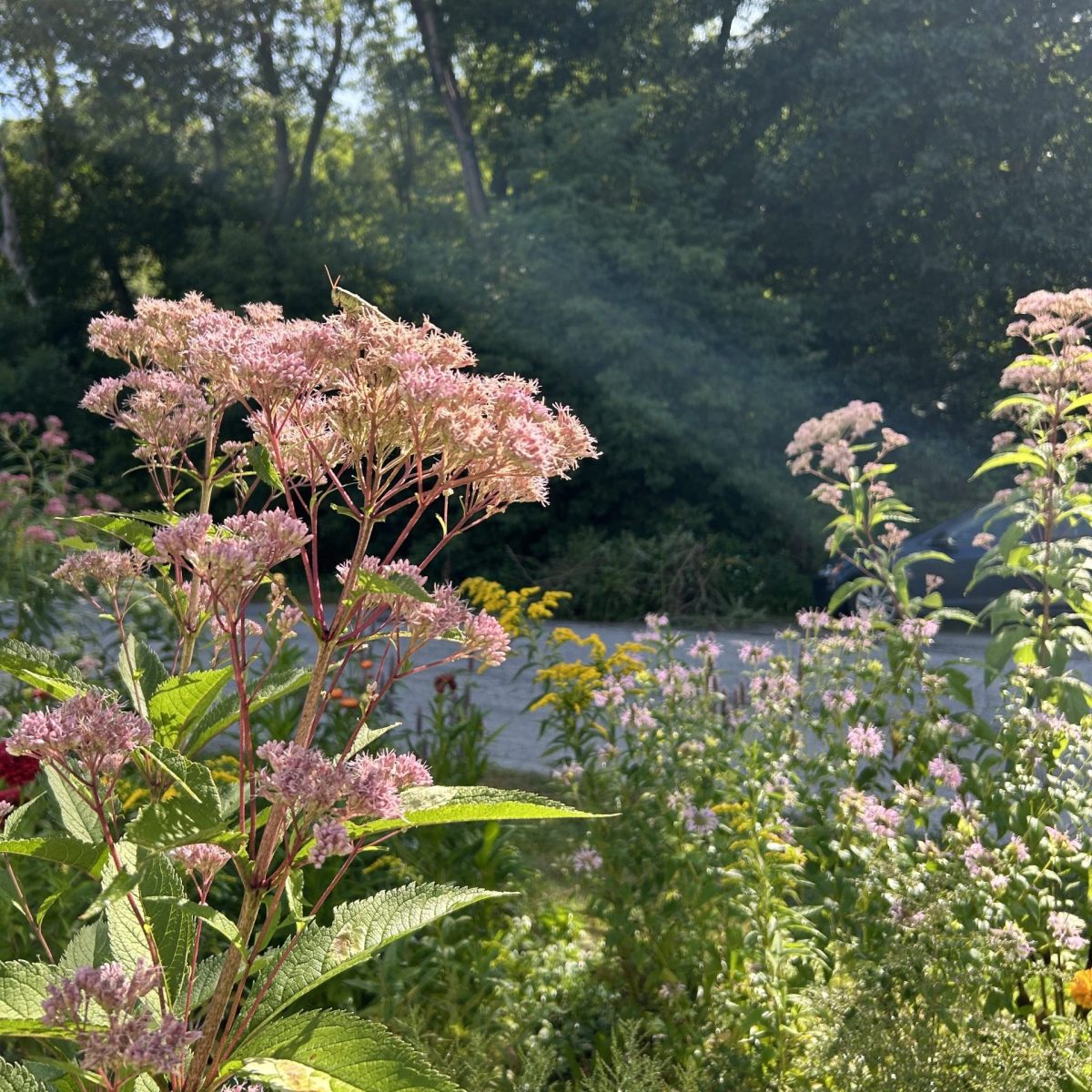
Salatino said she asked herself, “‘What if I grew a balance, and people can still have their peonies or their hostas or whatever, but taking some natives here and there to help our pollinator populations?’ And that’s how I started growing more and more natives.”
Salatino said potential planters should consider a diverse mix of species, and at least five plants per species, so foraging insects and other animals can have enough to eat when they come to your yard. “If you’re going to be riding your bike around to try and go to a restaurant,” she said by way of analogy, “you don’t want to have to ride your bike very far.”
Glynn said a few key species to consider are oaks, native grasses like switch grass and blue stem, willows, goldenrods, cherries, dogwoods, sweet fern and New England aster.
How to plant native plants
Fostering new life might start with death — that is, of the turf grass taking up space in your yard. Glynn said there are a few ways to get rid of grass, including simply ripping it up or turning the sod over and covering it with cardboard to prevent weeds from coming in.
Solarizing, or covering grass with plastic to kill it, is hands-off but can introduce plastics into the soil, she said.
The methods to integrate native plants vary by species. Salatino said many can be propagated simply by spreading seed in winter, but her nursery also offers seedlings in pots, some of which can be planted directly in the ground in spring.
The next step takes patience, and a certain level of acceptance of whatever comes up. Salatino said she sometimes hears pushback from people who think that native gardens look overgrown.
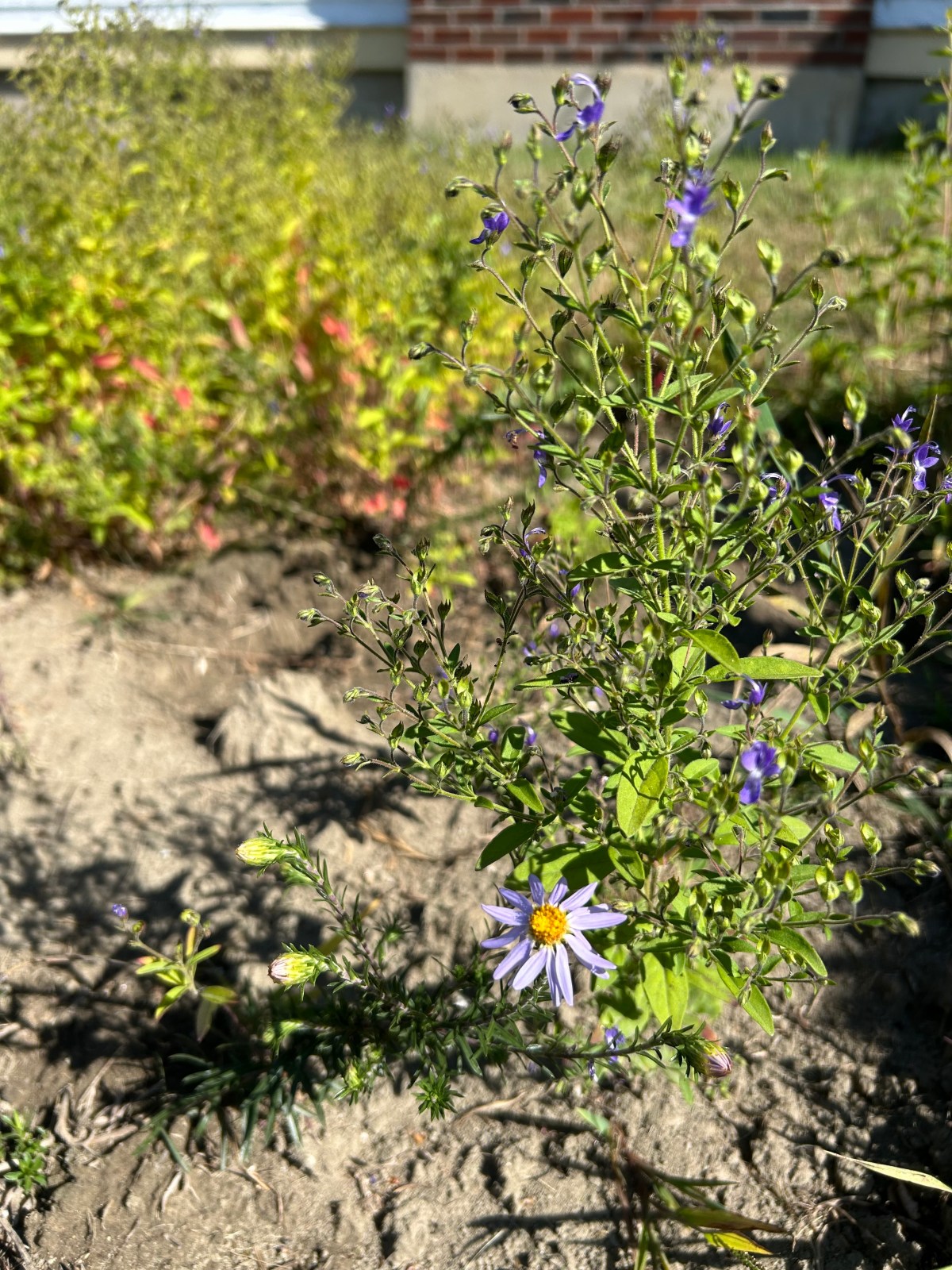
Glynn said she once got a comment from a neighbor that the previous homeowner’s garden looked pretty and tidy — which she took as a dig at her own messier-looking garden. Some homeowners have even taken to putting up signs letting their neighbors know the purpose of their garden’s wild appearance.
Salatino said her typical response is to simply suggest that people try planting native species in just a patch, or in part of their yard, and see what insects and other animals come in as a result of those new species. Even integrating native species in between non-native ones can have benefits for local pollinators.
And there are additional benefits to a native garden for the landowner. Glynn said native plants typically require less watering and often require less soil augmentation, meaning fewer chemicals in your yard.
Salatino said natives are “so easy” to grow, because they’re adapted to the local environment they’ll be planted in. “(They) hate being fussed over,” she said.
She also loves to observe the wildlife that arrives to take advantage of newfound habitat. Just recently, she saw giant swallowtail caterpillars, odd-looking mottled creatures, grow into beautiful massive butterflies.
What about “No Mow May”? Glynn said that the effort to protect pollinators by skipping a month of mowing is better than nothing, but it often works against pollinators by encouraging dandelions, which do not support local insect species.
She said one benefit is that you might even find some native species coming up that had been suppressed by close-trimmed grass.
“I’ve had a ton of purple violets and Philadelphia fleabane, which is a really pretty little aster that has just burst up all across my lawn,” she said. “Those early flowering plants are really important for early emerging insects and early emerging native bees. So there can definitely be benefits to No Mow May, but it doesn’t fix the fact that a lot of these lawns are just monocultures of non-native species.”
Beyond backyards
Private homeowners are not the only people who have grown more interested in helping pollinators. Mike Kiernan is the leader of Bee the Change, a nonprofit that has helped plant native fields in the spaces around solar panels in solar farms.
A few years ago, the group set a new goal: to plant pollinator habitats in every town in Vermont. So far, they’ve reached 70 habitats in four states, most of them in Vermont.
He said lawns are a visual demonstration of humanity’s power over the landscape. “But it’s time to examine how we use those spaces,” he said.
Our footprint is “crowding other species out,” Kiernan said. “If we’re having other species disappear at a rate that is accelerating,” because of climate change, habitat loss and other environmental issues, “we have to address it.”
He’s also gotten good feedback from members of the public about the impact of native species on the surrounding area.
“On the boundaries of the fence lines of one of the fields in Hinesburg, a farmer said, ‘I haven’t had apples like this since I was a kid,’” he said.
