


Editor’s note: This is the fifth in a series of profiles of the Democratic primary candidates for governor.
- In Profile: Matt Dunne, a precocious candidate with no shortage of confidence
- In Profile: Markowitz banks on hard work, local network, “women’s vote”
- In Profile: Shumlin, a gubernatorial candidate marked by determination and smarts
- In Profile: Bartlett, the underdog once again — this time in the race for governor
Doug Racine is an introvert in an extrovert’s profession, and in a five-way Democratic primary race for governor, his quiet, understated manner stands out in a field of big personalities. Secretary of State Deb Markowitz has a solid rapport with town officials across the state. Sen. Susan Bartlett has a homespun charm that plays well in forums. Matt Dunne, a Google executive, is never at a loss for words – and seems to relish his time at the podium. Senate President Pro Tem Peter Shumlin is an orator who is more comfortable on the campaign trail than he is cooped up in a committee room reviewing policy.
At this late stage, it’s still anyone’s race to win next Tuesday, according to political experts, and there are more questions than answers for all of the candidates who are scrambling to get their supporters to the polls on Aug. 24. In Racine’s case, the question is, will his reticence hurt his chances with voters, or will his straight-talking, consensus-building approach to politics win the day? Will the large grassroots organization he has built (he has more than 500 volunteers, according to Amy Shollenberger, his campaign manager) get more Vermonters out to the polls in a low turnout year? And finally, will his endorsements from four prominent organizations with thousands of members (the AFL-CIO, Vermont NEA, Vermont State Employees Association and Vermont League of Conservation Voters) translate into victory?
While the particulars of this gubernatorial race are new, Racine is no stranger to the shifting dynamics of campaigning. He has lost three high-profile races and won 10 bids over the course of his career. Losing doesn’t seem to daunt him — in fact it appears to be a strategy for an eventual win. Though he lost his initial bids for state Senate and lieutenant governor, for example, his perseverance has won the day in his second attempts. Racine hopes to repeat that pattern in this, his second race for governor.
Racine has held office for 20 years total, and he’s been in politics since his heady days at Princeton in the early 1970s. He has served off and on as a prominent lawmaker at the Statehouse and then as lieutenant governor in the Howard Dean era. In Chittenden County, he is practically a household name, thanks to his seven elections to the state Senate and his role as a part-owner of the company his father and mother started in the 1960s, Willie Racine’s, Inc., a Jeep dealership.
Though he beat Brian Dubie in the 2000 race for lieutenant governor, he lost to Republican Jim Douglas in a three-way race that included independent Con Hogan in the 2002 election for governor. Now, after six years in the state Senate, Racine is back, fighting in a historic five-way primary. Three former Statehouse colleagues are his opponents in this race.
The difference this time, Racine says, is that he’s not defending Gov. Howard Dean’s record. He said his message in this campaign is more grounded in his own values, record and vision.

“I think a lot of it is about saying here’s who I am and here’s what I believe,” Racine said. “It’s not about somebody else’s record, it’s about mine. And I’m just being a little more assertive, and I’m being a more aggressive campaigner. Jim Douglas ran a negative campaign, and I chose to let those things go, but I’m not letting those things go by this time.”
Still, some things haven’t changed. Racine, 57, is not a politician’s politician. He isn’t an aggressive campaigner. When he meets with voters, he doesn’t project his own ideas without listening to what they have to say first — his inclination is to let other people start the conversation. On the floor of the Senate, he gives direct, impassioned speeches remarkably free of rhetorical flourishes. Left to his own devices, he tends to shrink, rather than expand, in a room full of people.
In short, Racine is not a “press release” machine, as he puts it. The sound bites don’t come easily for the state senator in part because he often delves into substantive issues that don’t always serve up feel-good talking points. His message tends to be more nuanced and complicated.
Racine may be reticent, even shy, on stage or when he mingles in a crowd, but he isn’t afraid to take unpopular stands on issues. Over the course of the last month or so, he has been talking tough about the state’s budget woes, and he has proposed solutions, such as tapping half of the rainy day funds, a step the other Democratic candidates have treated like the third rail of politics. While Racine says government needs to become more efficient, largely through use of new technology, he has said that essential programs have already been deeply cut, and raising revenues has to be part of the budget equation in order to protect Vermonters who need government assistance, particularly in the down economy.
Racine doesn’t think state revenues will come roaring back anytime soon. That’s why, he says, whoever becomes governor in January will have to dip into the budget stabilization reserve, a.k.a. the rainy day funds. He would propose using as much as $30 million of the roughly $60 million reserve. Racine also believes some targeted taxes – for junk food and Internet sales (the state loses $40 million in revenue as a result of Web merchandising) – may have to be introduced to help make up for the $115 million shortfall, in addition to the $72 million in government restructuring savings the state is banking on. Vermont’s economy, in his view, will only recover once the national economy begins to see gains again. What a governor can do in the meantime, he told reporters this week, is ensure the state is poised to make the most of the recovery when it happens. The best way to do that, he said, is to invest in the state’s small businesses; infrastructure, broadband, roads, bridges and rail; and education, namely pre kindergarten programs and high school and post-secondary job training.
In press conferences and debates, Racine has accused his Democratic opponents of making “big promises” that they can’t deliver on because, in his view, the state’s budget gap can’t be filled in a year or two exclusively with revenues generated through economic development initiatives. It will take time, and a multi-pronged approach, which includes some implied shared sacrifice, to pull the state back out of the deficit, according to Racine.
“I want to challenge all the other candidates to tell us exactly how they’re going to deal with this problem,” Racine says. “What I’ve heard back are answers that are not complete. They say, ‘I’ve got a plan to improve the economy.’ Well, so do I, but I’m not going to pretend I’m going to walk into that office in January and 10,000 new jobs are going to appear.”
The revenge of the nerd
Racine, 57, grew up in Burlington. His parents, Willie and Annette, were both French Canadian Catholics. They ran a Texaco gas station, and in his spare time, Doug helped pump gas and wash windshields. Though they hadn’t gone to college themselves, the Racines were determined to make sure their three boys were well educated. In 1967, they launched a car dealership out of their gas station enterprise, Willie Racine, Inc., which sells Jeeps.
At an early age, Doug, the middle son, wanted to be an aeronautical engineer (he was fascinated by the space program), though he was intrigued by politics, too. He remembers staying up late to watch the television coverage of the 1964 Democratic and Republican conventions.
He wouldn’t say whether he wore a pocket protector in high school, but Racine freely admits his favorite subject was math (he was a member of the Burlington High School math club), closely followed by science. “Let’s put it this way, I wasn’t an athlete,” Racine says.
He was, however, something of an academic star. He was a runner-up for a National Merit Scholar award, and through a connection with one of his dad’s customers, he found himself getting into Princeton University, where he planned to study engineering.
A slide-rule career, however, wasn’t in his future. Racine was distracted by humanities classes and soon found a home in the political science department, where he could apply his aptitude for numbers to the accounting side of politics – statistical analysis and polling. He wrote his senior thesis on the demographic changes and voting trends that led to Vermont’s shift in the 1960s and 1970s from a rock-ribbed Republican state to a liberal bastion.
This happy marriage of math and the art of politicking carried Racine through to his first job – campaigning in Democrat Patrick Leahy’s first bid for the U.S. Senate, which had been dubbed “the children’s crusade” (the campaign manager was 26, and the oldest guy in the office was 30;
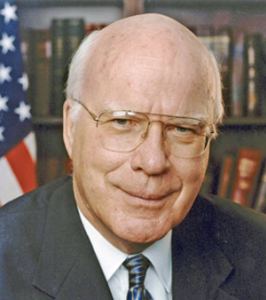
Racine himself was just 21). He was a full-time volunteer for Leahy, and he did the usual intern work – he manned the copy machine, dropped off literature and picked up coffee for the staff – but because of his number crunching skills, he also conducted polls and helped the Chittenden County state’s attorney identify voters.
When Leahy won, he brought Racine along to Washington, where he became part of the senator’s staff. For two years, Racine was Leahy’s eyes and ears on the Armed Services Committee. He prepared briefings, conducted research and suggested questions for hearings. Racine left Washington after a reshuffling of staff responsibilities in Leahy’s office.
Racine was bitten by the political bug in a big way when he returned to Burlington to join the family business. He worked on Democrat Madeleine Kunin’s race for lieutenant governor and, in 1980, set his sights on a vacant Chittenden County Senate seat. He lost in the Democratic primary by 300 votes – and won the Republican nomination, which he declined.
“I don’t get discouraged,” Racine said. “I was a good loser. No one expected me to win that.”
Two years later, he won the state Senate seat. Losing, he said, set the stage for that triumph. “I was in the right place at the right time,” he recalls. “I had established I was a credible candidate and built up name recognition. After I lost, I helped other candidates and got much more actively involved.”
He was in the Vermont Senate for 10 years, and became the President Pro Tem in 1989. Throughout this period, he continued to take care of the administrative and accounting side of the family business. In 1992, he left his seat and became co-chair of Leahy’s re-election campaign; one of his jobs was to go to forums that the senator couldn’t attend. “I was debating Jim Douglas who was running against Pat Leahy that year,” Racine said, explaining his stand-in role. “It’s a small state. You keep bumping into the same people.”
In 1994, Racine ran against Barbara Snelling, the Republican lieutenant governor and wife of popular former Republican Gov. Richard Snelling. Racine lost, but two years later took the seat. The pivotal issue in 1996 was equalized education funding and property tax reform. Gov. Dean adamantly opposed an income tax provision in the law. In his role as lieutenant governor, Racine said he worked closely with the Senate to develop the income sensitivity component of Act 60, which gave low-income property owners a break on their property taxes. In the end, the provision helped the bill reach passage.
Racine says he worked full-time as lieutenant governor and worked inside the legislative process; he says Republican Lt. Gov. Brian Dubie, who he beat in the lite gov race in 2000, works outside the Senate, preferring instead to be the unofficial Vermont ambassador to Canada, Cuba and China.

“The lieutenant governor is a legislative official,” Racine said. “I felt I had a strong role to play.” He said he organized a conference on early child education, chaired the Vermont Child Poverty Council, led an earlier iteration of a government efficiency and restructuring initiative and helped state employees work out a dispute between Dean and the Vermont State Employees Association over contracted services.
“I was pretty active, but pretty quiet,” Racine said. “The only time the press paid attention to me was when I disagreed with the governor.”
In 2002, Racine ran for governor, on the heels of Dean’s 10-year reign on the Fifth Floor. His opponents were Republican Jim Douglas, who had served as Secretary of State and State Treasurer, and Con Hogan, an independent who had served as the secretary of the Agency of Human Services for eight years.
Racine’s polling showed that Hogan siphoned off more votes from him than from Douglas, in part because both candidates had a strong interest in human services. Both Hogan and Douglas were critical of the Dean administration, and yet Dean made no bones about his preference for Hogan, according to Garrison Nelson, a political science professor at the University of Vermont.

“I was put in the role of defending more,” Racine said. “I always felt I was outnumbered. In the end there are a lot of factors. There were factors beyond my control, and yet things in my control.”
One of the things he could control, he decided, was his message. In the last round, Racine said, he didn’t run on his own record, and he wasn’t aggressive enough as a campaigner. This time, he said, he is making a point of spelling out his stances on the budget, taxation and economic development.
A natural legislator
At a recent fundraiser in Burlington, Racine chitchatted and warmly greeted supporters, but he didn’t stand out in the crowd. If you hadn’t known he was a candidate for governor, you might have mistaken him for one of the members of the audience. Though Racine stood at the podium and gave a short speech, the real star of the show that night at the Burlington Country Club was Joe Trippi, who is credited with giving Dean a shot at the presidency in 2004. The fundraiser, which was scheduled a few weeks after Racine made a fourth-place showing in the July campaign finance reporting period, was an attempt to regain fund-raising momentum. Fewer than 40 people attended the event, however — even with Trippi present as the draw.
As a result of his low fund-raising numbers, Racine is the last of the five candidates to put up television advertising. Shumlin has had ads up since early July.
Is Racine’s bashfulness a liability? UVM professor Garrison Nelson says it is. “Doug’s natural shyness has caused his campaign to lag, and it has created an opening for Shumlin,” Nelson said.
He adds: “There are politicians who are natural legislators and legislators who are natural politicians. Doug is a natural legislator. He is good at working with people coming up with common solutions, and the Legislature is his natural milieu.”

Nelson said, however, those aren’t necessarily the right qualities for a governor. An executive, he said, makes decisions and takes heat for decisions. “There is no question that Shumlin relishes that prospect,” Nelson said.
A number of Racine’s compatriots in the Legislature disagree with Nelson’s assessment. They say the senator’s self-effacement is part of what makes him an effective leader.
Rep. Johannah Donovan, D-Chittenden, who is chair of the House Education Committee, said Racine’s understated, quiet manner is too often cited as a flaw. “It’s a mistake to hold that against him, because he is a bright and powerful guy who will do well (as governor),” Donovan said. “He’ll be a steady hand at the wheel.”
Rep. Sandy Haas, P-Rochester, who has worked with Racine on human services issues, says, “Racine’s sincerity and fundamental decency make him best able to beat Brian Dubie — as he has done before.”
Addressing the shyness issue himself, Racine asks: “Am I going to be a Bernie Sanders-style politician? No, that’s not me. We all have our own individual styles. … In anything you do, you deal with those sorts of issues, and you fix them. I don’t think people who meet me say I’m shy; maybe quiet, yes. I’ve always had a passion about issues – kids, education health care – but people didn’t always see it. What I’m doing in this campaign is saying that this is what I care about and people are noticing.”
Health care, human services and the budget
As chair of the Senate Health and Human Welfare Committee, Racine’s signature piece of legislation in the last session was a controversial health care bill, which calls for the Legislature to review three system reform designs that are supposed to reduce health care costs and provide universal coverage to all Vermonters. It took Racine the entire session to maneuver the bill through the Senate and House, and even after it passed, Douglas threatened to veto it. Racine quietly pushed and pulled and managed to get it passed. Some of his detractors, most prominently Dr. Deb Richter, a proponent of single payer health care, give the credit for the bill’s passage to Senate President Pro Tem Peter Shumlin, one of Racine’s foes in the primary.
Sen. Randy Brock, R-Franklin-Grand Isle, is unhappy about the health care reform bill because, he said, federal rules will make it difficult for the state to implement new policies until 2017. “I beg the question: Was this a wise use of several hundred thousand dollars when we’re cutting critical programs?” Proponents of the reform plan, including Racine, want to wring savings out of health care through a better service, billing and administrative system.
Racine has also been a powerful advocate for low-income Vermonters. In the last session, he fought to protect the designated mental health agencies and programs for the physically disabled from cuts suggested by the Douglas administration.
Because he believes state government has already taken a big hit, he took a stand against the budget in the last legislative session. He objected to what he called a $38 million “hole” in the appropriations bill — the amount booked for the Challenges for Change government restructuring plan. Racine maintained then, and now, that the targets set for the reorganization are unrealistic. He floated an amendment that would have tied the Challenges to $20 million out of roughly $60 million in budget stabilization funds, if the savings sought through more government efficiencies weren’t found. So far, his prediction seems to have been borne out: The state has not been able to identify $10 million in spending reductions through the Challenges without making significant cuts, suggested by the administration, to programs.
Brock, a supporter of Republican candidate Dubie who is running on an anti-tax platform, is concerned about Racine’s stance on taxes. In 2009, he said, five senators voted against $26 million in capital gains and estate tax increases because the bill didn’t raise taxes enough. “Doug Racine was one of them, and therein lies some contrast,” Brock said.
Racine counters that he does not want to raise broad-based income or sales taxes to solve the $115 million budget deficit in fiscal year 2012. “What I’m talking about first is finding more efficiencies,” Racine said.
He said he wants to avoid cuts in services by aggressively improving state government’s information technology system, tapping as much as $30 million of the $60 million in budget stabilization funds, and extending the 6 percent sales tax to Internet merchandise and junk food. He said the Internet tax would raise $40 million; he doesn’t know how much the tax on junk food would generate.
“Some of my opponents are saying that I propose simply to raise taxes, which is a gross distortion of what I say,” Racine said. “I know that, based on what I’ve seen in the budgets, if you think you’re going to cut your way out of it, you can’t.”
