

The environmental group that prompted federal regulators to require the state to improve Lake Champlain’s water quality wants polluters to pay for part of the cleanup.
The Conservation Law Foundation is asking the state to use its existing authority to require commercial, industrial and institutional property owners to obtain permits that would limit the amount of pollution flowing from their properties.
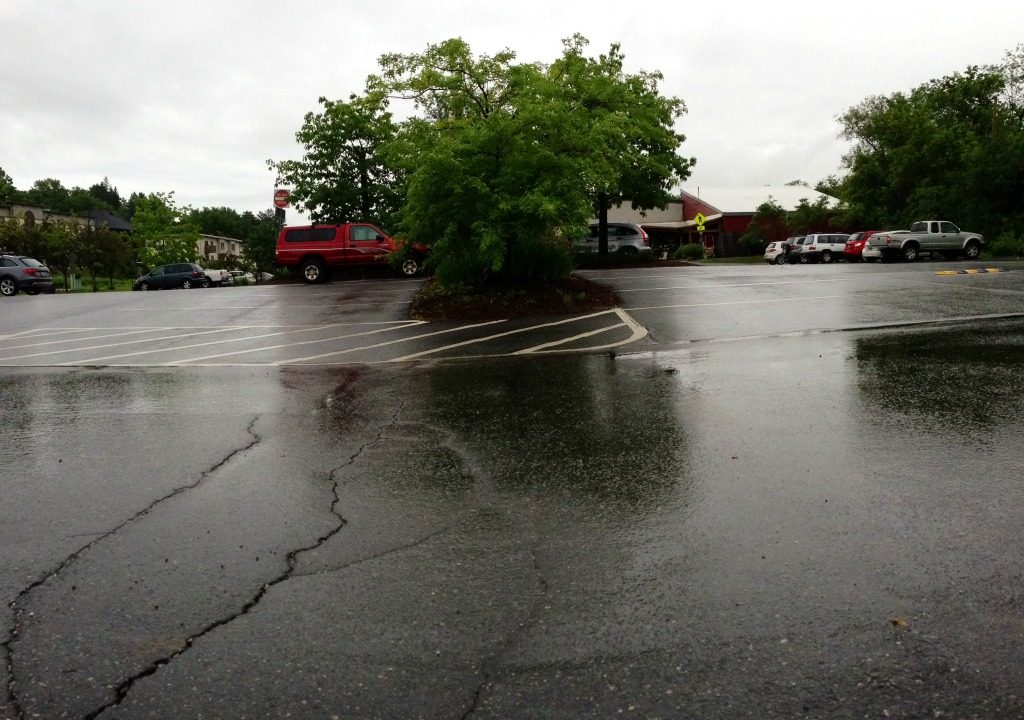
Runoff from parking lots, big box store roofs, campuses and other impervious surfaces carries pollutants and nutrients into Lake Champlain. That accounts for about 14 percent of the lake’s phosphorus loading, according to the state. Excess phosphorus is linked to toxic summer algae blooms and aquatic habitat degradation.
The state has an obligation under the Clean Water Act to regulate this type of runoff, CLF says, and can do so by requiring developers to obtain permits that would limit the amount of stormwater flowing off their property.
Pollution control measures currently exist that use natural vegetation to filter pollution and storm runoff before it enters lakes and streams. Building with so-called green infrastructure – rooftop vegetation, rain gardens, permeable pavement and the like – is one way to change the state’s urban landscape to improve water quality.
“The whole purpose of green infrastructure is to re-engineer the built environment with lots of little solutions,” said Anthony Iarrapino, a senior attorney for CLF who wrote the petition.
He said the green practice mimics the landscape’s natural ability to soak up rainwater, store it, and let it filter back into the ground while, at the same time, filtering pollutants.
Green infrastructure has already been implemented in some areas, such as Chittenden County, state officials point out. But CLF wants to require it for the entire Lake Champlain watershed.
“This special treatment has allowed a lot of polluters to take a free ride and contribute to the problem without contributing to the solution,” Iarrapino said.
The state last month sent a letter of commitment to the U.S. Environmental Protection Agency that it will restore Lake Champlain’s water quality by reducing phosphorus loading into the lake from the state’s farms, forests, roads and cityscapes.
The state’s proposed Lake Champlain Total Maximum Daily Load (TMDL) plan was released last month and is currently being reviewed by the EPA.
Natural Resources Secretary Deb Markowitz said the state will require development to incorporate green infrastructure as part of that plan.

“It will be part of the Phase I implementation,” she said. “We do fully intend to expand the use of the regulatory tool. It’s one of the important tools in our toolbox.”
The agency is working with stakeholders to decide how to pay for the restoration of the lake’s water quality. So far, the state is seeking money from the federal government and raising revenue through new taxes, state officials have said. The agency said it will have a funding proposal this fall.
Markowitz said all residents contribute to Lake Champlain pollution and the state must find the most fair way to share the cost of cleanup.
“We need to talk with people about what this will look like as it rolls out,” she said about the TMDL financing plan.
The state has 90 days to respond to CLF’s petition. CLF wants a commitment from the state that it will require polluters to help restore that lake’s water quality and could sue the state for not enforcing its obligations under the Clean Water Act.
CLF last May petitioned the state Agency of Agriculture, Food and Markets to enforce new regulations to curb agricultural phosphorus runoff into Missisquoi Bay.

