Editor’s note: “Facing climate change” is a monthly series on the impact of rising temperatures as a result global of carbon emissions on Vermont’s people and environment.
Climate change is upon us, scientists say, thanks to carbon dioxide levels in the atmosphere that have exceeded the tipping point of 350 parts per million.
Though meteorologists are loath to tie weather events directly to climate change, experts predict we will see heightened storm intensity and droughts, along with rising sea levels that could dramatically alter coastal regions inhabited by a large percentage of the world’s population. That’s because CO2 is trapping heat in the atmosphere and warming the planet.
The Arctic is melting; extreme heat and drought have crippled crops in the Midwest; Hurricane Sandy wiped out homes and livelihoods in the mid-Atlantic states.
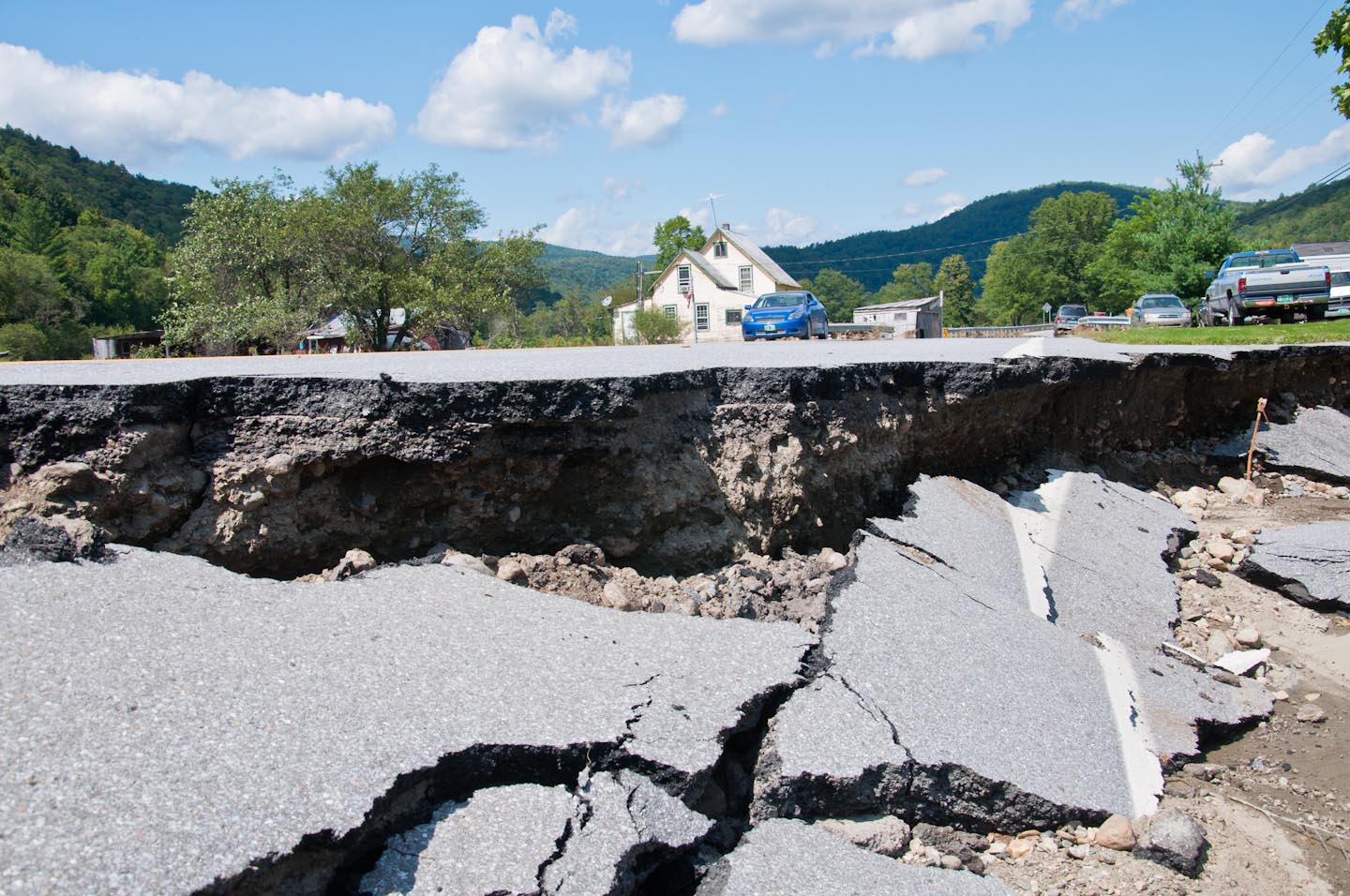
And Vermont is still recovering from the historic floods of Tropical Storm Irene in 2011. Last year the state narrowly missed a second hit from Sandy.
Changes in the Earth’s climate and related weather events aren’t isolated. Nor are they going away anytime soon, scientists say.
Earlier this month, concentrations of CO2 nearly hit the 400 parts per million mark. Atmospheric carbon dioxide has increased steadily since scientists began measuring the airborne chemical compound in the 1950s. Throughout that period, humans have continued to burn fossil fuels at ever-increasing rates, exacerbating the problem which began with the onset of the Industrial Revolution 200 years ago.
As a result of the ongoing increases in worldwide emissions, climate scientists predict more 90 degree days in Vermont, summer droughts like the one that lowered aquifer levels last summer, and inundations of precipitation that cause flooding. Data has been trending in that direction for decades. From 1948 to 2011, Vermont saw an 84 percent increase the number of storms, and the amount of precipitation released during weather events also increased — by 35 percent, according to a report by Environment America, an affiliate of the U.S. Public Interest Research Group.
Scientists routinely use words like “catastrophe” and “disaster” to describe a future in which weather patterns are no longer predictable. They warn of irreversible, extreme changes to the climate that will intensify if humans cannot bring CO2 levels down to 350 parts per million.
Vermont’s climate will be similar to that of southern Tennessee and northern Georgia by 2070 if CO2 emissions continue to climb, the Union of Concerned Scientists reports.
Bill McKibben, an author who lives in Ripton and who popularized the concept of climate change in his groundbreaking 1989 book “End of Nature,” started an activist group called 350.org to draw attention to the climate change threshold.
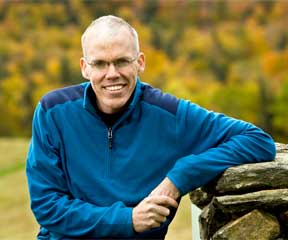
McKibben told lawmakers earlier this year that we are on a path to creating a planet “straight out of science fiction.”
That warning did little to motivate politicians to take actions that would limit carbon emissions from Vermont. A proposal to subsidize weatherization of thousands of leaky Vermont homes, for example, failed. Money for public transportation remained static.
But Vermont is green, right? How much, really, does Vermont contribute to climate change, and what is state government doing to make it better? After all, Vermonters emit 40 percent less per capita than the national average.
Christopher Kilian of the Conservation Law Foundation says the state is doing nowhere near enough.
“Vermonters should not be sitting back on whatever laurels we think we should recognize based on a simple greenhouse gas accounting,” he said.
Vermont’s annual emissions are 4 percent more than the state’s 1990 levels, a far cry from the state’s goal of 25 percent below 1990 levels by 2012. Emissions have declined from a high of 9.3 million metric tons in 2005, but that’s largely due to the 2008 recession. Since 2008, they’ve risen slightly. As of 2009, Vermont’s emissions stood at 8.4 million metric tons of greenhouse gases a year. About 70 percent is sequestered by our forests.
Though the Department of Public Service set ambitious targets for lowering emissions levels for transportation, heating and electricity, only slow progress has been made. The state’s largest greenhouse gas emissions come from transportation, and state agencies are promoting electric vehicles and alternative modes of travel, but the percentage of Vermonters taking advantage of these programs falls short. Heating is the second largest source of greenhouse gases in Vermont, and the state’s energy efficiency utility weatherizes thousands of homes each year, but tens of thousands more are inadequately insulated. Agricultural innovations, cap-and-trade carbon credits, and waste management overhauls bolster Vermont’s green persona, but change in these areas is slow, too.
Brian Woods, of the Agency of Natural Resource’s (ANR) air pollution control division, said Vermont’s greenhouse gas emissions have declined in recent years, partly because of improvements in energy efficiency. But, he said, more programs are needed, and fast, because of the lag between emissions and climate impacts.
Paul Burns, the executive director of the Vermont Public Interest Research Group, agrees.
“There’s a lot more that we could and should be doing to reduce our contribution to climate change and to be a leader in this effort,” Burns said. “The state has a really strong ambitious long-term goal for getting 90 percent of our energy from renewable sources by 2050. To make that goal a reality we really need to get moving very, very rapidly and so far we haven’t seen enough movement toward that.”
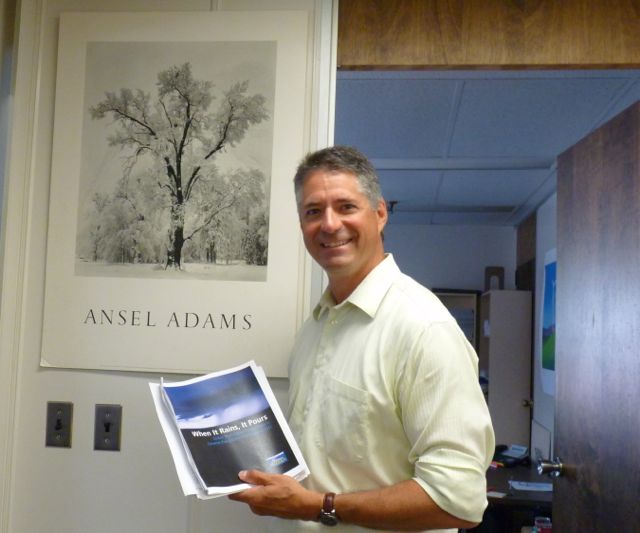
Vermont’s greenhouse gas reduction goals, set forth in statute, are as follows:
● Cut total emissions 25 percent below 1990 levels by 2012, 50 percent by 2028, and 75 percent by 2050.
● Improve energy efficiency by 25 percent in 60,000 homes by 2017 and 80,000 homes by 2020.
● Reduce fossil fuel use in buildings by 6 percent a year by 2017 and 10 percent a year by 2025.
● Save Vermonters $1.5 billion on their fuel bills over the life of efficiency investments made between 2008 and 2017.
● Increase weatherization services for low-income Vermonters.
● Produce 90 percent of the state’s energy from renewable sources by 2050.
All of these efforts are lagging, environmentalists say, even as awareness of the impacts of climate change become more noticeable year by year.
Emissions by sector
Transportation
Transportation accounts for nearly half of Vermont’s emissions. Because it’s a rural state, Vermonters drive more than those in most other states. According to the state’s Comprehensive Energy Plan, transportation is also the fastest-growing sector in terms of energy use.
On average, Vermonters drive 11,000 miles per year; nationally, the average is 10,000 miles annually, according to a UVM report for the Vermont Agency of Transportation. Statistically, Vermont is among the 11 worst states for average vehicle miles traveled.
Walking, biking, and public transit account for barely 12 percent of all trips in Vermont; the rest are by car, truck or motorcycle.
Walking, biking, and public transit account for barely 12 percent of all trips in Vermont; the rest are by car, truck or motorcycle. Only 0.3 percent of Vermonters used public transportation in 2009; 1.2 percent used a bicycle; and 10.8 percent walked. More than 84 percent of Vermonters drove to their destinations, according to the UVM study.
Vermont’s three-pronged plan to reduce transportation emissions focuses on reducing demand for cars, increasing efficiency and promoting alternative fuels.
The Vermont Agency of Transportation, in partnership with the Vermont Energy Investment Corp., runs an outreach program called Go Vermont that encourages commuters to use public transportation, to walk or bike, and to carpool.
About 4,578 commuters have registered with the program.
Gina Campoli, an environmental policy planner with the transportation agency, says public transportation ridership has increased by 20 percent in the last four years. Amtrak’s recent track and speed improvements are also expected to help cut emissions from transportation.
“Go Vermont is a very successful strategy in getting more people in cars and fewer trips that works well in a rural setting,” said Campoli. “Whereas having a transit system, buses running all over the countryside, is more difficult.”
Vermont has long been committed to the highest standards for fuel efficiency. The state adopted California’s strict fuel economy standards in 1996. Most recently, California and the states that follow its example began to regulate greenhouse gas emissions from vehicles and to spur the use of zero-emissions vehicles.
The California standards apply to new vehicles. Vermont aims to determine the fuel economy of all vehicles, new and old, registered in the state, and meet or exceed the federal standard by 2025.
Campoli said reaching the state’s emissions goals won’t be easy, but it’s clear electric vehicles are key.
“We can’t do it without a massive switch to electric vehicles,” said Campoli. “Because of that [rural] land-use pattern, getting people out of their cars is going to be challenging.” But, she said, switching to electric vehicles “has viability because the cars are out there today. You can buy an electric vehicle and they’re cool cars and the price is coming down.”
Though electric cars can cost more than $40,000 upfront, owners save money on maintenance and pay the equivalent of $1 per gallon of fuel (the cars get 112 miles per gallon), according to Drive Electric Vermont, a coalition of policymakers, industry leaders, and members of the public dedicated to promoting the use of electric vehicles.
Kilian of the Conservation Law Foundation said that the lack of political will to find revenue streams to fund major transportation programs is a serious obstacle.
As of mid-April, Vermont hosted 18 charging stations, most on private land, and seven more are slated to come online in the next six months. Campoli said VTrans has begun putting signs on the interstate to help travelers find charging stations. A new charging station at the corner of Gov. Aiken Avenue and State Street in Montpelier has two spaces, one of which is used for the state’s first electric vehicle in its fleet. VTrans is also looking into charging stations at state facilities, like Park & Rides.
Environmentalists are critical that any of this is enough. Kilian of the Conservation Law Foundation said that the lack of political will to find revenue streams to fund major transportation programs is a serious obstacle.
Rep. Tony Klein, D-East Montpelier, said promoting public transportation, fuel efficiency and electric vehicles is critical, but none of these are standalone strategies. “If electric vehicles are part of the solution, then renewable energy becomes even more important,” Klein said. “We have to do everything.”
Residential, commercial, and industrial fuel use
Residential, commercial and industrial fuel use makes up a third of Vermont’s greenhouse gas emissions. The Greenhouse Gas Inventory report cites insulating homes to improve thermal efficiency as one of the key actions that can reduce demand for heating fuel.
Since the Vermont Energy Efficiency and Affordability Act was passed into law in 2007, 18,000 homes have been weatherized — that’s an average of 2,300 homes each year. The Thermal Efficiency Task Force was assembled by the Department of Public Service in 2012 to study what it would take to reach Vermont’s goal of weatherizing 60,000 homes by 2017 and 80,000 by 2020. To reach that goal, the state would need to increase the number of homes weatherized each year up to 8,800. Woods of ANR said this would save 6.8 million metric tons of carbon dioxide over the lifetime of the investments as well as provide major economic benefits. A bill designed to achieve those benefits, H.520, passed the House in March, but without funding. Proponents hope funding will come through next year.

Kilian, of the Conservation Law Foundation, is frustrated with the lack of commitment to weatherization he’s seen this year.
“I think there’s a broad recognition that we need to tighten up our building stock dramatically in order to reduce our greenhouse gas footprint associated with heating and cooling,” he said. “The most logical revenue stream would be a surcharge on fuels. But because our legislators and our governor are not willing to press hard to create a revenue stream based on a fuels surcharge to fund a central program that would implement building efficiency measures to reduce that greenhouse gas footprint, we do not have a meaningful program in the state.”
Agriculture, electricity and waste
Agriculture, electricity use, and waste management account for about 18 percent of Vermont’s greenhouse gas emissions.
Agricultural alone produces 10 percent. The emissions come in part from the breakdown of organic material that speeds up when soil is plowed and manure and fertilizer added.
On-farm solar and biodiesel projects reduce emissions from farm equipment and heating greenhouses while using marginal land efficiently. One such project, unique to Vermont and led by the University of Vermont agricultural extension, is Farm Fresh Fuels. Farmers grow sunflowers, press the seeds to extract the oil, and then use the oil to power equipment.
Electricity production comprises 4 percent of Vermont’s greenhouse gas emissions. As of 2009, 42 percent of Vermont’s energy came from wind, solar, hydro, biomass and nuclear sources. The state hopes to produce 90 percent of Vermont’s power from renewable sources by 2050. Though controversial, the recent proliferation of wind farms, as well as solar arrays, supports that goal.
Vermont regulates electricity emissions through the Regional Greenhouse Gas Initiative, a cap-and-trade program among Northeastern and mid-Atlantic states. The program aims to reduce carbon emissions from power plants by 10 percent by 2018. This year, the initiative announced it would be lowering its cap on emissions by half.
Waste management accounts for 3 percent of Vermont’s greenhouse gas emissions. When organic waste breaks down in a landfill, it produces methane. Methane is a greenhouse gas 21 times more powerful than carbon dioxide. Vermont’s two commercial landfills convert the gas to electricity or burn it off. But according to Woods of ANR, landfill gas collection systems only manage to capture 30 to 70 percent of the gas. The rest escapes into the atmosphere.
Act 148, the solid waste bill passed in 2012, mandates that organic material be completely phased out of the landfill waste stream by 2020. Woods says it’s not clear that this will reduce methane pollution from landfills, but that ANR believes it “could have a small benefit.”
“We just haven’t gone past the rhetoric. And we need to go past the rhetoric. We need to understand that whatever short-term or immediate pain concrete action may cause every one of us, that will be less than the economic pain and suffering we’re going to have in the long term if we don’t do it.” ~Rep. Tony Klein
If organic material is diverted from landfills and composted instead, won’t it release methane anyway in the composting process? Woods says it won’t.
“Commercial composting, if done properly, will only generate a small amount of methane,” he said. “Compost systems are aerobic, which means that oxygen is used to break down organic compounds. The formation of methane from landfill gas is an anaerobic process.”
An added benefit is that composting organic waste may lower transportation emissions because there are more composting facilities than landfills in the state.
In some cases, Woods said, food waste might be processed in an anaerobic digester on a farm. “These facilities will both produce energy and a value-added product such as animal bedding and soil amendments and they are much more efficient at capturing methane to turn into energy than a landfill-based system because these systems are completely enclosed,” Woods said.
Modest steps
Do all these efforts add up? Will they enable Vermont to reach its goals in time?
Burns, of the VPIRG, thinks not. He says Vermont needs to push harder for green transportation, thermal efficiency and clean energy facilities. He is disappointed with the weak support for thermal efficiency and wind power evident in the Legislature this session.
“I think we’re seeing some relatively modest steps being taken so far but there is a lot more that needs to happen,” he said.
Klein is frustrated by the gap between what people say and what they do.
“What happened in this legislative session is a prime example,” he said. “At the beginning of the session you had the governor and the speaker and McKibben coming in. We just haven’t gone past the rhetoric. And we need to go past the rhetoric. We need to understand that whatever short-term or immediate pain concrete action may cause every one of us, that will be less than the economic pain and suffering we’re going to have in the long term if we don’t do it.”
Klein says the state is not keeping up.
“When you have programs in place that only have the ability to inch forward and the problem is accelerating and we haven’t done anything to accelerate the programs that are meant to attack the problem, we’re losing ground.”
Klein added, “I just came out of probably the most disappointing legislative session that I’ve ever been a part of on the subject of climate change or energy generation. We didn’t do anything. So I think it’s going to be the Legislature’s job to find a way to do two things: find the necessary revenue to accomplish the task, but we also have to do a better job of educating Vermonters to take ownership and to feel it and to internalize and to make it a personal problem that everyone needs to solve.”