


While the nuclear renaissance grips Washington, Vermont’s congressional delegation introduced a bill this week seeking more local control over the closure of nuclear plants.
U.S. Sens. Peter Welch, D-Vt., and Bernie Sanders, I-Vt., along with U.S. Rep. Becca Balint, D-Vt., joined with others to give states a more meaningful role in the development and approval of shutting down old nuclear reactors through the Nuclear Plant Decommissioning Act of 2025.
Local groups that oversee the shutdown process, called community advisory boards, would receive more support under the law, and communities that host the reactors would get more money through grant programs. Those communities would also get more say in what happens when plants close or change ownership.
In Vermont, the town of Vernon saw its nuclear plant close down in 2014, leading to job loss and economic disruption in a rural community. In the decade since, more than 1,000 tons of nuclear waste have been left behind, according to cleanup contractor NorthStar.
Adding parameters suggested in the bill to federal statute could become salient as nuclear energy grows, with plans to add 15 new reactors globally in 2026, including formerly retired U.S. plants.
“For too long, working class communities across the country have been forced to deal with the safety and economic consequences of nuclear power plant(s) while having virtually no say in the plans, which the people of Vernon understand all too well,” Sanders said in a media release.
The shuttering of Vermont Yankee
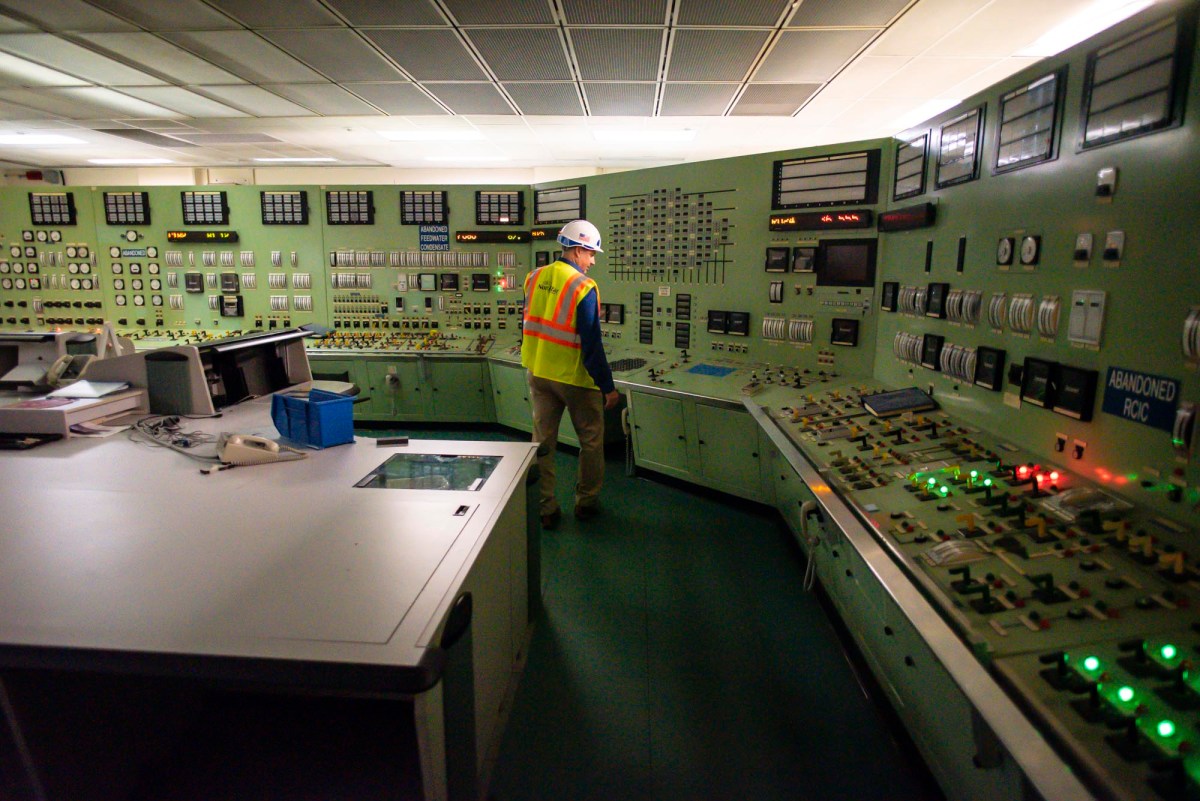
Vernon is the host community for the Vermont Yankee Nuclear Power Station, a 650-megawatt plant that opened in 1972 on a curve along the Connecticut River. The plant produced more than a third of the state’s electricity while operating, but it closed in 2014, outcompeted by cheap natural gas and following decades of anti-nuclear activism in the state.
The closure came after a battle between the state and Entergy Nuclear Vermont Yankee, a Louisiana-based energy company that bought the facility a decade earlier. That company wanted to keep the plant open until 2032; the state wanted the plant to close in 2012, at the end of its operational license. Lawsuits followed, including a nationally watched debate over who had more control over nuclear energy: the state or the federal government. In the end, the parties settled.
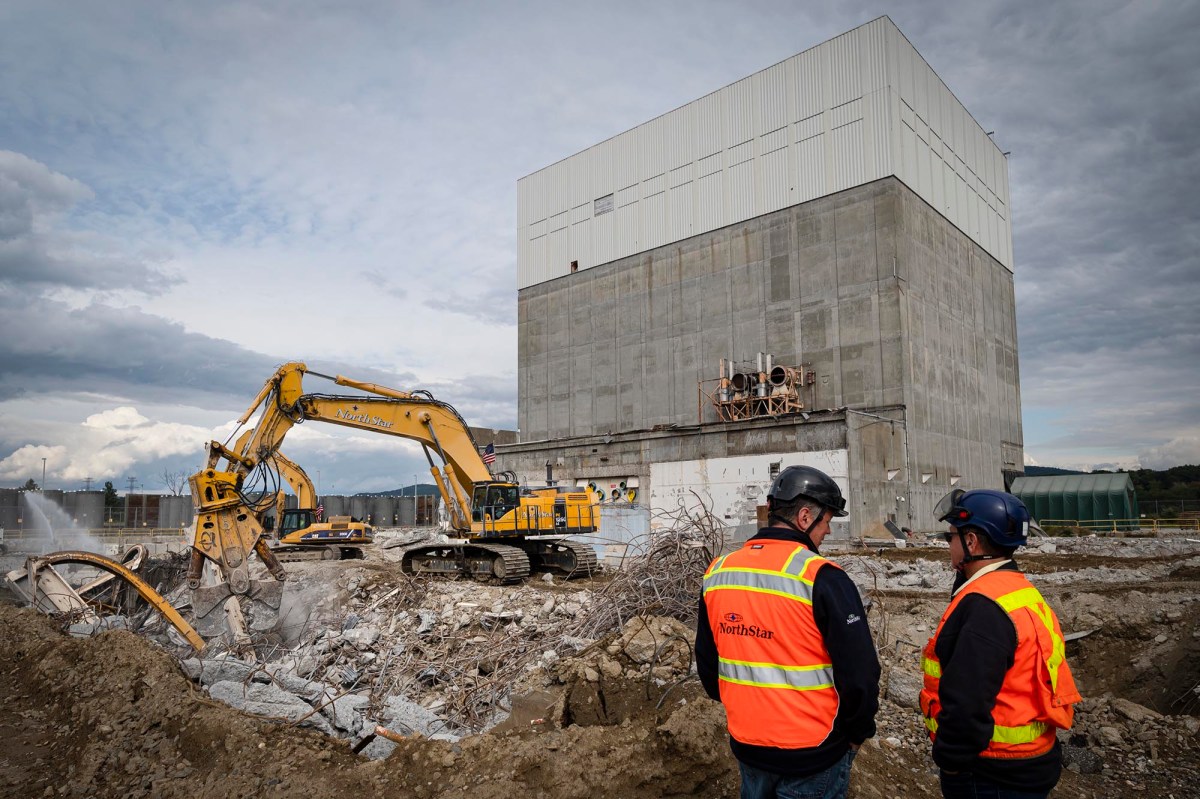
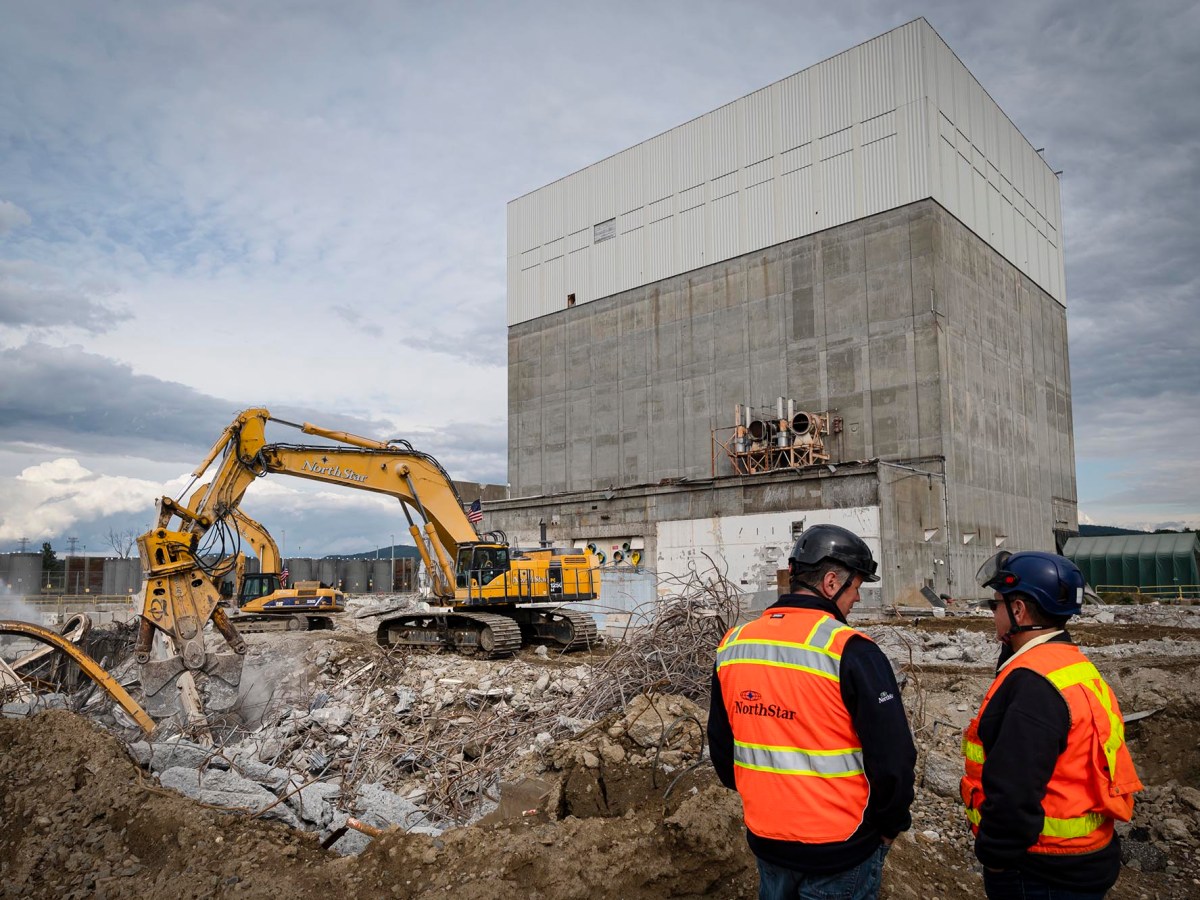
Entergy transferred ownership of the site to a cleanup contractor, NorthStar Group Services Inc., which will decommission the plant by the end of 2026, four years ahead of schedule, according to a September report. A community group, the Vermont Nuclear Decommissioning Citizen Advisory Panel, formed under state statute to follow the progress in quarterly meetings, because decommissioning plans were convoluted and difficult to track.
“In Vernon, the loss of steady information, limited local capacity and the lack of predictable planning dollars made it much harder for the region to adapt,” said Adam Grinold, executive director of the Brattleboro Development Credit Corporation, an economic growth engine in the region that endorsed the legislation, in a statement. “A community can only react for so long before momentum slips away.”
The era of old nuclear fuel
The nation has no solution for long-term storage of nuclear waste, known as spent nuclear fuel, from such plants.
While other countries have successfully sited long-term storage facilities — managed waste sites where fuel is stored thousands of feet underground — the U.S. is nowhere close to such construction after decades-long plans to store the waste at Nevada’s Yucca Mountain were canned during former President Barack Obama’s tenure.
Right now, spent fuel is often stored on or near the decommissioned site in dry casks meant to keep people and the environment safe from dangerous levels of radiation. That’s the situation in Vernon, where 58 dry casks are stored on site.
Under the Senate bill introduced by Welch and others, host communities like Vernon could be paid $15 per kilogram of waste. Vermont Yankee houses 1.2 million kilograms of waste in its dry casks. Under the bill, the nearby community could earn more than $10 million annually, according to Welch’s office, or about $90 million through fiscal year 2035, if the bill passes during the 2026 congressional session.
But that passage is unlikely, according to Welch’s office.
While support for nuclear power is a rare overlap between Republicans and Democrats, the bill did not receive bipartisan support, a point made when state leaders and community members assembled at a virtual Dec. 8 meeting hosted by the citizens advisory panel.
That’s partly because the bill is asking for a lot of money for nuclear communities, according to Welch’s office. The law also comes in response to moves by the Trump administration to weaken the independence of the Nuclear Regulatory Commission, the independent federal body that oversees the licensing and safety regulations of U.S. nuclear sites.
An uncertain future
Vernon’s nuclear future remains uncertain. Under the Trump administration, the U.S. Department of Energy is pushing to find a home for stranded nuclear waste, including in communities like Windham County.
In November, a pro-nuclear energy nonprofit based in California, the Good Energy Collective, hosted a two-day meeting in Vernon to discuss why a community might be interested in hosting a consolidated 15,000 metric tons of spent nuclear fuel. That’s more than 12 times the amount of waste stored in Vernon today. While no communities have signed on to hosting such a high volume of waste, the federal government is searching for one.
The Energy Department has the sole legal authority and responsibility to remove spent fuel from the Vermont Yankee site, according to Scott State, NorthStar CEO and chief nuclear officer. Some of those low-level radioactive materials from the decommissioning process are stored at a facility in Andrews County, Texas. NorthStar once hoped to send more nuclear waste to Texas until a federal court decision blocked the transportation in 2023.
This summer, that decision was overturned by the U.S. Supreme Court. The Texas site “provides a safe and economical interim storage option for spent fuel from Vermont Yankee,” State said in an email. But the Energy Department hasn’t developed the infrastructure needed to transport spent fuel there, State said.
“NorthStar has no control over either the timing of spent fuel removal or the choice of final or interim storage location,” State wrote. “NorthStar’s only responsibility is to ensure that spent fuel remains safely and securely stored while it remains on the Vermont Yankee site.”
