[T]he same weather system that has fed California’s devastating wildfires is expected to bring record-breaking cold temperatures to Vermont this Thanksgiving.
“The leg bone is connected to the knee bone and so forth,” said Roger Hill, who runs a forecasting service for Radio Vermont.
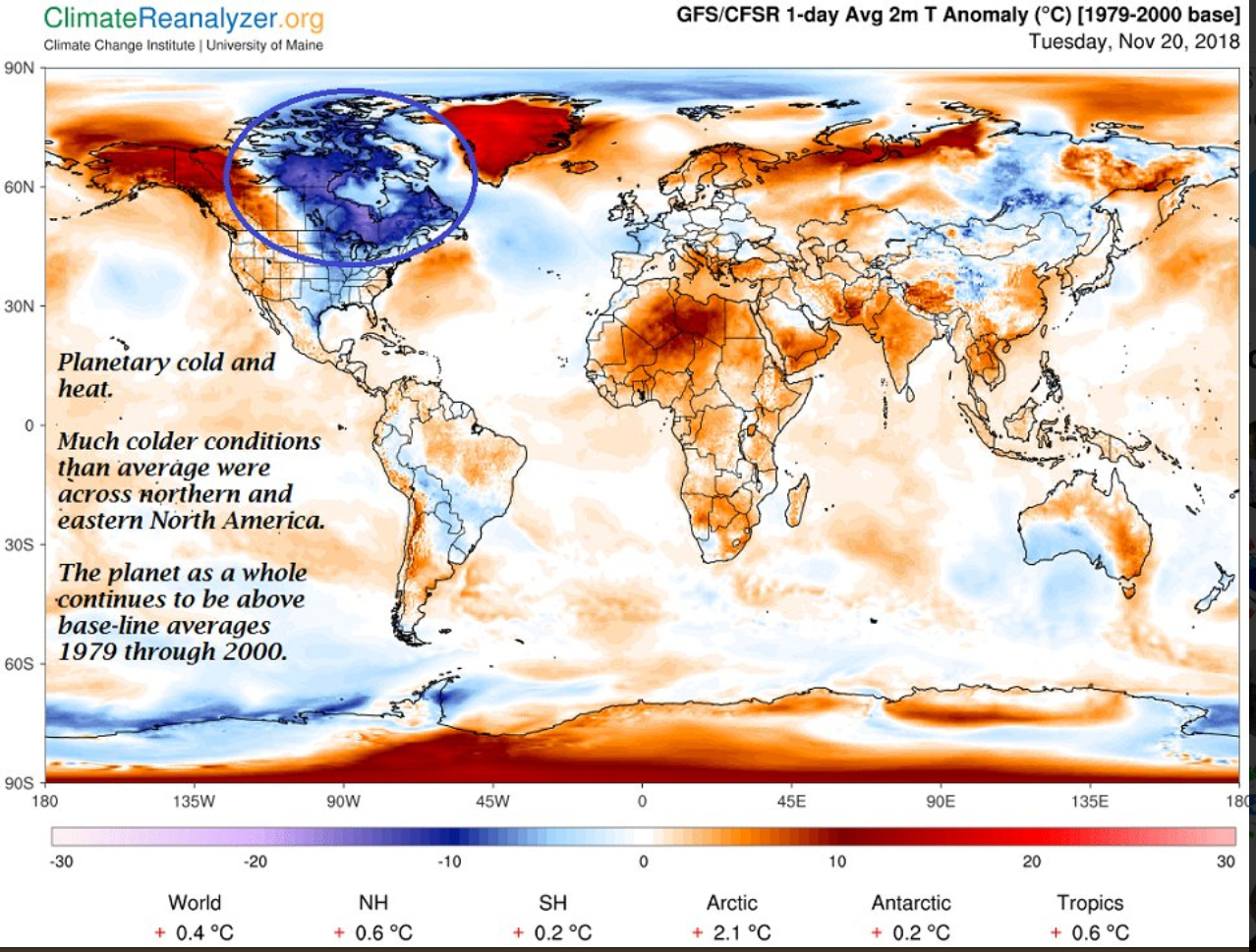
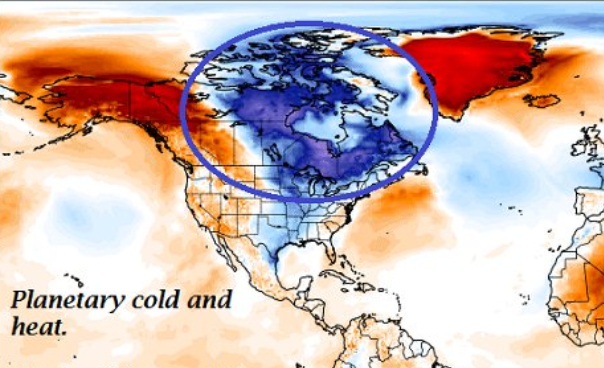
Hill said a ridge of higher pressure in the west has pushed cold air out of Alaska, which is unusually warm right now, and back down through eastern Canada. That blast of Arctic air will settle into the Northeast on Wednesday night and Thursday, likely breaking cold temperature records and bringing blustery, snowy conditions.
“This is going to make for probably one of the coldest Thanksgivings we’ve seen in decades,” Hill said.
Thanksgiving will likely see some of the lowest temperatures for daily highs on record.
“Burlington is set at 22 degrees, and that was set in 2008. And it looks like it will only have high temperatures that will be in the low- to mid-teens. Maybe some upper teens,” Hill said.
There’s also a chance records for daily lows will be broken. In Burlington, that would require overnight temperatures to dip below 2 degrees (a record set in 1972), -1 in Montpelier (1972), and 7 degrees in St. Johnsbury (2007).
Hill also cautioned those planning trips on Wednesday to watch out for dicey road conditions.
“We’ll probably see the wind pick up, and that could produce blowing and drifting snow, maybe a couple white-outs, and maybe some more intense snow squalls. But in general things are going to start to improve as we head into Thanksgiving day. It’ll just be really, really cold,” he said.
The bitterly cold temperatures should be short-lived, with temperatures starting to warm Friday through the weekend, Hill said. Dramatic fluctuations in temperatures could persist through the winter.
“It’s part and parcel, related to climate change and configurations of the jet streams that have become more amplified, where you have these big ridges of higher pressure and large troughs of low pressure and you have these weird, odd flows,” he said.
As for the rest of the world, things look decidedly different.
“North America is the only cold, anomalous spot. Everywhere else is extremely warm. It’s warm in Eurasia. It’s warm in Siberia. It’s warm in Africa. It’s warm in Alaska. It’s warm, warm, warm,” he said.