

The largest source of phosphorous, 46 percent of the total, comes from crops, hay, pasture and production on Vermont farms.
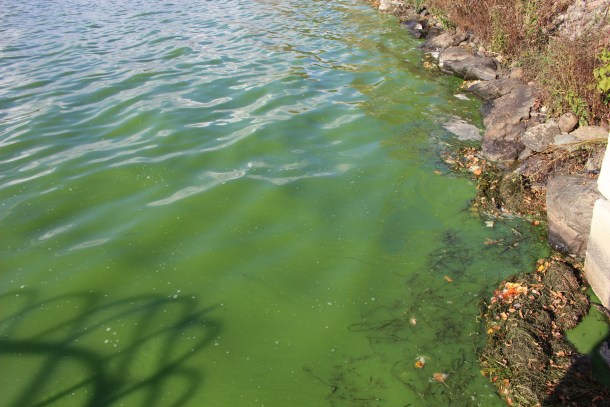
Excess phosphorus fuels toxic cyanobacteria growth that has fouled public waters in Vermont, including Lake Champlain and Lake Carmi. The bacteria, known informally as blue-green algae, has killed pets and sickened Vermonters in recent years.
Earlier this month Vermont finalized the agreement with the U.S. Environmental Protection Agency, said Ben Copans, a watershed coordinator with the Vermont Department of Environmental Conservation.
Three-quarters of Lake Memphremagog is in Quebec, but Copans said that “Vermont really drives” the levels of phosphorus pollution in the lake. That’s because while the surface water of the lake is in Canada, the watershed that feeds the lake is in Vermont.
The Clyde, Barton and Black rivers flow into the lake from the Vermont side. The Black River carries the most agricultural phosphorous into Memphremagog, according to the report.
Vermonters have already spent $1.5 million on farm improvements over the last five years to reduce phosphorus pollution in the Lake Memphremagog watershed, Copans said.
The Lake Memphremagog watershed contains about 200 farms, said Anson Tebbetts, Secretary of the Agency of Agriculture, Food and Markets. Agricultural land makes up 17 percent of the watershed’s total surface area, according to figures from the federal order.
It’s unclear how much more Vermont taxpayers will need to pay to stem farmers’ phosphorus pollution in the Lake Memphremagog watershed to comply with the new federal order, Copans said, but it is likely to be “a pretty substantial amount of funding.”
The phosphorus that feeds cyanobacteria blooms is a common, naturally-occurring element that a variety of sources — including forests, stream banks, dirt roads and lawns — release into state waters.
The feds say Vermont needs to cut phosphorus levels in the Lake Memphremagog watershed by about a third.
Department of Environmental Conservation leaders have stressed that all Vermonters will need to contribute to cleanup efforts in Lake Memphremagog, as they’ve said in the past about similar phosphorus pollution in Lake Champlain and Lake Carmi.
The federal order is called a Total Maximum Daily Load, and it specifies how much phosphorus Vermonters may emit into Lake Memphremagog.
Currently Vermont sends about 57 tons of phosphorus into Lake Memphremagog each year. The TMDL will require that amount be cut to about 42 tons.

