


Christopher Sullivan, 57, who served many years as Rutland’s attorney, appeared Thursday afternoon in criminal court in White River Junction, where his public defender tried to get him released from prison pending a new sentencing hearing set for June 29.
However, Judge Theresa DiMauro said Sullivan didn’t qualify for home detention because that option is available only to defendants awaiting trial.
“It doesn’t apply,” the judge said. She noted that Sullivan was convicted by a jury and the Vermont Supreme Court last month upheld those convictions, though it did overturn his sentence of four to 10 years in jail.
Joshua O’Hara, a public defender representing Sullivan, disputed the judge’s contention, arguing that home detention is an option for defendants still awaiting sentencing.
In this case, Sullivan’s trial took place two years ago. A jury convicted him of drunken driving with death resulting and leaving the scene of a fatality in the April 2013 crash in downtown Rutland that killed Mary Jane Outslay, 71, of Mendon.
Sullivan, wearing shackles, attended the hearing Thursday and stood at the defense table alongside his attorney for the entire 40-minute proceeding.
He was returned to the Springfield prison after the hearing, his bail set at $500,000 with a 10 percent cash deposit required for release.
O’Hara said at the hearing that his client has no assets and is unable to post the $50,000 deposit.
The Vermont Supreme Court, in overturning the sentence, ruled that the trial judge, DiMauro, should have allowed Sullivan more time to hire, prepare and present a “mitigation” expert at his sentencing hearing.
Such an expert, his attorneys have contended, would help explain why Sullivan fled the scene of the crash that took place about 7:45 p.m. on April 10, 2013.
Sullivan drove into Outslay as she tried to cross a street in downtown Rutland. A day later, Sullivan went to the police station and reported that he was the driver involved in the fatal crash.
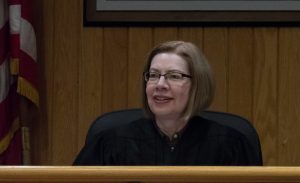
DiMauro told O’Hara and the prosecutor, Assistant Attorney General Ultan Doyle, that the new sentencing hearing would be limited in scope to the testimony of the mitigation expert for the defense.
“The only thing that’s raised in his appeal relating to sentencing is the defendant’s inability to present a mitigation expert,” DiMauro said. “That’s it.”
O’Hara said his reading of the ruling doesn’t limit the sentencing hearing in that way. He talked of presenting evidence about how Sullivan has acted behind bars since the earlier sentence was imposed two years ago.
“He’s been serving (his sentence) quite well. He’s become a trusted person in the facility,” O’Hara said of Sullivan. “He’s on a very low security status.”
DiMauro said that wasn’t how she intends to proceed at the new sentencing hearing. She also said members of Sullivan’s or Outslay’s families would not be permitted to testify at that hearing.
“They’ve already testified. They’re not testifying again,” the judge said. “The remand is very limited to a mitigation expert, and that’s what we’re going to do.”
O’Hara said it’s important at the sentencing hearing to take into consideration the “entirety” of Sullivan’s character, which has developed in the two years he has been incarcerated.
Doyle, the prosecutor, agreed with DiMauro.
“We would turn the clock back to allow that mitigation expert to testify — that would be it,” Doyle said. “It wouldn’t encompass anything that’s happened since he was sentenced.”
The judge told Sullivan and the attorneys that she saw four possible outcomes of a new sentencing hearing.
• The defense does not present a mitigation expert, and the sentence stays the same for the same reasons spelled out two years ago.
• The defense presents the mitigation expert, and that expert doesn’t provide any support for changing the sentence.
• The mitigation expert does present some evidence that provides mitigation for Sullivan’s actions, which could lower the minimum or maximum portions of the sentence.
• The mitigation expert doesn’t present mitigating evidence, but rather aggravating evidence, which could lead to a longer sentence. At the original sentencing, the prosecutor sought a term of eight to 15 years in jail.
DiMauro also told the attorneys she wouldn’t allow Sullivan to address the court again at the new sentencing hearing, saying he did that at the original hearing.
“Is there some suggestion that Mr. Sullivan is going to say something different now than he did at the sentencing?” the judge asked O’Hara.
The defense attorney replied that allowing Sullivan to speak would show the court that he has accepted responsibility for his actions.
“(Sullivan) feels responsibility for what happened,” O’Hara said. “Mr. Sullivan feels deeply sorry for what happened.” The defense attorney said that would add to the mitigation evidence on his client’s behalf.
“I think any alteration in his position is colored by the fact he’s been incarcerated,” the judge responded.
O’Hara later asked the judge if he could file a brief in 10 days explaining why he believes the new sentencing wasn’t limited to the mitigation expert’s testimony.
“I’m not going to change my mind,” the judge responded, reiterating her point that the Supreme Court’s ruling calls only for a mitigation expert to testify.
