


NEWPORT — Rick Ufford-Chase hears what people say about Newport.
He sees what’s come to be known as “the pit,” an empty, fenced-in block of space that was once supposed to be a hotel before developers were caught in the EB-5 scandal, the biggest instance of fraud in Vermont’s history. He has witnessed a constant cycle of hopeful businesses shutter their doors on Main Street. So he knows how the city looks from the outside.
But Newport’s mayor recalls a different downtown atmosphere when he visited in the 1960s and ‘70s, one with two vibrant dance halls, diverse shopping and restaurants. He also admires the beauty of the lakeside community and its vast opportunities for outdoor adventures.
The years have not been kind to Newport, Ufford-Chase admits. Even before the EB-5 scandal left an abandoned lot in the middle of downtown, Newport’s streets had started to empty.
Now, the city of about 4,400 people is trying to rebuild. In addition to filling the pit, the city needs to heal relationships with its Canadian neighbors and dramatically increase affordable housing, while fighting labor shortages in the dairy and construction industries. And one of its major employers, Galvion Inc., recently attracted controversy for supplying helmets to ICE operations.
All of this work needs to happen without increasing the strain on Newport’s taxpayers, Ufford-Chase said.
As “the pit” nears new possibilities with an upcoming land sale, Ufford-Chase faces the same question every day.
“How do you bring a city back to life?” he said.
A slow decline
When Ufford-Chase, 62, and his wife moved to the Northeast Kingdom from Rockland County, New York in 2020, they found a vastly different Newport than the one he remembered.
Growing up, Newport was the closest city to Ufford-Chase’s family home in Lowell. He lived full-time in Pennsylvania, but his mother was a fifth-generation Kingdom resident.
The family stopped in Newport during every visit.
“This was really quite a thriving place when I was a kid,” Ufford-Chase said. “This was the spot where everybody in the surrounding area came to do their shopping.”

Ufford-Chase spent his early adulthood in the West, attending Colorado College before becoming an immigration advocate in Tucson, Ariz., working with officials and families on the forefront of the border crisis.
“I thought I would go for a year as a volunteer, doing human rights work on the border, and instead I stayed 20 years,” he said.
During his time there, Ufford-Chase said he helped to start an organization called BorderLinks, which worked to help educate people about the border economy and the complicated situation of refugees.
Ufford-Chase and his wife eventually moved to New York state, and began to manage a conference center for the National Presbyterian Church. He continued his advocacy for peace, and was arrested while protesting the Iraq war in 2007.
Conference centers and COVID-19 don’t mix, he said, so they lost their jobs when the pandemic hit.
“We looked at each other and said, ‘Let’s go home to the place we’ve always gone to be with family and vacation,’” Ufford-Chase said. “So it felt very natural for us to come here.”
As Ufford-Chase made his way in the world, Newport’s once-vibrant streets began to struggle, according to Sharon Pare, a city council member who has always lived in Newport.
“I don’t think you can blame anybody because downtowns across the country suffered the same way,” Pare said, referring to the growth of online retail. “And I think if we blame anybody, we can blame the dot-com era.”
In the 2010’s, a team of developers came with big promises to build a grand hotel in the heart of Newport, Ufford-Chase said. But the team was caught in the EB-5 scandal — an instance of fraud that took advantage of the federal EB-5 immigrant investor program — and the project was demolished.
“It gave us such hope, that things were going to, you know, take off and bring businesses in,” Pare said. “And then it just kind of all came crashing down.”
Newport was left with a pit stretching for almost a block, where fully grown aspens interlace with dilapidated staircases and building facades.
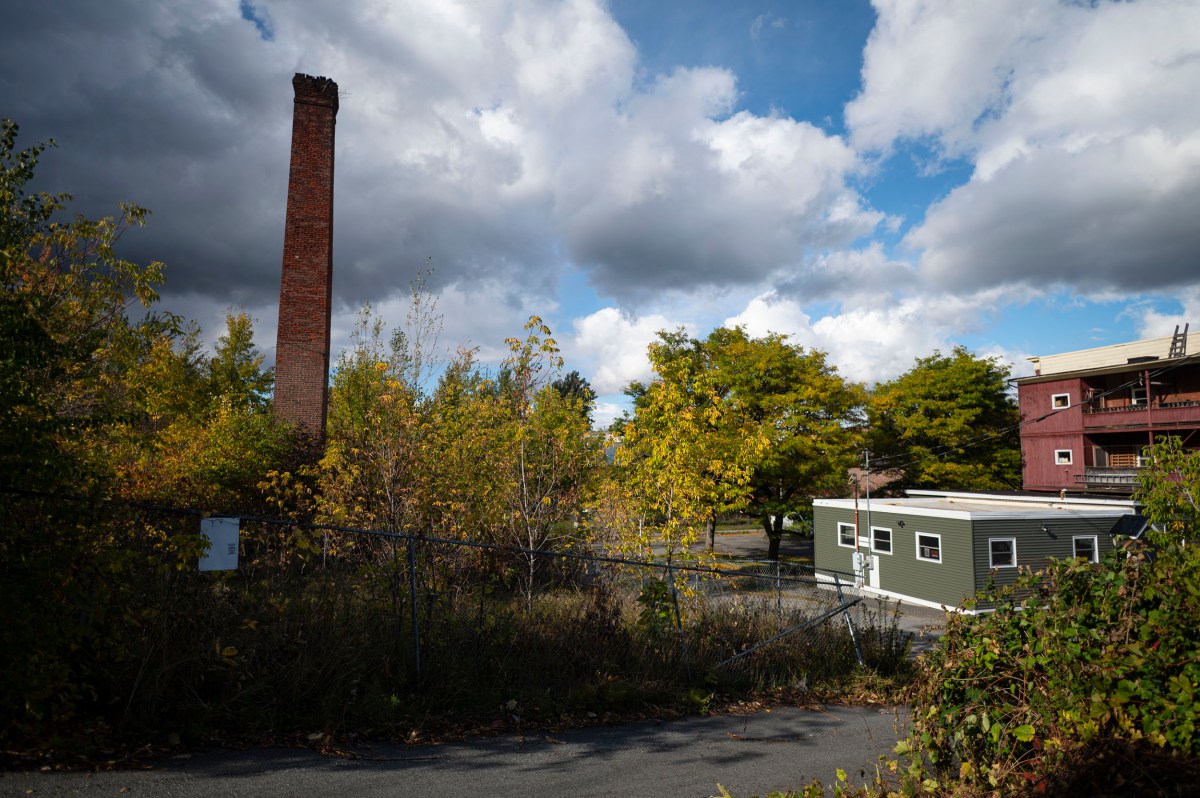
The land deal, involving the sale of the property to the Northwestern Vermont Development Association which plans to transfer it to the city of Newport or another development partner, which Ufford-Chase hopes will finally fill “the pit” is expected to close this week, he said. But trust between the community and developers still needs to be rebuilt, too, Ufford-Chase said.
“I think almost without exception, people are thrilled that Newport has taken control of this critical piece of our destiny,” Ufford-Chase said in regards to the sale. “So I don’t hear anybody saying, ‘You shouldn’t have done that.’
“I hear a lot of people say, ‘I’ll believe something will happen there when I see it happen.’”
Headwinds from the borders
Newport faces an unusual set of challenges as a small, remote city, Ufford-Chase said. Newport, located in northern Vermont, is the only city in Orleans County. Its proximity to the Canadian border comes with the presence of ICE in their community, which he said has an impact on both the dairy and construction industries.
Both industries in his area are struggling with labor shortages since many of their employees are afraid to go to work, he said. Orleans County is neck-and-neck with Addison County for second place in total dairy production in Vermont, surpassed only by Franklin County, according to 2024 data from the University of Vermont.
The economic realities of immigration are often overlooked, Ufford-Chase said, although he said he understands the necessity of a secure border.
“On this side of the border, you know, you talk to anybody right now in our area who’s a dairy farmer, Ufford-Chase said, “and they are really, really challenged by the current enforcement strategy here in Vermont, targeting workers from Mexico and other places in Latin America who are keeping our dairy industry alive right now.”
And in order to revitalize the city, Ufford-Chase said the city needs to build. And fast.
Housing comes first, he said.
The Newport City Master Plan Update, written in 2024, by the city and Newport Downtown Development, calls for 410 additional housing units to be built to meet the needs of the city and allow for expansion. Ufford-Chase said this is the goal, but the city must also contend with reality.
“If we build 410 units of housing, it will be nothing short of a miracle,” Ufford-Chase said. “If we built half that, I would think we had done an incredible thing.”
Most of the land has already been developed, he said, so the way to increase housing is to create a denser downtown with more varied types of housing options, such as affordable housing units and housing for seniors.
To do that, Newport needs construction companies to invest in the community, a task complicated by the ICE presence on the Northern border, Ufford-Chase said. Many developers are hesitant to start projects in Newport for fear of being targeted, he added.
“I don’t understand why we would target people,” Ufford-Chase said of construction and dairy workers, many of whom are authorized to work in the U.S. “Because we do not have enough labor here to build what we need to build.”
Newport is also home to Galvion Inc., a company which supplies helmets to ICE agents and U.S. military operations. The company provides essential jobs to the local community, he said. As someone who has spent a long time working as an immigration advocate, Ufford-Chase said it’s a “challenging juxtaposition” for him to face. But he said his duty is to help businesses thrive in the community.
“I feel about that not unlike I feel about a prison, which we also have in our city,” Ufford-Chase said. “Which is, I wish that there were ways that all of us could build an economy that is not dependent on aggressive military and policing behavior.”
The tariffs and trade hostilities between the U.S. and Canada have also had a noticeable effect on Newport, Ufford-Chase said.
“Where we see the impact the most is in our Canadian visitors,” Ufford-Chase said, “because our retail economy here in Newport has depended for years on the visitors who come, and there are very few people willing to come to the United States right now from Canada.”
Local limitations
The other challenge to development is much closer to home, Ufford-Chase said.
Newport has a small taxpayer base, he said. It’s also located in the county with the second highest rate of families below the poverty line in Vermont, according to the National Institute of Health, with neighboring Essex County ranking first. It’s difficult to sustain local services such as police, schools and infrastructure, let alone additional development.
It’s an issue that came into full focus during a city council meeting last Wednesday, when discussions for the 2028 budget began.

There’s many unknowns in the community, Pare said in the meeting. The education system is getting more expensive to fund, and the water and sewer plants need repairs.
“I’m a little frightened for everything that’s coming down the pike,” Pare added.
It can be difficult to balance downtown development with taxpayers’ concerns, Pare said, although Newport’s business leaders help by searching for grants and outside funding.
“And I’m often saying, great ideas, wonderful ideas, but you can’t ask the taxpayers to pay for that,” Pare said. “And they all say there’s money out there, you know. We’ve just got to find it and meet the guidelines.”
Ufford-Chase also attracted some controversy during his 2025 unopposed campaign for mayor, when former Mayor Linda Sullivan expressed concerns about a conflict of interest due to his position as executive director of Newport Downtown Development, according to past reporting from VTDigger.
“We’re going to have to see if Rick can manage the inherent conflicts of holding both positions in a sufficiently transparent way as to assure our residents that his actions as Mayor are consistent with the interests of all of our constituents,” Sullivan wrote.
Ufford-Chase said he fully believed that he could juggle the two positions in an ethical way, although he understood where the concerns were coming from. He added that he reached out to the state’s ethics commission prior to joining the race, who confirmed that it would not be an ethics violation.
Efforts to reach Sullivan for an updated comment before publication were not successful.
There is also a new charter up for vote in Newport this November — the second attempt by the city council to pass a revised charter, Ufford-Chase said. Jay Walsh, a community member, took his complaints about the original amended charter to the Vermont Superior Court, but since the city voted down that version of the charter, Ufford-Chase said the case became a moot point.
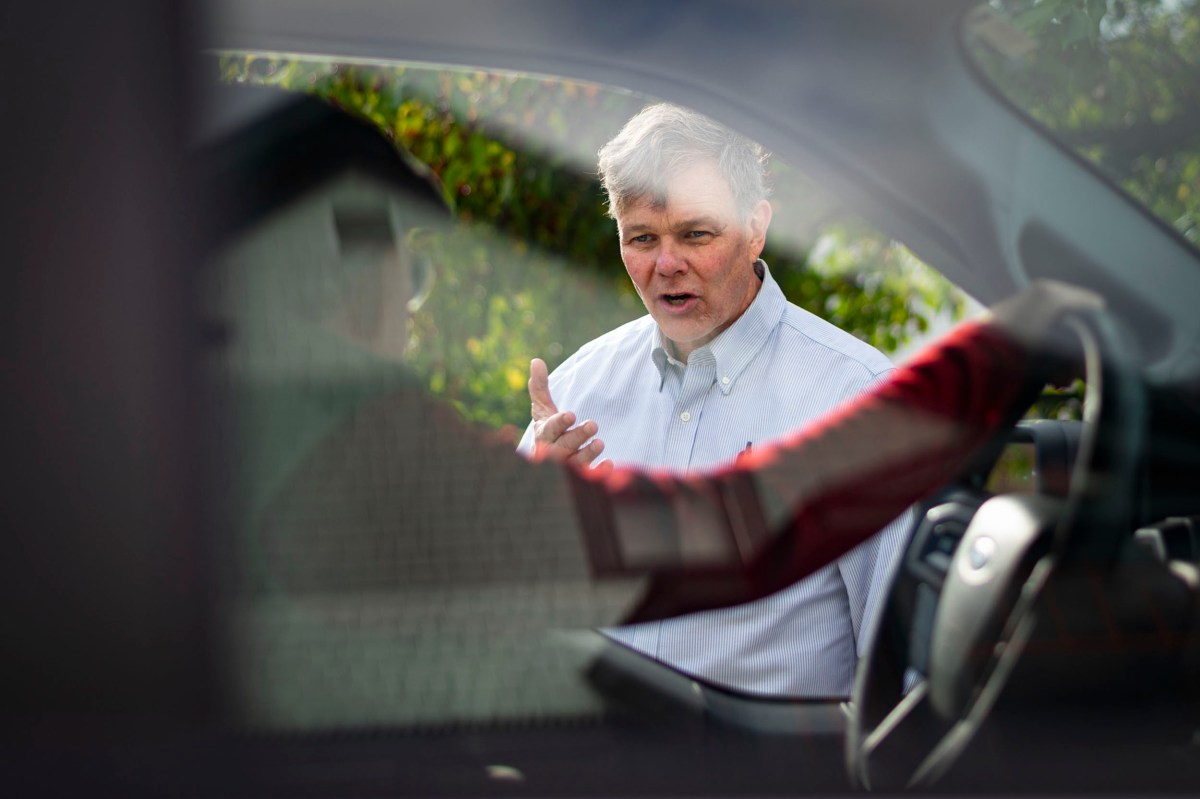
Walsh also has raised complaints about the voting process for the charter, alleging that the changes to the charter should be voted on individually rather than grouped together.
Ufford-Chase and the council have repeatedly dismissed the concerns, and Ufford-Chase added that they have discussed the matter with the city attorneys.
The revised document clarifies mayoral powers, Ufford-Chase said, but it does not change day-to-day operations. It also increases annual stipends to $5,000 for the mayor, $3,500 for the president of the council, and $3,000 for each member, and sets their compensation to increase as inflation increases.
The path forward
One of Newport’s young entrepreneurs, Dani Grant, who opened a yarn store downtown just a week earlier, attended last Wednesday’s meeting. She said she has recently witnessed energy being poured into Newport’s downtown and she’s learned more about Newport’s evolution through her work at the historical society.
A recent example of this energy is an effort by community members to launch a food co-op.
Grant knew that downtown was the place for her business to be.
“As I go through our archives, I see a lot of pictures of how downtown used to be,” Grant said. “There were so many different shops and so much culture.”
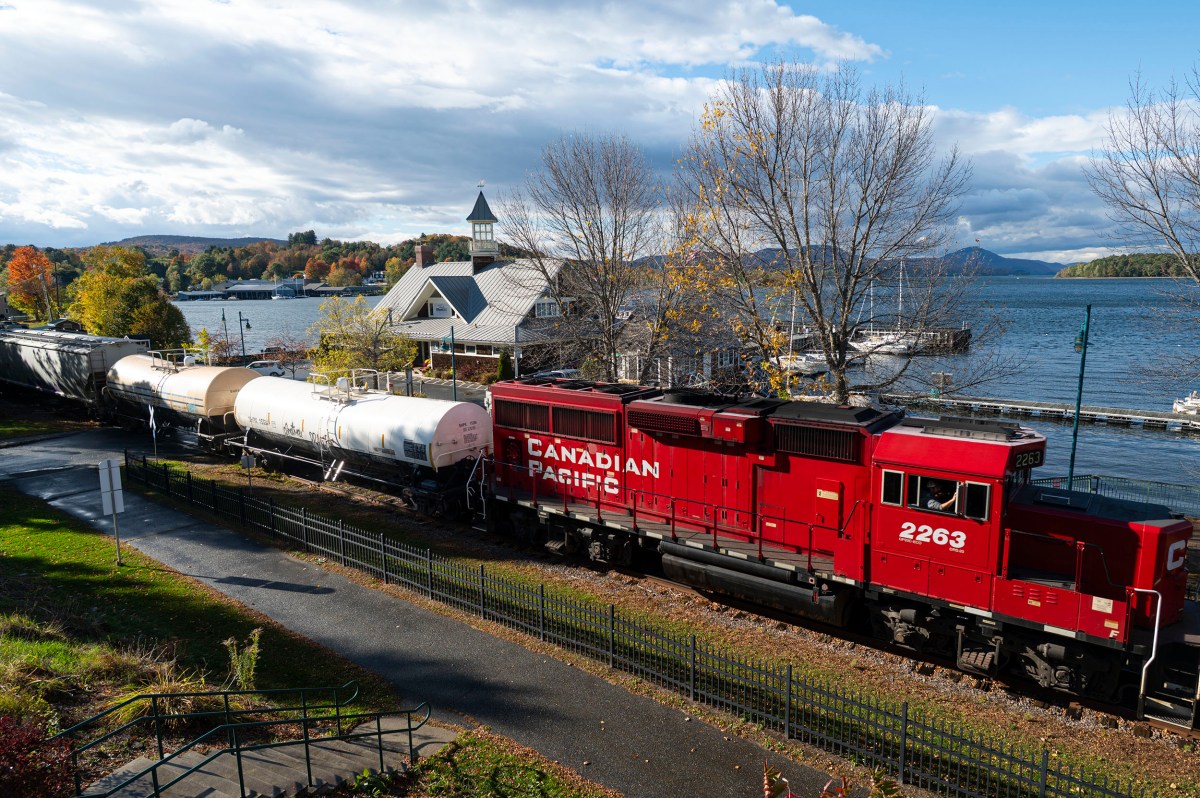
Ufford-Chase knows that reviving the community will not be easy, he said. But on summer evenings, he goes to downtown waterfront concerts on Lake Memphremagog, gazing out over 27 miles of water connecting his city to Canada.
“I sit on the lawn over there and listen to a band and watch the sun go down over the lake. And I think to myself, ‘If I had spent money to buy a plane ticket to Switzerland, I would be no less happy than I am right now.’
“And no more happy either.”

