

This story by Charlotte King was first published in the Brattleboro Reformer on Oct. 11, 2026.
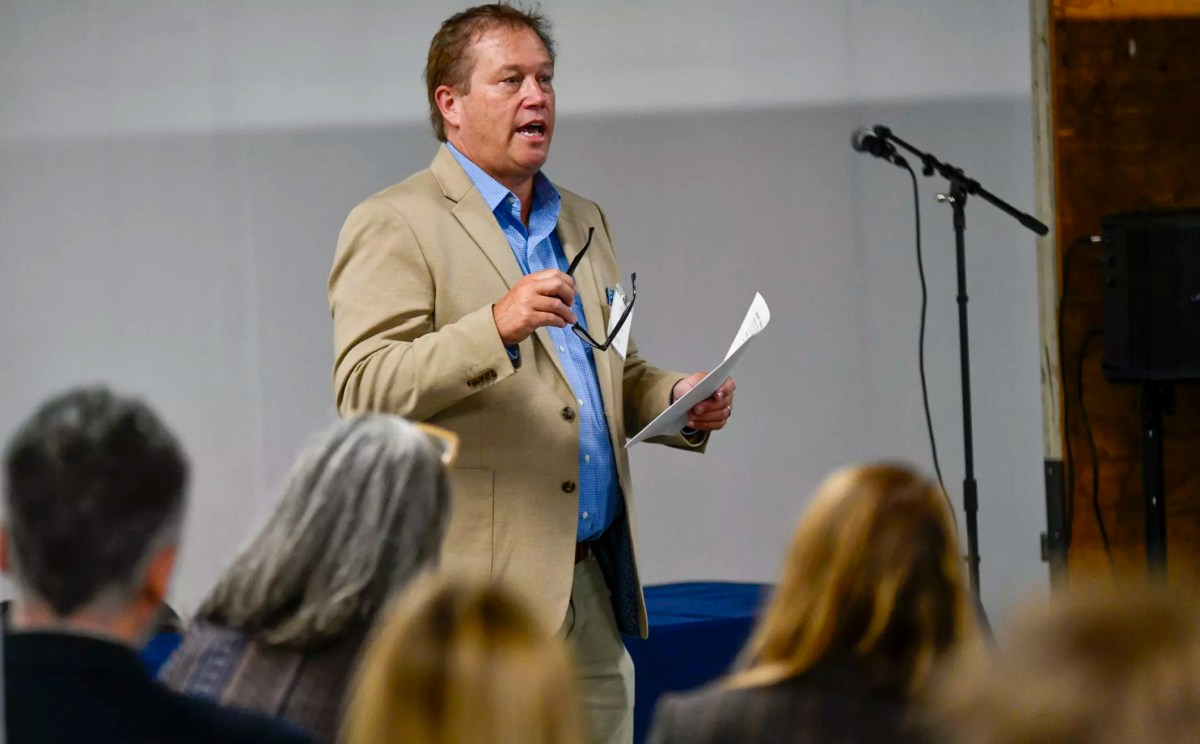
The Brattleboro Development Credit Corporation (BDCC) brought together employers, educators and government officials for a roundtable discussion about manufacturing on Thursday, ringing in October as Manufacturing Month.
The event featured presentations from educators at the Windham Regional Career Center (WRCC) and from the state’s Economic & Labor Market Information Director Mathew Barewicz, as well as panel discussions with state officials and educators and an open discussion with all present brainstorming about how to streamline the process of educating and employing people in the regional manufacturing industry.
BDCC Executive Director Adam Grinold said the goal was to get people from all sides of the matter in a room to start conversation about why manufacturing matters in southeast Vermont, what problems are facing the industry and how to find some shared solutions to those problems.
“We recognize our role in trying to bring everybody together,” Grinold said. “We have a real opportunity to lead as we see manufacturing start to decline, largely around some closures, but there’s opportunity, there’s need, and we need to make sure we’re following all of those.”
Barewicz’s presentation focused on data concerning changes in employment and population rates over the past 20 years. He said Vermont, adjusted proportionally to compare against the United States, surpasses the nation in its share of industry that is manufacturing. He also said one of the major contributing factors to the state’s population growth has been immigration.
“Seventy-five percent of our population growth over these last decades has been from people coming from abroad,” Barewicz said. “When you have a change in the federal policy about how many people are coming into this country, states like Vermont are going to feel problems.”
Barewicz said Brattleboro holds the biggest share of manufacturing industry in Windham County, and he emphasized the need to make the profession seem accessible to young people.
“When we’re talking to kids today, we’re changing the conversation, from not just finding a job or getting a career, but, ‘Hey, do you want to run your own business?’” Barewicz said.
He said there was a need for passion to drive successful employment.
“We have to get them excited about either the work they’re going to do or the mission of the organization,” Barewicz said.
Some discussion covered preconceptions about manufacturing, like involving lots of dangerous work or having limited upward mobility. WRCC Director Nancy Wiese said a lot has changed in the industry over time.
“We need students to buy into the fact that manufacturing is now really cool,” Wiese said. “Now, manufacturing is so clean, and it has so much to offer students.”
After hearing from leaders in both government labor relations and regional education, several attendees voiced a need to streamline and simplify.
“We need to have one door to knock on,” said Richard Normandin of Northrich, Inc. “A common goal as a region is really important.”
Commissioner of Economic Development Lyle Jepson said the limited population growth of Vermont makes every potential new employee important.
“When we’re only graduating four or five thousand kids, we’ve got to make sure that we keep all the kids in the state, going to our schools,” Jepson said. “Maybe we need to change how we work things, but we all need to meet them, shake their hands, tell them how important they are, create relationships to keep them in the state of Vermont. It’s a harder thing to do, because you can ski in Colorado [or] you can ski in Vermont, but it’s the relationships that are going to keep people here.”
