

This story by Susan Smallheer was first published in the Brattleboro Reformer on Sept. 21, 2026.
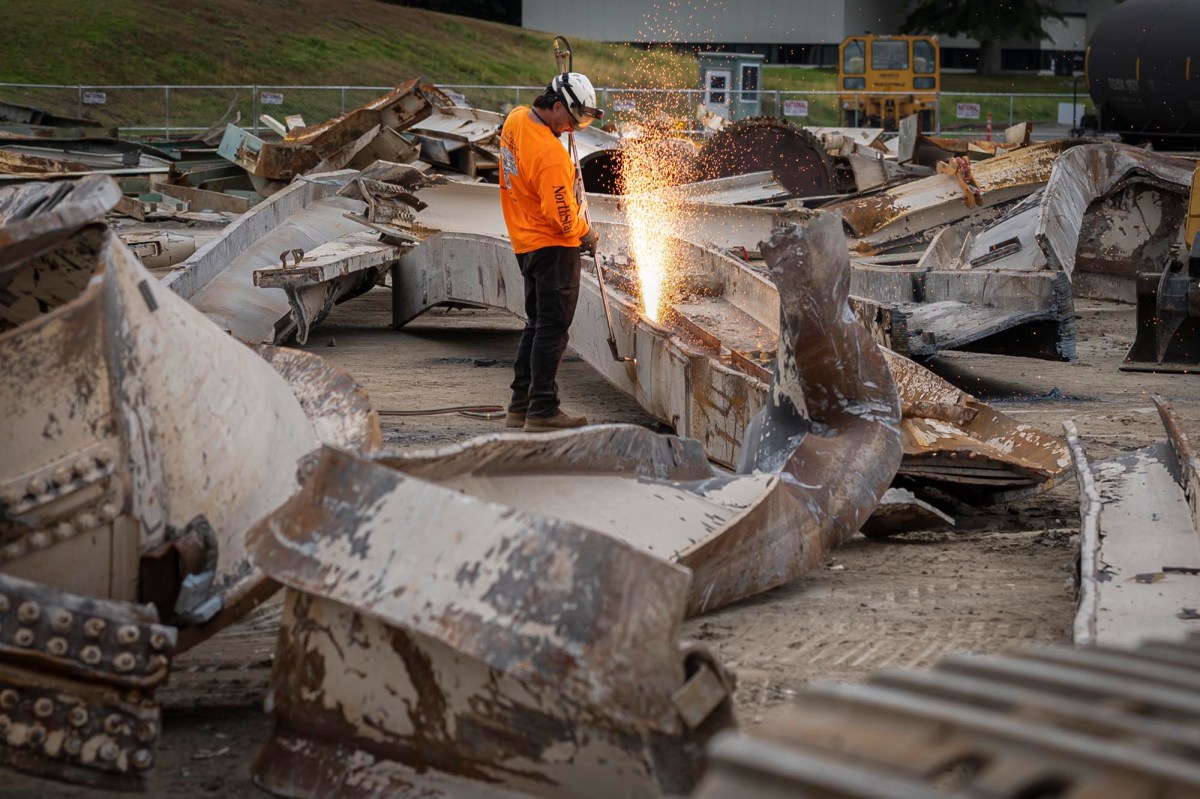
VERNON — The sound of jackhammering has largely stopped. And the view of the Connecticut River is frankly astonishing: Gone is the large, five-story pale green reactor building that has dominated the site for close to 50 years. There are no more giant industrial buildings at the former Vermont Yankee nuclear power plant, just what looks like an ordinary construction yard.
Decommissioning or demolition work at the reactor, which was shut down in 2016 by its then-owner Entergy Nuclear because it was losing money in the “deregulated” New England energy market, is fast approaching completion. Almost all of the $602 million decommissioning trust fund has been spent on demolishing the reactor and its affiliated structures and shipping the debris thousands of miles away.
During a tour last week of the site, Scott State, who until recently was the CEO of NorthStar Group Services, the owner of the 140-acre Yankee site, said the 10-year project was “99 percent done.”
State stepped down as NorthStar’s CEO in July to become its executive chairman and chief nuclear officer.
Along on the tour was NorthStar’s new CEO, Jeffrey Adix, who was promoted from his position at NorthStar as chief financial officer.
State said the project has used up almost all of the $602 million in the decommissioning trust fund NorthStar inherited when it bought Yankee in 2019.
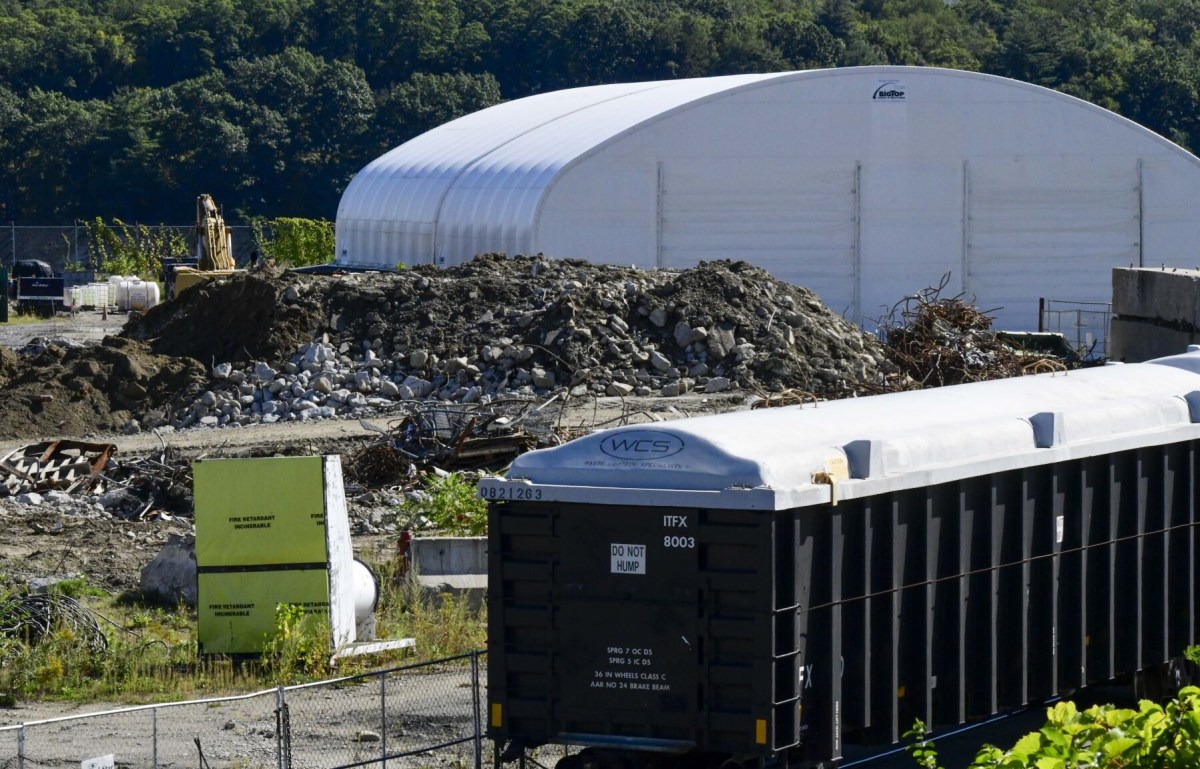
State said there is $8.5 million left to complete what needs to be done in the next several months. There is another fund for site restoration. Final work will be completed in 2027, three years ahead of NorthStar’s promised deadline of 2030.
Although construction and cleanup may soon be completed by NorthStar, in the parlance of the Nuclear Regulatory Commission the site can’t be “released” for potential reuse until it has reviewed NorthStar’s work — a review that State expects will take a couple of years.
All the concrete from the reactor building’s foundation and above-ground building, approximately 28,000 cubic yards, was shipped out of Vermont to Waste Control Specialists’ disposal site in Andrews, Texas, at the low-level radioactive waste site operated for Texas, Vermont and other waste generators.
The reactor’s foundation and walls were in some places 12 feet thick, and NorthStar has agreed to remove any concrete 4 feet below the surface.
During negotiations with the state over the sale of Yankee to NorthStar, it was agreed that the concrete would not be pulverized and used as fill on site, State said.
“Consistent with its obligations under the MOU (memorandum of understanding) entered into during the Public Utility Commission Certificate of Public Good process, NorthStar shipped all the concrete generated from excavating the reactor building superstructure, totaling approximately 28,000 cubic yards, to Waste Control Specialists’ disposal site in Andrews, Texas,” State said in a follow-up exchange.
NorthStar sourced the clean fill for the reactor building basement from a local Vermont quarry, State said. When excavation and fill of the reactor building site is completed to the 4-foot-below-grade-structure standard, NorthStar anticipates that it will have used approximately 28,000 cubic yards of locally sourced clean fill to restore the reactor building site.
Last week, there were still dozens of construction workers at the Vernon site, with NorthStar manager Corey Daniels estimating there were between 50 and 80 people on site.
One of the remaining projects that won’t be tackled until early next year is dismantling the plant’s water discharge structure, a non-nuclear concrete structure that would release the heated but not radioactive cooling water from Yankee’s cooling towers, and indirectly its reactor, back to the Connecticut River.
NorthStar anticipates completing physical decommissioning in 2027, State said.
“Following physical decommissioning, NorthStar’s team will work efficiently to satisfy all Nuclear Regulatory Commission requirements for partial site release,” he said.
The NRC typically hires a consultant to evaluate the work done by a decommissioning firm, and NorthStar anticipates completing both physical and regulatory decommissioning and site restoration by 2030. State anticipates the NRC will hire the Oak Ridge Institute for Science and Education, and that will be paid for by NorthStar.
“We pay for everything,” he said.
NorthStar largely won over the state’s support of its purchase in 2018-19 by promising to dismantle Yankee as soon as possible. Previously, the plan under Entergy was to put the plant into cold shutdown, a process the NRC called SAFSTOR, and start demolition and cleanup in about 60 years. The time would have allowed the decommissioning trust fund, which was invested in government bonds, to grow and radiation to decay. State said that none of the nuclear reactors shut down in recent years has gone into SAFSTOR.
NorthStar in 2018 said the $602 million was adequate to do the job, and it provided guarantees to the state in case it wasn’t. Those guarantees won’t be necessary, State said.
Back in 2016, the natural gas market made generating electricity in a nuclear power plant too expensive, State said, and Entergy eventually shut down and sold its reactors to get out of the business.
State said Entergy still operates nuclear power plants in the South, where the energy market is regulated.
Workers have already tackled the intake structure, which drew millions of gallons of river water to indirectly cool the reactor. In both cases, the river bank will be recontoured to its original slope, NorthStar officials said. “It’s not a rad thing,” State said, pointing out both structures had no exposure to radioactivity.
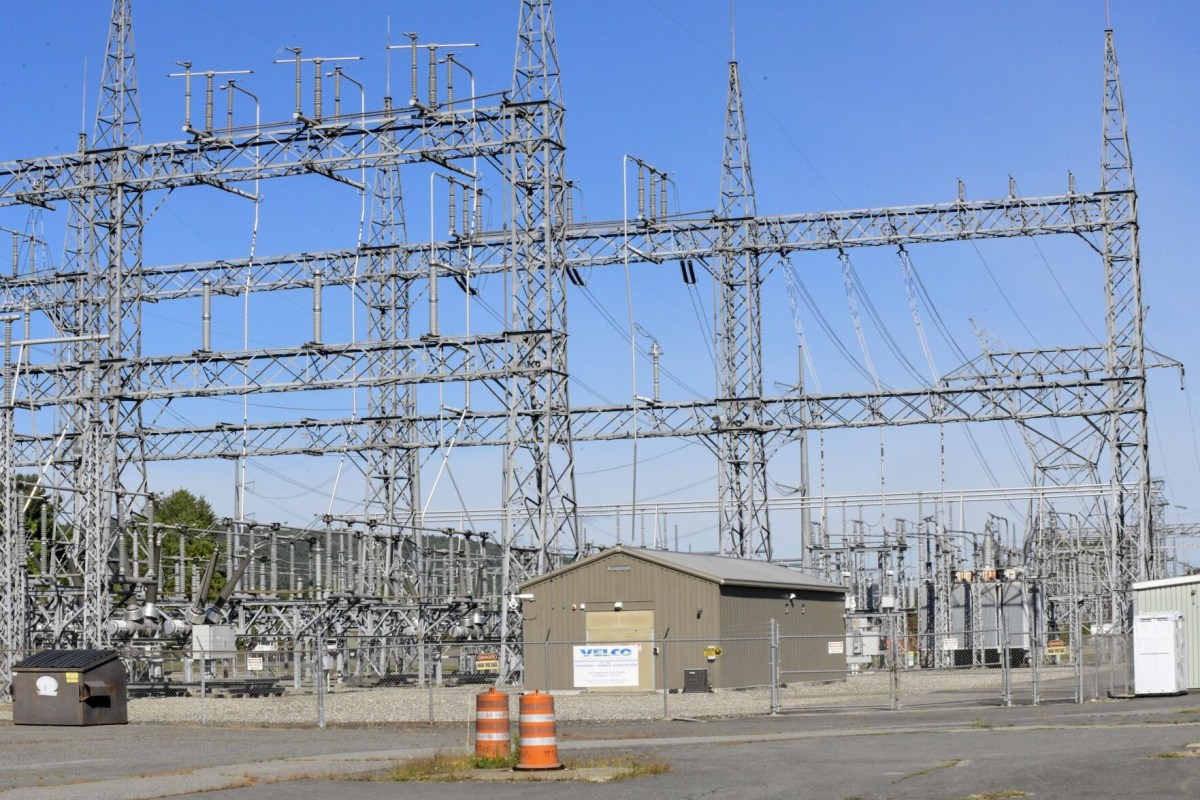
As a condition of last week’s tour, State and other NorthStar officials wouldn’t talk about the future use or development of the site or PowerTransitions, the Texas-based company that has a lease with NorthStar to study the site for potential future use. PowerTransitions is said to be exploring a battery storage facility, to take advantage of the adjoining power substation, owned by VELCO (Vermont Electric Power Co., which is a joint operation of Vermont utilities). PowerTransitions is also considering a data center and even a small modular nuclear reactor, although Vernon town officials have said that its focus is on a battery storage facility.
Although the large industrial buildings are gone, the large collection of giant steel and concrete casks — about 20 feet tall and containing the 42-plus years of spent nuclear fuel — remains at the north edge of the property. The casks will remain there for the foreseeable future until the federal Department of Energy creates a national repository and takes them away.
