
After years of nationwide concerns about teen mental health, the latest data from Vermont’s largest survey of its kind suggests that the situation for the state’s youth might finally be improving.
The Vermont Department of Health released a report on Aug. 18 showing that fewer teens say they feel depressed or anxious, and a smaller percentage of teens are vaping, drinking or using cannabis. Experts said that may be partly the result of a slow recovery from the mental health struggles of the Covid-19 pandemic.
“I do think some of this is, ‘Hey, our country went through this horrible event of a pandemic,’ and it affected all of us, including our youth and teens,” said Vermont Department of Health Commissioner Dr. Rick Hildebrant. “We’re seeing a bit of a return to less of that poor mental health that we were seeing around the country and around the world.”
The data comes from the 2025 Youth Risk Behavior Survey, sent to high school and middle school students around the state every two years since 1995. More than 15,000 students completed surveys last year.
Despite progress, Hildebrant noted that mental health issues in teens were still “way too high.” One in four high school students reported poor mental health, down from one in three in 2023.
“I think it’s the collective desire of every parent to have children who are able to live their best life,” Hildebrant said. “And when you are struggling from depression and mental health disorders? That’s a concern, and to have the number be as high as it is, (is) alarming and concerning to me.”
Also concerning are the disparities reported for girls, LGBTQ+ teens, and high school students with educational disabilities. Female high school students were more than twice as likely as male students to report poor mental health. LGBTQ+ students were far more likely than their peers to feel sad or anxious, to self-harm or make a suicide plan.
Hildebrant said those groups were also less likely to say that they feel like they mattered in their community, and more likely to drop out of activities due to poor mental health.
“This feeling of connectedness — there’s more and more research showing how important that is to your self-esteem and to your mental health,” he said.
Dana Kaplan is the executive director of Outright Vermont, an organization that supports LGBTQ+ youth. He said it was important to highlight that queer teens’ poor mental health “is not based on anything being wrong with a young person’s identity,” but says more about “the level of bullying, harassment, rejection (and) isolation” they’re navigating.
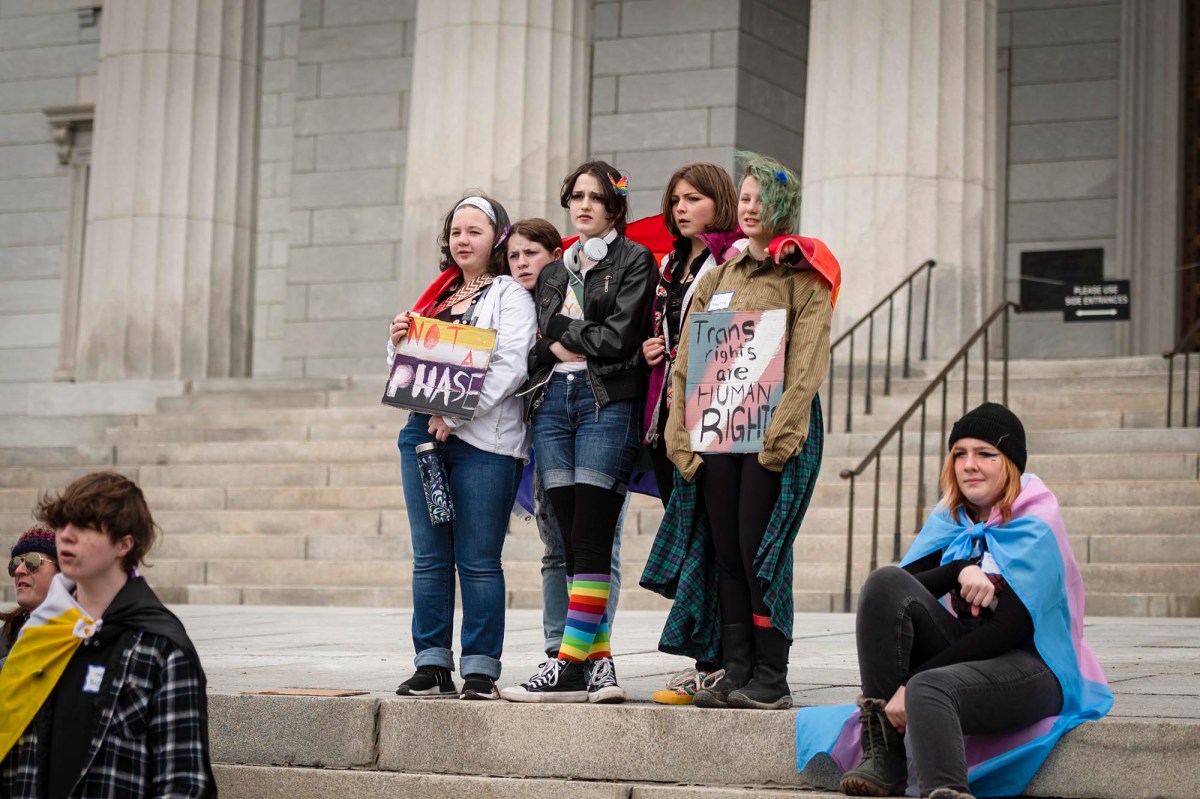
Vermont has great policies to protect LGBTQ+ people, “but there is a real gap between the actual lived experience of young folks and what those policies say on the books,” he said.
“There’s things that happen on a daily basis, of being misgendered, or not being referred to by your right name,” Kaplan said. “(We get) phone calls from young folks saying, ‘Am I allowed to go to school and be who I am?’”
“Whack-a-mole”
Another highlight from the survey is that e-cigarette use among Vermont’s teenagers has dropped precipitously from pre-pandemic levels. About 14% of high school students reported using a vape or electronic cigarette in the past 30 days, down from 26% in 2019.
In total, 18% of students said they’ve used any form of tobacco, including vapes, cigarettes, cigars and smokeless tobacco pouches, according to the survey.
Elias Klemperer, a researcher at the University of Vermont who studies tobacco use, said the drop among Vermont’s teens was a “very good sign” that parallels a national fall in e-cigarette use. “Anytime we can keep kids from using nicotine products, that is a good thing,” he said.
Hildebrant praised youth-led anti-tobacco initiatives like Unhyped for spreading awareness of the harms of vaping. “It’s peer pressure in the positive direction,” he said.
But it’s not entirely clear whether the drop signifies a shift away from tobacco products entirely, or just a shift to other tobacco products. Cigarette use remained low — just 6% of high school students — but early reports have shown a rise in smokeless tobacco pouches from brands like Zyns.
Jill Sudhoff-Guerin, a lobbyist and spokesperson for the Coalition for a Tobacco Free Vermont, said it can feel like a “game of whack-a-mole” trying to keep up with new products. Along with pouches, she noted that e-cigarettes are coming on the market that look like toys or phones.
“This industry is highly, highly skilled at communications, highly skilled at marketing,” she said. “And kids know when things are made for them.”