

Updated 4:57 p.m.
BURLINGTON — Burlington city councilors are requesting the governor take new steps to help the Queen City address homelessness and drug use downtown.
The request from city officials comes in the form of a resolution, which Burlington city councilors approved on a voice vote Monday night with support from Mayor Emma Mulvaney-Stanak.
In a 10-point list, the resolution recommends ways for Gov. Phil Scott to respond to the city’s persistent struggles with homelessness and drug use. Some of the city’s requests are as broad as requesting more police support while some are as prescriptive as hiring three staff members at an inpatient care facility.
The resolution takes no action on its own. It solely directs the mayor to bring the city’s requests to the governor. Mulvaney-Stanak said in an interview Tuesday that she is not sure when she will meet with Scott.
The resolution is the city’s most recent attempt in a long — and at times divisive — battle to address its struggles. The debate has at times put state leaders at odds with the mayor. And recently, it’s divided Democrats and Progressives on the city council.
The latest resolution, though, seems to keep the peace among the city’s political leadership. Ten of the council’s 12 members from both the Progressive and Democratic parties proposed the resolution and it was drafted by the Progressive mayor’s administration.
“This is what is most urgently needed and will do the most to meaningfully advance our community health and safety goals,” Mulvaney-Stanak said Monday during her routine update to the council on city affairs.
The mayor said that Burlington is dealing with a “trifecta of issues”: homelessness, untreated mental illness and substance use disorder. And those issues, she said, extend beyond the boundaries of the city and state.
“These problems are not within the capacity of any single municipality to solve without significant state action,” the resolution notes.
The city’s request to the governor comes after he recently directed Vermont State Police troopers to patrol downtown Burlington without first consulting the mayor. Violent crime is down this year in the Queen City, according to its data, although a spate of violent incidents downtown earlier this month left one dead.
Scott said during a Tuesday press conference that at first glance he was “disappointed” in the resolution, although he had yet to read it in full.
“We’ve done a lot for Burlington,” he said, and other parts of the state that are less affluent are hurting too.
Before the council’s vote Monday, Jason Malucci, the governor’s director of policy development and legislative affairs, said in an email that the governor is always willing to have conversations on how to support Vermont communities.
“It is also important for communities like Burlington to evaluate policies that they have implemented that have contributed to the current climate,” Malucci said.
The concerns laid out in the recent resolution are similar to those raised by Mulvaney-Stanak last September when she called on the governor to do more to help Burlington. She blamed Burlington’s struggles — in part — on Scott’s decision to allow mass evictions from state-sponsored motel rooms last summer.
Last year, Scott initially responded by saying he wasn’t sure what resources his administration would be willing to provide until the city increased law enforcement and cracked down on drug use.
Scott later announced a plan to put state resources toward social services, judicial resources and policing in the Queen City for about three months. Shortly after the initiative, state officials largely praised his efforts as a success.
During Monday’s city council meeting, Mulvaney-Stanak commended parts of the governor’s plan — but emphasized that it “omitted” addressing homelessness.
The city’s proposed plan, she said, fills gaps that remain in the wake of the governor’s earlier interventions.
Housing resources were at the top of the list in the resolution.
The first request outlined in the resolution asks the governor to direct the Vermont Agency of Human Services to aid in the process of securing a location and finding staff for a 100-bed emergency shelter in Chittenden County.
The Champlain Valley Office of Economic Opportunity, or CVOEO, and the Champlain Housing Trust are in the process of finding a location for the proposed shelter. The organizations hope to open the shelter before this winter and operate it year-round.
The resolution also asks the governor to direct the human services agency to support daytime spaces for unhoused people, namely CVOEO’s Community Resource Center. It also requests expediting processes and resources for “municipalities with disproportionate unhoused populations” to access state support.
Along with housing resources, the city is requesting more statewide help with acute mental health care.

The resolution asks the Vermont Department of Health “to more strongly partner” with the city, especially to support its syringe service programs. Another request asks for four more inpatient beds and three more positions to support recovery services for inpatient care at an unspecified Vermont Department of Mental Health site in central Vermont.
The resolution appears to refer to the Vermont Psychiatric Care Hospital in Berlin, which recently cut its staff and beds.
Naming an intention to “address the root causes of recidivism,” the city is asking for more resources to pair social services with court processes, including expanding the capacity of the county’s treatment court docket, which focuses on offering some defendants with rehabilitative alternatives to incarceration. The city also wants the state to prevent juveniles from getting involved with drugs and gun possession.
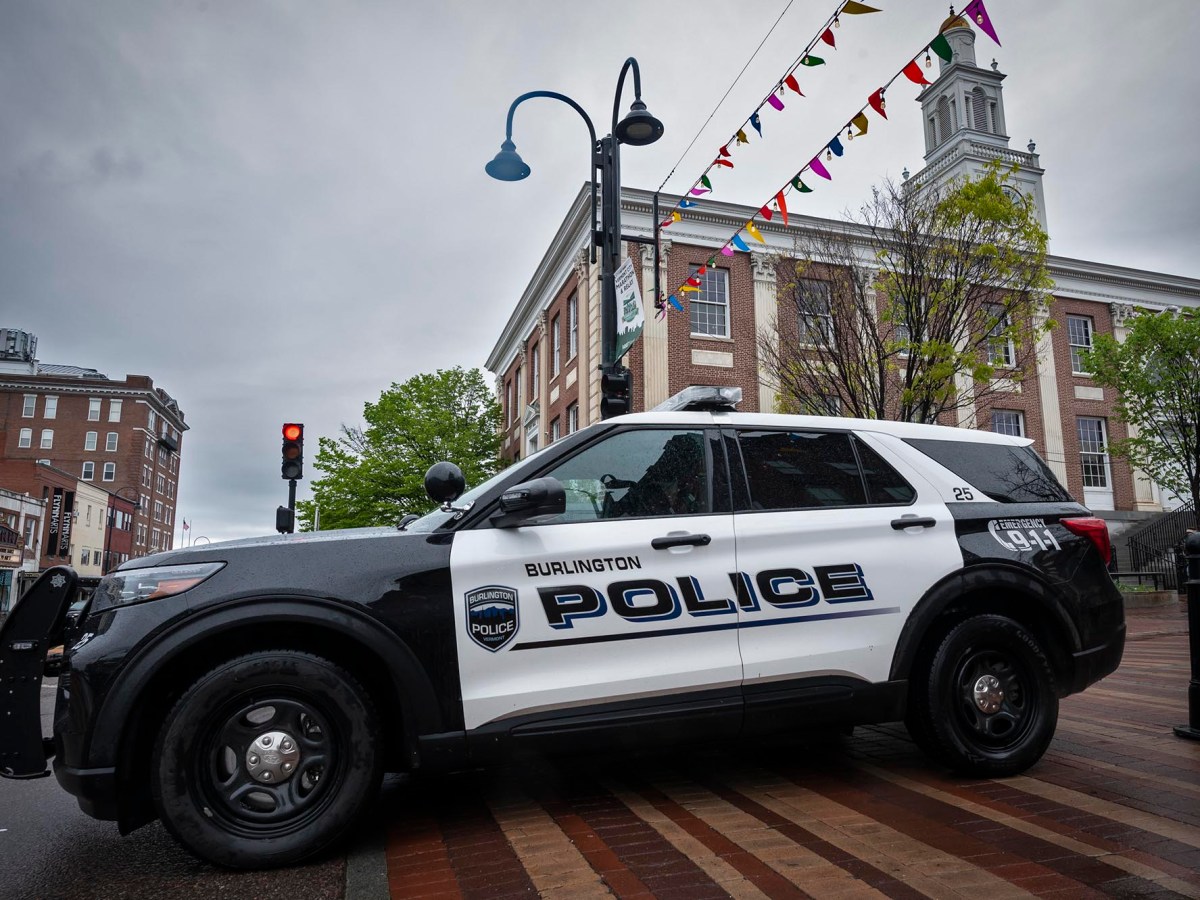
The council also asked for coordinated state law enforcement support for city police officers cracking down on drug trafficking, traffic enforcement and retail theft. That request comes as Burlington tries to recruit more local officers and expand its police force.
City Councilor Laura Sánchez-Parkinson, P-Ward 3, said ahead of the vote that she sees Burlington’s issues downtown as decades in the making, exacerbated by federal divestment from healthcare and housing resources.
“This is the moment that calls for shared responsibility and coordination across the state. We cannot run from the root causes that continue to take our community in a downward spiral year after year,” she said.
Shaun Robinson contributed reporting.