


Creditors in the Vermont Roman Catholic Diocese’s Chapter 11 financial reorganization case are fighting a church plan to sell Rice Memorial High School to supporters to protect the grade 9-12 South Burlington campus from potential liquidation.
In a U.S. Bankruptcy Court filing Monday, lawyers for a creditors’ committee that represents more than 100 clergy abuse claimants questioned the proposed $4.3 million price tag for Rice’s 42-classroom building and 27 acres of athletic fields, parking areas and wetlands. The figure is only 14% of the $30.5 million value reported in a recent church-commissioned appraisal.
“The proposed sale is a functional insider transaction,” the claimants’ counsel wrote in the filing. “The diocese did not list the property. It did not retain a broker. It did not solicit a single competing offer. It contractually promised the buyer that it would not do so. And it now asks the court to bless the result as ‘the highest and best offer,’ a characterization that is true only in the trivial sense that it is the sole offer the diocese permitted itself to receive.”
The creditors’ committee wants the court to limit any sale to a public offering in hopes of raising more money for clergy abuse settlements.
“If the purchaser’s offer is truly the best available, a competitive process will confirm it and the purchaser will prevail,” attorneys wrote. “If it is not, the (diocese), and the over 100 survivors of childhood sexual abuse who are the principal creditors in this case, will have been spared a substantial and irreversible loss.”
Judge Heather Cooper is scheduled to consider the issue at a hearing in Burlington on Sept. 1.
The creditors’ filing comes a month after the state’s largest religious denomination asked the court to approve a private sale of the 400-student campus to a nonprofit entity of supporters identifying themselves only as RMHS Inc.
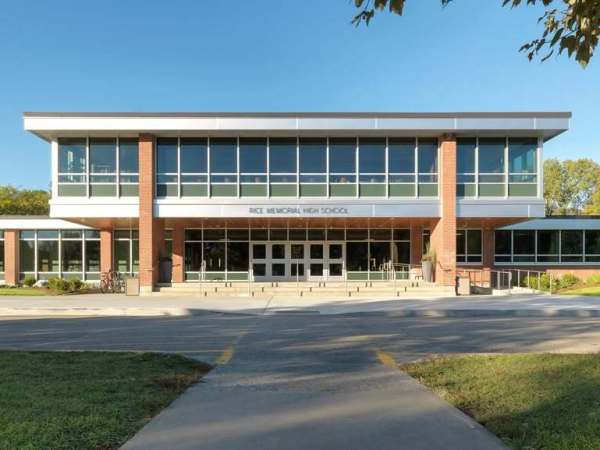
“Significant concern exists that a fully public sale process would severely and negatively impact student enrollment at RMHS, which the purchaser indicated would force it to reduce and potentially withdraw its offer,” church lawyers wrote in their request. “Additionally, the diocese will not be required to make commission payments to any brokers or agents, increasing the net proceeds available for the bankruptcy estate.”
The diocese filed for Chapter 11 protection in the fall of 2024, arguing that a past series of nearly 70 priest misconduct settlements had reduced its bank-and-building holdings by half — to about $35 million — with more than 100 other abuse claims dating as far back as 1950 yet to be resolved.
As part of the process, the church has received court and creditor permission to publicly sell a few of its properties, including its South Burlington headquarters for $3.13 million and Rutland’s former Loretto Home senior living facility for $1 million.
Behind the scenes, the diocese has spent the past year discussing a Rice sale with unnamed “dedicated donors,” who initially offered $2 million before increasing the total to $4.3 million after negotiations, according to court records.
“The proposal is intended to preserve Rice’s Catholic identity while providing a strong foundation for future generations,” Christina DeGraff-Murphy, chair of the Rice School Board, said in a statement to VTDigger. “Because this matter remains subject to ongoing legal proceedings, we are limited in our ability to comment further at this time.”
Rice began in 1917 as Cathedral High School in downtown Burlington before moving to a new name and its current South Burlington location in 1959, according to its online history.
Rice is one of three Catholic high schools in Vermont, alongside Mount St. Joseph Academy in Rutland and St. Michael School in Brattleboro. The diocese hasn’t announced any plans for the latter two institutions or its 10 schools for elementary and middle grades.
The potential sale comes as attorneys for the church and clergy abuse claimants are in mediation over who should have access to an estimated $500 million in other local parish properties and possessions that were placed in trusts in 2006. Under federal law, both the court and creditors must approve any Chapter 11 reorganization plan.
