


With less than a month until Vermont’s general election, campaign cash is rolling in from political action committees and a group backing a proposal to enshrine the right to union organizing in the state Constitution.
Of the roughly 70 PACs set up in Vermont ahead of the November election, the top five largest spenders have so far put a combined $233,265 into races for statewide office, the Vermont House and Senate and one of the two ballot questions voters will decide on, according to filings with the Vermont Secretary of State’s Office.
Meanwhile, the group backing a pro-labor ballot measure, called Vote Yes for Workers Rights, reported spending $552,000 so far this election cycle.
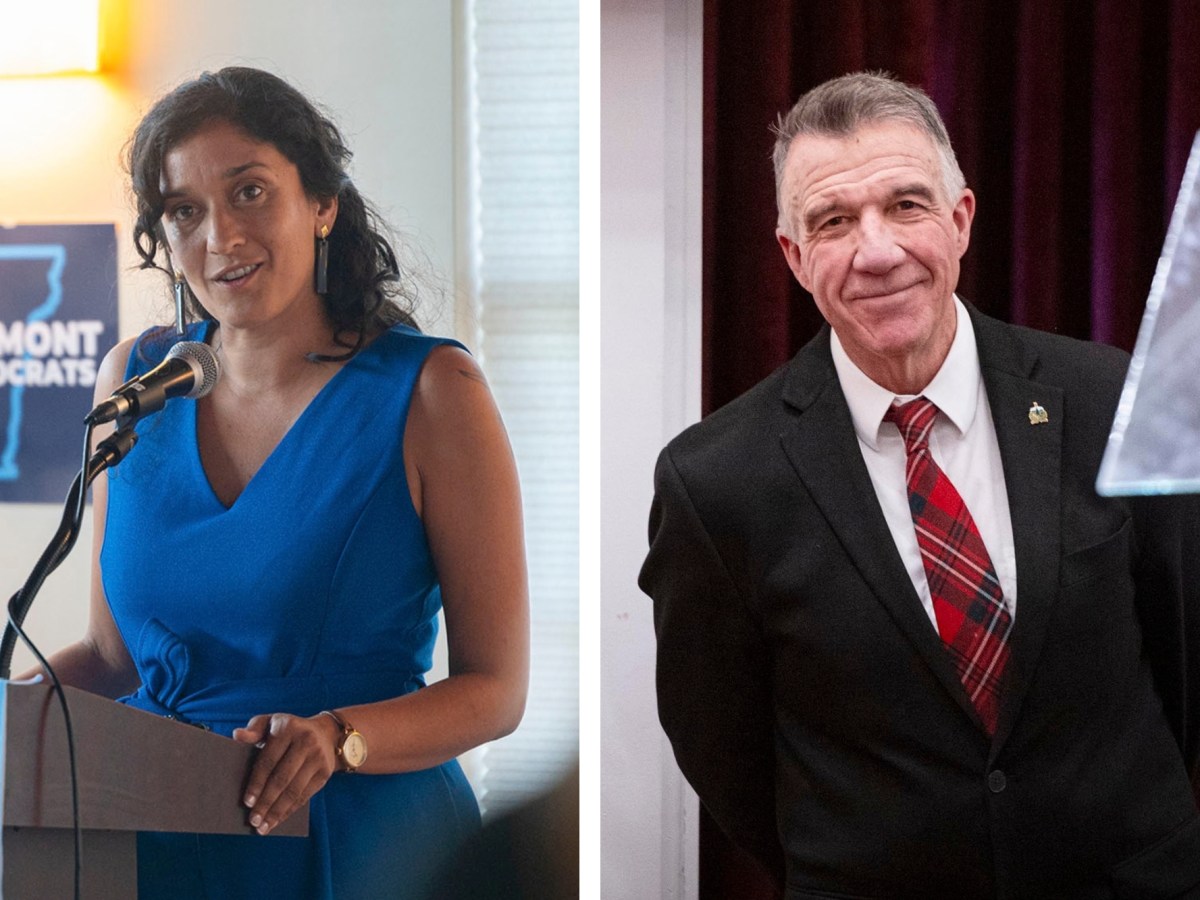
One PAC filing also suggests that Amanda Janoo, the Democratic nominee for governor, has the attention of a national organization focused on electing governors of that party. But her campaign told VTDigger she does not want the group, called the Democratic Governors Association, spending money on her behalf.
Here’s a look at which PACs have put the most money into Vermont campaigns, as of the latest Oct. 1 filings.
The top-spending committee so far this election is VPIRG Votes, the campaign arm of the Vermont Public Interest Research Group. The group is based in Montpelier and runs one of the largest lobbying operations in the Statehouse during the legislative session, focusing largely on environmental and consumer protection laws.
VPIRG has spent $66,100 so far. Of that, it directed at least $28,500 to 40 Democratic and Progressive candidates for statewide office and the House and Senate.
The largest single contributor to VPIRG Votes so far is David Blittersdorf, a renewable energy developer who founded the Hinesburg wind company NRG systems and later the Williston solar equipment manufacturer AllEarth Renewables. He’s contributed the maximum amount allowed under state law, $5,180.
The next-highest amount of PAC spending has been on the Republican side: an organization called Rutland GOPAC. The committee’s treasurer is Peter Fagan, a former and longtime state representative from Rutland City.
So far this cycle, Rutland GOPAC has spent $62,170, including at least $26,460 on 18 Republican candidates for the House and Senate in districts around Rutland County.
Its largest contributor is Casella Waste Systems, the state’s largest trash hauler. Casella, also headquartered in Rutland, sent GOPAC $5,100. The company itself has also sent money to a number of Republican and Democratic candidates this election cycle, state filings show.
The third-highest-spending PAC so far this year has a more generic name: “Democrat, Republican, Independent Voter Education.” It’s the campaign arm of the International Brotherhood of Teamsters, one of the largest labor unions in North America. The union represents more than 900 workers in Vermont across a wide array of sectors, according to its website.
The Teamsters have spent $50,000, not on any one candidate but on Vote Yes for Workers Rights, the campaign urging people to vote for Proposal 3. That’s the ballot question asking voters whether to enshrine workers’ rights to organizing and collective bargaining in the state Constitution.
Of the $552,000 that Vote Yes for Workers Rights reported spending so far in this election cycle, half was for advertisements and a quarter was for surveys, the group’s filing shows.
A technical glitch had prevented the report from appearing in the state’s campaign finance database earlier this week — but the group filed its report by the required deadline, according to Gordon Merrick, an election administrator at the Secretary of State’s Office.
Another Republican-aligned committee, Common Sense Leadership PAC, has spent the next-highest total, about $33,000, on this year’s election so far. The PAC has been supporting Republican candidates in the state for at least the past decade.
This election cycle so far, it’s given at least $27,620 to 30 House GOP candidates. It also sent $5,000 to a leadership committee supporting GOP Senate candidates.
One of Common Sense PAC’s top donors, to the tune of $5,100, is the major tobacco and nicotine pouch manufacturer PMI, short for Philip Morris International. The other is Rutland GOPAC, which contributed the same amount.
The fifth-largest spender among PACs so far this year is notable for the fact that it has not reported spending money on Vermont elections since 2020.
The PAC, “Our Vermont,” has spent $22,000 so far this year on consulting fees as well as surveys conducted by a firm based in Washington, D.C. But what’s most interesting is that in late September, it reported receiving $40,000 from the Democratic Governors Association, the national group that provides cash and campaign strategy to elect governors of that party.
Our Vermont has $73,360 remaining as of Oct. 1.
Kevin Donohoe, a spokesperson for the Democratic Governors Association, said in a statement Wednesday that the organization is “closely watching Vermont for opportunities for a competitive race.”
“Under Phil Scott’s leadership, everything from heating to housing has become too expensive, and Amanda Janoo is running to finally break with this failed status quo and deliver on affordability,” Donohoe said.
But Neil Rohan, a spokesperson for Janoo’s campaign, indicated Wednesday that Janoo wasn’t interested in the national organization’s support.
Janoo is not coordinating with the governor’s association, Rohan said in a statement, and “Amanda has been clear: she does not support outside interest groups getting involved in Vermont politics.”
Janoo has raised more money, at this stage in the race, than Zuckerman or any other Scott challenger over the past decade Scott’s held his current job.
Recent polls also show Janoo has generated significant momentum in her race against the incumbent Republican. On Wednesday, Janoo scored an endorsement from U.S. Sen. Bernie Sanders, I-Vt., who has been endorsing progressive candidates around the country over the past year. His backing for Janoo’s campaign could give her a boost in name recognition, which she’ll need against a five-term incumbent in Scott.
It’s far from guaranteed that will translate to a win, though. Sanders has endorsed the Democratic candidate in three of the five previous races Scott’s run for governor: Sue Minter in 2016, Christine Hallquist in 2018 and Zuckerman in 2020. All three lost to Scott and by wider margins each time.
Vermont’s general election is Nov. 3. The Secretary of State’s Office said in a press release Wednesday that ballots have now been mailed out to every registered voter.
