

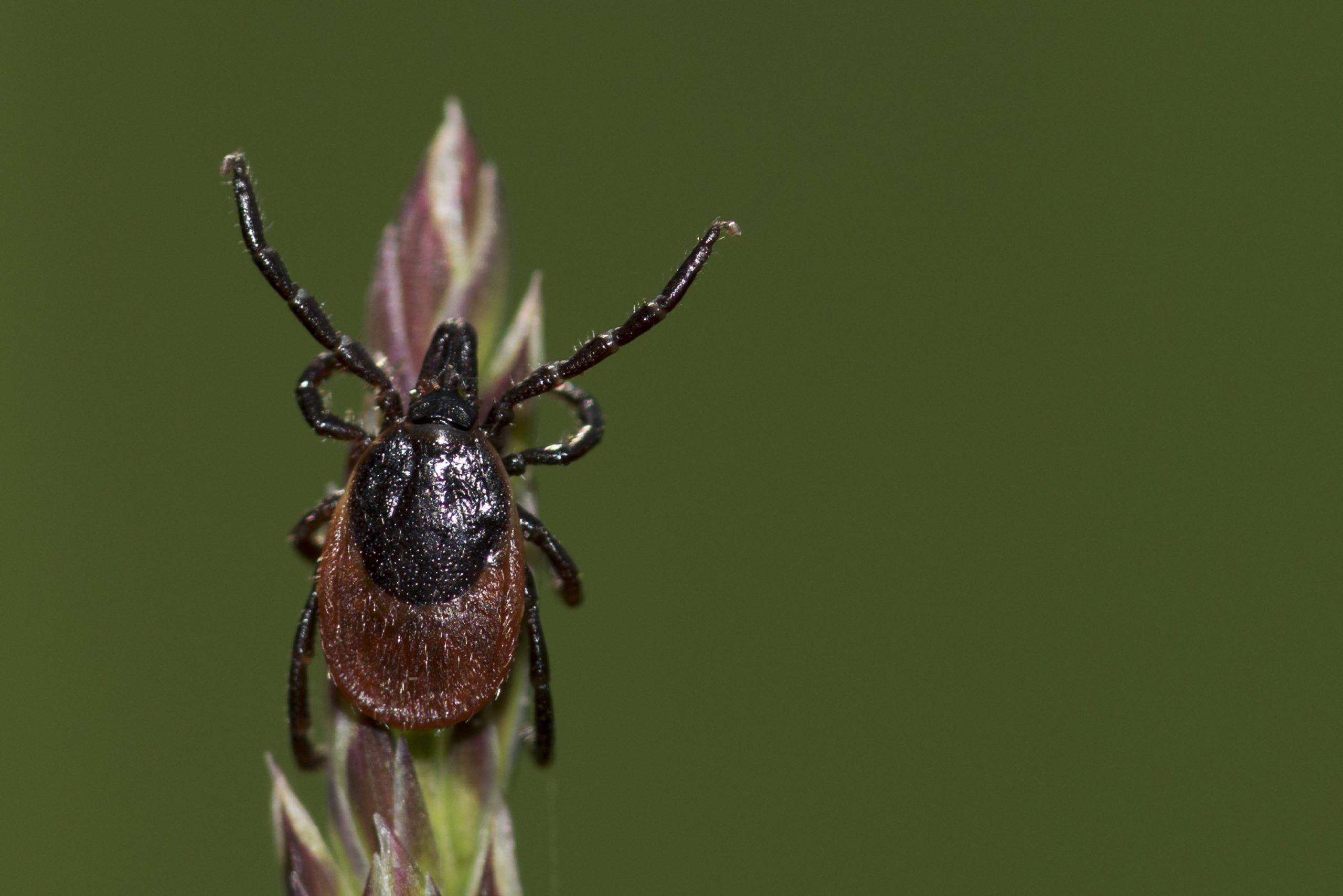
Patti Casey remembers some news organization calling her job one of the “ten worst jobs in the world, ever.”
But to Casey, “It’s kind of cool.”
Casey is director of a Vermont Agency of Agriculture program tasked with monitoring the state’s tick population. So from spring to early summer, her team goes to the most tick-infested places they can find: meadows, cornfields, cemeteries, forest edges, stone walls and anywhere else ticks like to “quest.” That’s when they throw out their arms, waiting to hitch a ride and find a potential blood meal.
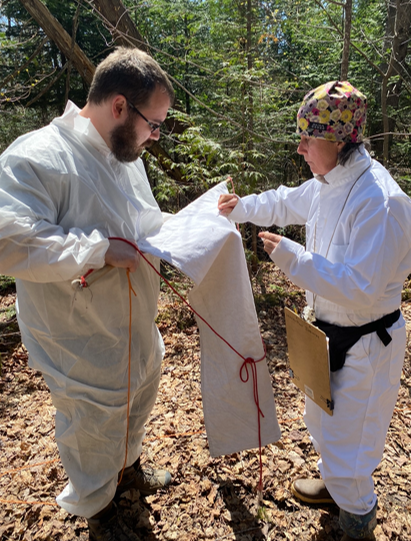
Casey dons light-colored, protective clothing from head to toe. In pairs or small groups, her team drags pieces of fabric — big, white flags — behind them, then collects any ticks that latch on.
The program has collected roughly 25,000 ticks with this method over the past decade. The data it’s collected is critical for public health officials to understand the prevalence of diseases like Lyme disease, anaplasmosis and babesiosis.
“We do need to know what is here, because if somebody gets sick and goes to the doctor, they need to know what to look for,” she said.
Lyme disease, in particular, is common in Vermont. From 2020 to 2024, 51% of the deer ticks the agriculture agency has tested were positive for Lyme disease. And that prevalence has translated into real risks for Vermonters. In 2025, the state Department of Health reported 2,246 Lyme disease cases based on lab testing results, far higher than it used to be.
In fact, Vermont has the second-highest reported rate of Lyme Disease in the nation, just before Rhode Island, another New England state, according to data from the U.S. Centers for Disease Control and Prevention.
But it wasn’t always this way, according to CDC data. The number of Lyme disease cases in the Green Mountain State has risen significantly since the 1990s.
Natalie Kwit, a state public health veterinarian at the Vermont Department of Health, said ticks as a whole, and disease-carrying ticks in particular, have expanded northward over the years from the mid-Atlantic region into New England.
“We’re kind of at that northern leading edge of the multi-state regional incidence of tick-borne illnesses,” she said.
But other changes have led to increased diagnoses, too. Increased awareness of Lyme Disease might be driving more people into the doctor’s office to get checked out, and more doctors to test for it, Kwit said.
Climate change has also expanded the length of time that ticks are active. In fact, Casey has found them during mid-winter thaws in January and February.
“As soon as it’s above freezing, all bets are off,” she said.
There may also be more human-tick interaction than there used to be, thanks to suburban lawns and new recreation paths and spaces.
“Vermont is doing something really great, which is trying to appeal to a younger population by putting in a lot more trails, town forests are proliferating, people are putting in trails and bike paths and stuff,” Casey said. “Which is awesome, but those are places where ticks are going to be along the edges.”
She emphasized that the trend shouldn’t discourage the growing movement of planting native species in local lawns. Just make sure to leave a wide margin around pathways and places where people spend time.
“Pollinator protection does not have to be in conflict with tick protection,” she said.
“The full rigamarole”
Working in Vermont’s tick hotspots means that Casey takes every measure she can to prevent tick bites. That starts with long, protective layers of clothing treated with permethrin, a federally approved insect repellent.
Her pro tip for Vermonters: As soon as you get home, toss every article of clothing into the dryer and hop into the shower. The dryer’s heat kills any ticks stuck on your clothes, while the shower helps you wash off unattached ticks or catch attached ones.
The health department has detailed guidance online on how to check for or remove an attached tick. Indeed, they can be tricky to find. The smallest ones are “smaller than a poppy seed,” Kwit said.

If you are bitten, depending on the type of tick and the time of exposure, you might want to seek post-bite antibiotic treatment, Kwit said. She recommended contacting your health care provider to find out whether that’s a good idea for you.
After a bite, keep an eye out for symptoms such as a rash, fever and joint pain, according to the health department. While Lyme disease is the most common tick-borne illness, your doctor might consider rarer illnesses such as Hard tick relapsing fever and Powassan virus disease.
There’s some good news. Alpha-gal syndrome, an illness that can cause an allergy to red meat, is not likely to occur in Vermont. Out of the tens of thousands of ticks Casey has caught, only five have been the species of tick that causes Alpha-gal.
And if you do get bitten, one small upside is that you could end up contributing to science. The Agency of Agriculture allows any Vermonter to mail in ticks preserved in alcohol for free identification.
“That’s useful information for people if they get sick, because they can go to the doctor and say ‘Yes, I know it was an adult female black legged tick,” which is the highest-risk tick for disease, Casey said.
Casey said fear of tick bites shouldn’t prohibit Vermonters from enjoying the beautiful nature the state has to offer.
“I don’t love coming back in and going through this full rigmarole, but I love being outdoors more than I hate that stuff,” she said. “There are ways to protect yourself and still enjoy the outdoors.”
