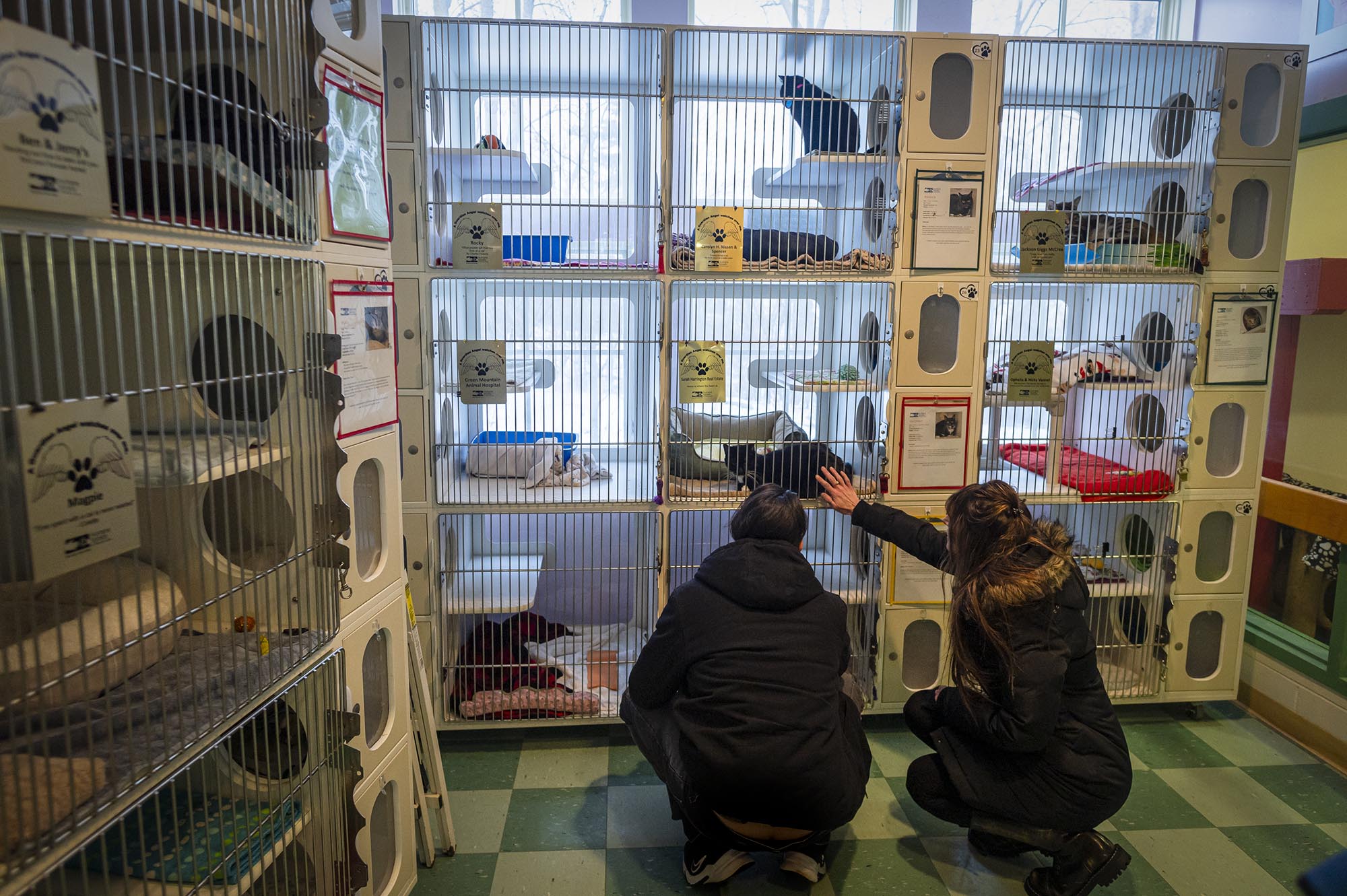
Two bills aimed at improving the animal welfare system in Vermont have passed the House and are now being considered in Senate committees.
One bill, sponsored by Rep. Chea Waters Evans, D-Charlotte, would require animal shelters, rescues, breeders and any person importing animals into Vermont to register with the Animal Welfare Division. The bill, H.841, would also require wolf hybrids to be spayed or neutered and allow shelters to sexually sterilize stray cats brought in after one day.
“It’s not just about animals, but it’s about public health and public safety at large,” Waters Evans said of the bill, which is now in the Senate Government Operations Committee.
Cases like the repeated seizures of horses from a Townshend farm and the death of goats in Charlotte spotlighted the problems with the state’s animal welfare system, and spurred Waters Evans to sponsor the bill that created the Animal Welfare Division in 2024.
Era MacDonald, director of the Merrymac Farm Sanctuary in Charlotte, said she supports the registration requirement because there is a low bar to start an animal sanctuary. But she thinks the state needs to invest further in the Division of Animal Welfare to ensure there is capacity and follow-through to run such a program. Merrymac Farm Sanctuary cares for a variety of farm animals, including two pigs that were seized from a Williamstown animal rescue after they were found emaciated last summer.
“I definitely think our state needs help with animal welfare, period,” MacDonald said. “We need to empower the Animal Welfare Division that we’re trying to form.”

Lisa Milot, the state’s Division of Animal Welfare director, said she was tasked with creating a report to the Legislature this session outlining the inefficiencies in the state’s system for investigating and enforcing animal cruelty cases and offering potential solutions. Millot said veterinary deserts in rural communities create “very real challenges a lot of Vermonters face in caring for their animals.” The registration requirement in the bill would help the division gain a better picture of the animal care landscape, Milot said.
Erika Holm, co-executive director of the Central Vermont Humane Society, said the registration requirement helps the state ensure organizations are meeting good standards of care for animals.
“It’s a good step in the right direction so that we can get a handle on exactly how many organizations there are in the state that are participating in some fashion with helping animals,” Holm said. “Nobody knows how many organizations are out there doing this, and that makes it very difficult for us to create any meaningful standards for licensing and inspection down the road.”
The division would also gain rulemaking authority and the ability to receive grants and donations under the bill, though the division has gained no additional budget through the appropriations process so far this session, Waters Evans said.
The bill that passed the House in March originally would have created a certified rabies vaccination program under the division. Milot said she advocated for that provision to be removed from the Senate bill last week, because that type of program is under the Vermont Agency of Agriculture, Food and Market’s rulemaking purview.
State Veterinarian Kaitlynn Levine said the Agency of Agriculture is open to starting the process of setting up a certified rabies vaccination program, but it likely will take at least a year to go through the required rulemaking, legislative review and public comment processes.

A second bill currently in the Senate Judiciary Committee, H.578, would create a mechanism to recoup the cost of animal care during a forfeiture proceeding from the person accused of animal cruelty and shorten the timeline for forfeiture in animal cruelty cases, among other provisions. Forfeiture cases can take months, meaning animal rescues are footing a high bill to care for animals while cases are in limbo, said Rep. Emilie Krasnow, D-South Burlington, the bill’s sponsor.
“This creates a fair forfeiture process so animals don’t suffer as long while these cases drag on,” said Krasnow of her bill.
Milot said the bills work in tandem to improve the state’s animal welfare response.
“These bills are trying to modernize Vermont’s approach to animal welfare and remove some of the obstacles — non-financial, non-personnel-related obstacles — to actually improving conditions for Vermonters and animals,” Milot said.