


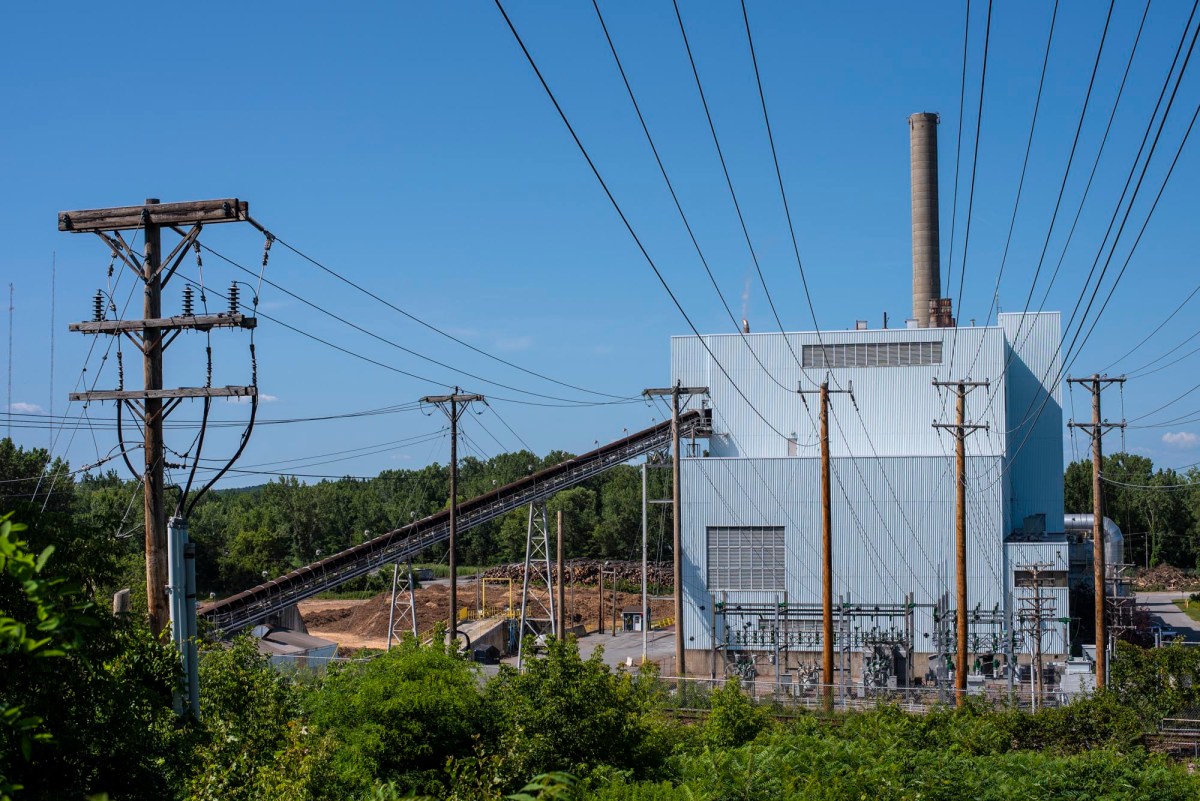
MONTPELIER — Vermont is falling behind on its legal mandate to cut greenhouse gas emissions. The only policies that could help the state meet its targets have died — and lawmakers aren’t on track to pass legislation this year to help the state change course.
Democrats, who have a majority in the Legislature, look unlikely to take any major policy actions as they anticipate their efforts to cut state emissions might face a veto by Republican Gov. Phil Scott.
“We have to use our time well. I want to spend time on things that can pass and move the ball forward,” said Sen. Anne Watson, D/P-Washington, who chairs the Senate Natural Resources and Energy Committee. She does not think Scott would approve of any major attempts to meet the state’s emission requirements, she said.
House Speaker Jill Krowinski, D-Burlington, confirmed there is no broad policy vehicle this year to help the state meet its emission goals.
But not taking legislative action puts the state at risk of a lawsuit. The Global Warming Solutions Act, passed in 2020, sets legally binding requirements for cutting the state’s greenhouse gas emissions in line with standards set by the Paris Agreement, a landmark international climate treaty signed in 2015.
To make the initiative law, a Democratic supermajority overrode Scott’s veto. Under the law’s requirements, the state’s greenhouse gasses are supposed to be 26% below 2005 levels by Jan. 1, 2025; 40% below 1990 levels by 2030; and 80% below 1990 levels by 2050. If the state doesn’t meet those requirements, people can sue the state.
“I think we entered into the Global Warming Solutions Act without understanding the magnitude of the work that was required, the costs associated with the programs that would need to be put in place,” said Julie Moore, secretary of the Agency of Natural Resources, at the governor’s weekly press conference this month.
Projections from this summer show that the state likely did not meet its reduction goals for 2025, though a judge tossed out a lawsuit last year that addressed that failure.
The potential for a lawsuit in the case of inaction has Democrats at odds with the governor and his Cabinet, with both sides casting blame. Democrats chastised Scott for not being willing to get on board with policies they say will help the state meet its goals. And Scott’s administration blames Democratic lawmakers for shackling the state to a plan they say will be too costly to Vermonters to carry out.
In order for the state to get on track to meeting its emission reduction requirements, lawmakers would have to tackle bigger policy changes and would need the governor’s approval, Watson said. But she doubts Scott would do that.
“I have no indication that he would approve of policies that would help us get there,” Watson said.
Scott has a “terrible record on climate legislation,” Watson said. This year, his Cabinet has supported bills that, rather than aiming to meet the state’s goals, would change the state’s requirements, she said.
“That’s not a solution,” she said.
In 2024, Scott vetoed a bill that would have required Vermont utilities to buy renewable energy at a faster pace. In 2022, Scott vetoed the clean heat standard, which environmentalists vowed would cut the state’s emissions by transforming its heat sector. Lawmakers overrode Scott’s veto on the clean energy bill, making it law, but the clean heat standard failed and never became law.
Moore said that while the state appears to have missed its 2025 target for emission reductions, she’s especially concerned about the state’s 2030 deadline, which requires more aggressive reductions.
“We do have these really significant reductions we now committed ourselves to in statute for 2030 and don’t necessarily have the tools needed to achieve those kind of reductions,” Moore said.
She pointed fingers at the Legislature for not following through on its own commitment. “The Legislature took a series of goals and turned them into requirements without fully understanding what it was going to cost to achieve them,” Moore said.
Though lawmakers have taken a few stabs at changing the state’s regulations on fuel, none have succeeded. Last year, attempts to transition Vermonters to using more renewable energy sources for heating fell apart.
When lawmakers were considering the clean heat standard, which ultimately died in the Statehouse, the governor often cited concerns that the policy plan would increase the cost of heating fuel by $4 per gallon.
Public utility commissioners, though, later estimated that the increase in fuel prices would be substantially lower, costing customers from $0.08 to $0.58 more per gallon. Some lawmakers and lobbyists blame the policy’s failure, in part, on the Scott administration’s claims about the policy’s price.
This year, a bill, H.740, would require the state to monitor fossil fuel sales at the local level instead of at the state level. Those records of fuel sales allow the state to benchmark how much is being burned and from there calculate the state’s emissions. The monitoring will only be required if the state has the funds.
House lawmakers approved the bill Wednesday, advancing it to the Senate.
Chair of the House Energy and Digital Infrastructure Committee Rep. Kathleen James, D-Manchester, said in an interview the state currently collects data on fuel sales on a statewide scale. Having granular data on how certain towns or counties are buying fuel will help the state make better policy, said James, the bill’s lead sponsor.
In past years, policymakers have struggled to agree on the numbers they’re citing. She hopes the bill might prevent that, she said.
Moore, for her part, said she supports the bill and sees it as “foundational” to creating a well-designed program to reduce emissions. Krowinski also said she supports the bill and considers it “a really important step” in the state’s climate work.
On the House floor Tuesday, Republican legislators criticized the bill as a stepping stone to policy reforms they don’t support.
Rep. Gina Galfetti, R-Barre Town, said she didn’t support the bill because she believed it was a path to policy that would make fuel too expensive for Vermonters. She said the state should first take other measures, like weatherizing homes.
“We know how to reduce our emissions. This bill is a path to a carbon tax,” Galfetti said.
Meanwhile, Rep. Laura Sibilia, I-Dover, said that climate policy at the national level is being “actively dismantled,” making it more important for Vermont to make sure it has its own reliable data.
“This is a small practical step to give us better data,” Sibilia said.
Shaun Robinson contributed reporting.
