

This commentary is by Jennifer Barrett, Erin Dimick, Cait Fitzwater, Clanci Giddings, Sara Gingue, Shawn Gingue, Amira Ghazali, Kirsten Grace, Melissa Leo, Emily Makelky and Melissa Peters, who are from Waterford and parents of students at Waterford School, a public K-8 school.

When Vermont lawmakers debate school choice, they often conjure a particular image: parents shopping around for private alternatives, siphoning public dollars away from neighborhood schools. But in our region of the Northeast Kingdom, that picture doesn’t fit. Here, school choice means something far simpler — and far older — than the political debate implies. It means sending your kid to the local high school, the same school many parents attended, and their parents before them.
We are a group of parents in Waterford, Vermont. We include multigenerational Northeast Kingdom (NEK) families, spouses who married into this community, and people who came here for work or simply to put down roots in a place worth raising a family. We are business owners, health care workers, caregivers, remote workers and farmers. We have different backgrounds, different incomes, different political perspectives, different stories.
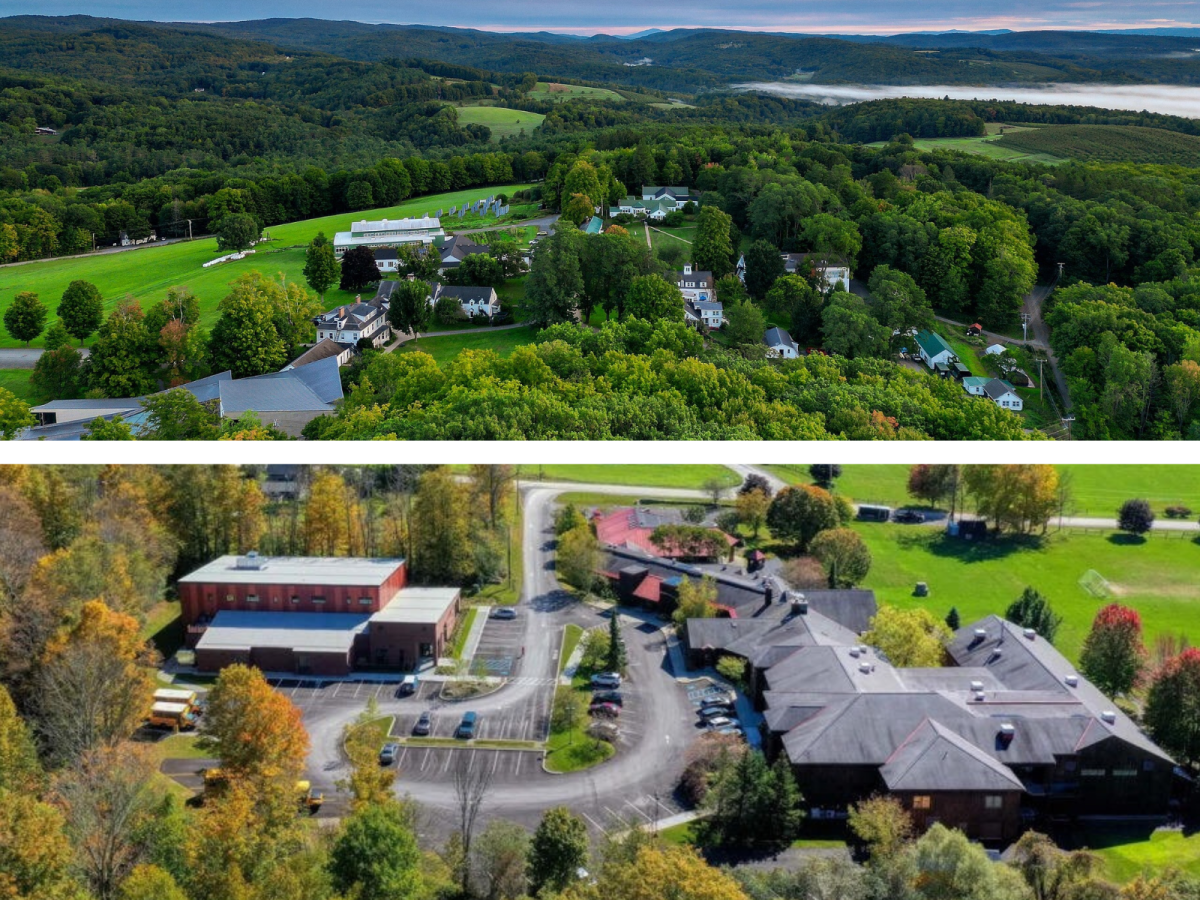
But on this we are united: our children attend Waterford School, and like virtually every Waterford family for generations, we have always expected our kids to head to St. Johnsbury Academy for high school. The town of St. Johnsbury is where our community’s daily life is centered. The Academy is 5 to 15 minutes from our homes. It is, by every practical measure, our local high school. It simply happens to be an independent school rather than a public school.
The same is true for the Lyndonville area and the surrounding towns in our region. For well over a century, tuition arrangements between our towns and St. Johnsbury Academy and Lyndon Institute have provided students with strong academic and technical programs — cost-effectively, safely and logically. There is no local public high school within 30 to 40 minutes of many of our homes. There has simply never been a need because our towns solved for consistent and affordable high school access generations ago.
When families talk about being drawn back to this region or choosing to put down roots here, they talk about our schools. Not because St. Johnsbury Academy and Lyndon Institute are independent schools, but because our communities in the Northeast Kingdom figured out how to prioritize excellent education and built institutions that have stood the test of time. That is a source of deep regional pride. And here’s the thing: it is no different from the pride any Vermont community feels in its excellent local high school, whether that school is publicly or independently run. The distinction matters less than the quality, the community and the generations of students who have thrived in our schools.
This nuance is almost entirely absent from the statewide conversation around Act 73 and school district consolidation. The arguments against school choice — that it fragments communities, drains resources or privileges the few — may have merit in other contexts. But they simply do not describe what is happening here. The towns in our region of the NEK are not gaming a system. We are asking to preserve access to our nearest high schools, as we have done for the last century. Framing that as a politically charged so-called “choice” misrepresents our reality.
The stakes became concrete this legislative session when a redistricting map introduced by Rep. Peter Conlon, D-Cornwall, in the House Education Committee separated Waterford from St. Johnsbury and removed decades of high school education access. A map drawn by legislators in Montpelier in the name of education reform and cost savings would sever our town from the school next door and bus our kids hours each day to more distant high schools. The absurdity is difficult to overstate.
We appreciate that the Senate Education Committee, led by Sen. Seth Bongartz, D-Bennington, introduced a map placing Waterford in a district with St. Johnsbury and preserving high school access, and we urge that this sensible alignment prevails when the chambers reconcile their proposals.
Act 73’s criteria explicitly include providing the “least amount of disruption to students as possible.” So, how did our town and region end up being penalized in this debate?
Our system in the NEK is not broken or in need of reform. Our tuition arrangements are cost-effective for our town and provide vital, sustainable, convenient opportunities for our students. St. Johnsbury Academy and Lyndon Institute serve the diverse needs of local students, as other local parents have highlighted. This is not a pipeline for wealthy families to opt out of public education. It is simply how high school education has worked in our region, practically and successfully, for more than a century.
Vermont’s education reform conversations deserve nuance and require that statewide leaders listen to local communities when we say what is working for us. Sweeping statements about school choice written for one context should not be carelessly applied to communities where the reality is entirely different.
In Waterford and across our area of the NEK, we are not asking for anything we don’t already have. We are an under-resourced and overlooked region trying to guarantee our students’ longstanding access to high school. That is not a political abstraction. That is just our kids attending and succeeding at their local high school.
