

This commentary is by Alex Herzog, director of career and technical education at Lyndon Institute.

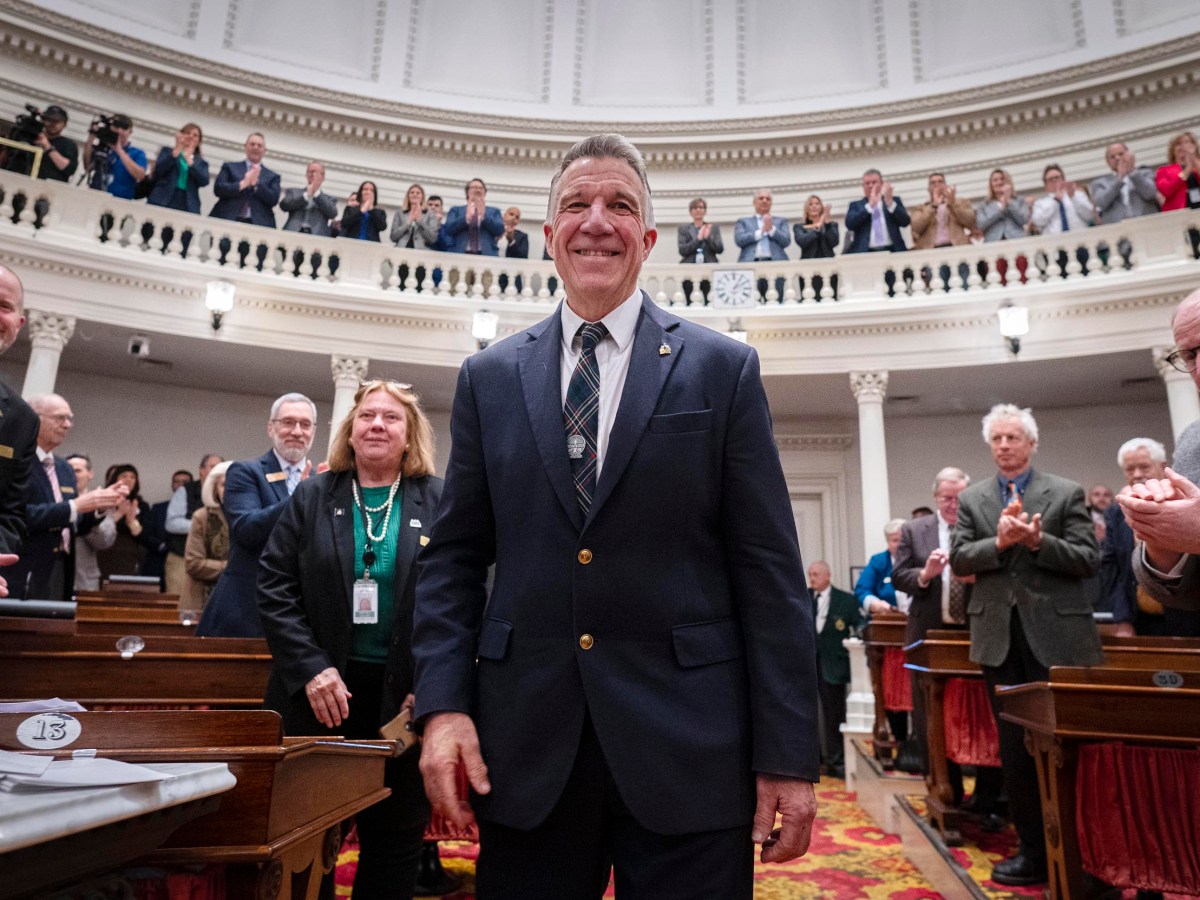
When Gov. Phil Scott delivered his 2026 State of the State address, he framed education reform — now referred to as education transformation — as a prerequisite for Vermont’s long-term economic and demographic stability.
His emphasis on cradle-to-career pathways, funding equity and workforce alignment reflects a growing consensus: the state’s education system must be better connected to how Vermonters live and work.
That reality is especially apparent in the Northeast Kingdom, known to all who live here as the NEK.
Over the past 25 years, Vermont’s manufacturing sector has declined by roughly 41%, sharper than the national average.
The Northeast Kingdom has experienced even deeper losses, with nearly half of its manufacturing jobs disappearing over that period. As the most rural and geographically isolated region in the state, the NEK has seen the erosion of its economic base accompanied by persistent poverty and limited access to services.
Compounding these challenges, the region has faced three consecutive years of severe flooding. While recovery efforts continue, the larger question confronting communities is how to reduce vulnerability and build durable economic systems that can withstand future disruptions.
In that context, education reform is not an abstract policy debate. It is directly tied to whether rural regions can sustain a workforce, attract investment and retain young people.
A central premise of the governor’s remarks is that education must align more closely with workforce needs.
In the Northeast Kingdom, that alignment depends in large part on career and technical education (CTE). It is often described as an alternative to traditional academic pathways, but in rural regions, it functions as critical infrastructure — connecting students to local industries, providing adults with opportunities to reskill and supporting employers struggling to find qualified workers.
Effective education transformation must begin early and extend across a learner’s lifetime. Middle and high school programs, adult education and workforce training should function as connected pathways rather than separate systems.
Equally important are partnerships with employers, who can help inform curriculum, provide work-based learning opportunities and ensure that training aligns with real labor market demand.
These industry-to-school partnerships are increasingly central to regional economic strategies. Recent private investment in the Northeast Kingdom — including renewed activity at Burke Mountain and growth in advanced manufacturing — suggests that employers see opportunity in the region.
Public investment in education and training must keep pace if those opportunities are to translate into stable jobs for Vermonters.
Governor Scott has argued that education reform is essential to affordability and to keeping young people in the state. In rural Vermont, achieving those goals requires recognizing that education policy, workforce development, and regional economic planning are interdependent.
Strong schools alone are not sufficient; neither is workforce training that operates in isolation from K-12 education.
If education transformation is to succeed, it must move beyond changes to governance structures or funding formulas. It must include sustained investment in rural regions where education and economic resilience are closely linked.
Vermont’s future will depend not only on how it reforms its education system, but on where and how those reforms are implemented.
In the Northeast Kingdom, aligning education with opportunity is not a theoretical exercise — it is a practical necessity.
Disclosure: VTDigger Opinion Editor Tess Stimson is married to an employee of Lyndon Institute.

