

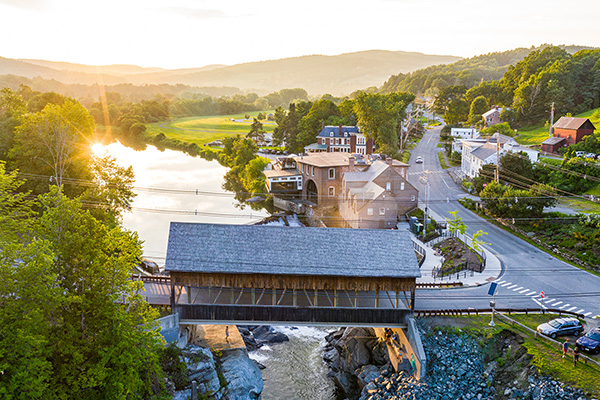
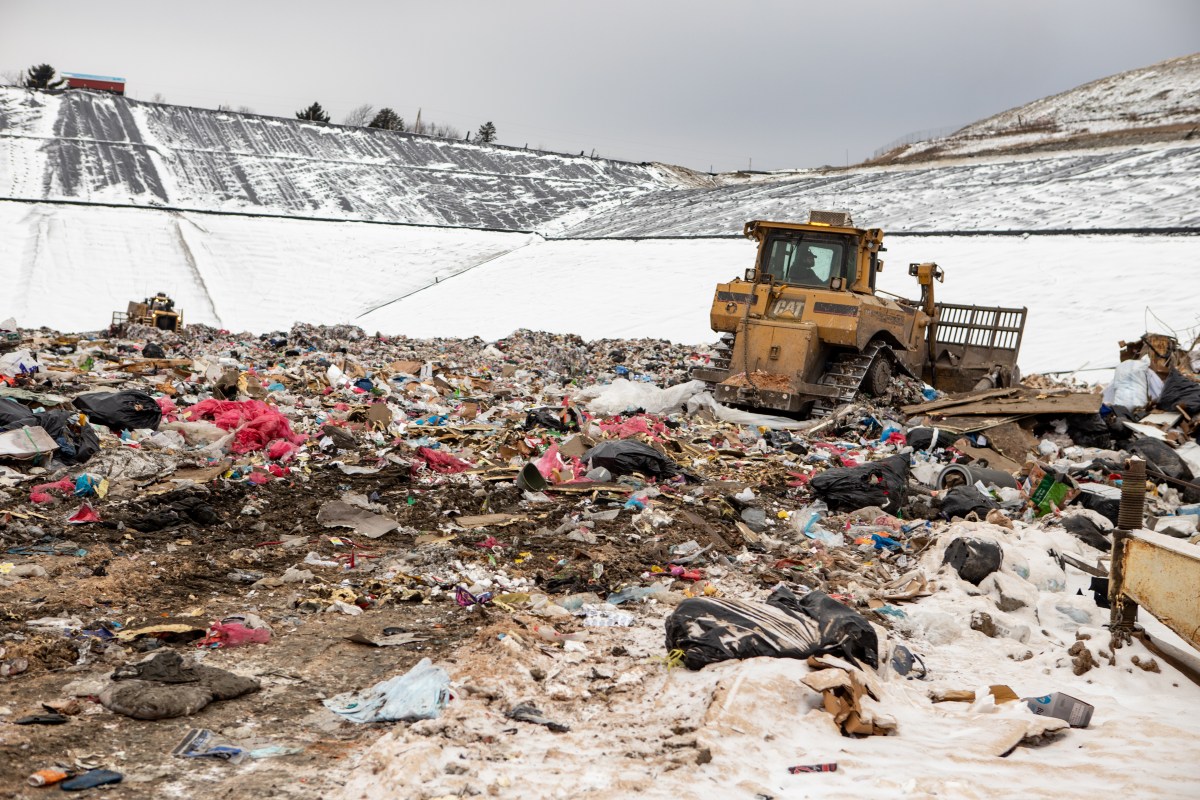
The Northeast Kingdom produces less than a tenth of Vermont’s total waste, but bears all of the burden, according to locals who live near the state’s only landfill in Coventry.
They’re asking the legislature to protect the lake that abuts the landfill through H.652, a bill that would prohibit discharge of waste from the landfill, or any other dump site, into Lake Memphremagog, an international waterbody that touches both Vermont and the Canadian province of Quebec.
“The landfill is out of sight and out of mind of the municipalities in Vermont that generate the most waste,” Peggy Stevens, a member of a grassroots organization trying to protect the local community from potential landfill pollution, told the legislature in February.
The bill highlights concerns locals have had for years that the Coventry landfill is contaminating their waterways with forever chemicals. PFAS, or per-polyfluoroalkyl substances, are a family of thousands of manmade chemicals commonly found in waterproofing material and firefighting foam. The bill seeks to protect Lake Memphremagog by banning the disposal of leachate – liquid that runs through the waste and collects in the landfill’s liner system – into the watershed.
“We’re not trying to elevate our watershed above any other area within the state, but we are the only landfill in the state of Vermont that’s operating and therefore we want to protect our lake,” said Rep. Woodman Page, R-Newport City, who sponsored the bill. “Up here in the Northeast Kingdom we’re not a wealthy area, we’re very remote and rural and we depend predominantly on tourism dollars and that lake is very important to our economy.”
Protection from PFAS
Leachate from the Coventry landfill was once disposed of in Newport’s wastewater treatment plant. But a state permit put a five-year moratorium on that disposal while allowing the landfill, now nearly 130 acres, to expand. That moratorium will soon expire, according to Rep. Larry Labor, R-Morgan, who co-sponsored the bill with Page.
For years during the moratorium, that leachate was trucked to wastewater treatment facilities in Montpelier and Plattsburgh, New York, where it eventually enters Lake Champlain. Casella Waste Systems, the company that runs the Coventry landfill, has no plans to apply for another permit to bring leachate back to Newport, Jeff Weld, Casella’s vice president of communications, said in an email.
Instead, since 2023, Casella has invested more than $6 million in a system that pre-treats the leachate for PFAS at the landfill. Almost daily, up to 100 gallons of leachate are aerated into a foam that concentrates the contaminant, according to Casella representatives. That foam is then skimmed off the top leaving a cleaner liquid behind. The liquid is trucked out of the county. The bill only addresses the leachate, not the PFAS which is solidified in cement and returned in blocks to the landfill.
The landfill receives about 14,000 tons of waste per week, Samuel Nicolai, vice president of engineering and compliance for Casella told the House Environment Committee in February. About one ton of that waste becomes a PFAS block. It would take about four months to fill their committee room with those blocks, he estimated.
The process removes nearly all concentrations of the five PFAS compounds regulated for safe drinking water in Vermont, and it’s one of the only proven PFAS-removal solutions in the state, according to Weld.
Last week, the landfill received a draft permit from the Department of Environmental Conservation’s air quality division to pilot a modified version of the system – called Surface Active Foam Fractionation, or SAFF – in an attempt to further remove PFAS concentrations in wastewater.
But advocates worry that the removal process isn’t enough to keep the region safe from contamination.
“The (House Environment) committee members do not understand how dangerous PFAS are and how insufficient the experimental leachate treatment technology is that’s being used right now,” Stevens, a member of DUMP, or Don’t Undermine Memphremagog’s Purity, a grassroots organization based in the Northeast Kingdom, said in an email. The SAFF technology should not be used as a stand alone solution, Stevens said.
During their own testimony with the House Environment Committee, Stevens, along with other advocates from DUMP and a sister group in Quebec, pointed to two main pieces of evidence for PFAS contamination in the lake: a 2021 state report that measured one chemical in the family of PFAS in the middle of the lake at 2.8 parts per trillion or about 70% of the state’s safe drinking water level.
Julie Moore, secretary of the Agency of Natural Resources which produced the 2021 report, said there was nothing in the data set her agency found alarming and that background concentrations of PFAS were almost everywhere at this point.
Advocates also argue there is a link between landfill pollution and a 2020 United States Geological Survey report that showed 30% of brown bullhead, a fish in Lake Memphremagog, were diseased with malignant melanoma. The tumors have not been found on brown bullheads in any other lake in Vermont, according to the bill.
Moore said she was not aware of a link between the tumors found on the brown bullhead and PFAS.
“We’re very comfortable that there is no PFAS coming from the landfill into the lake because there are no discharges into the lake,” Nicolai told the committee. “We’re seeing PFAS in the lake for the same reason 98% of adults in this country have PFAS in their blood. We have it everywhere.”
Passive receivers
Over the last five years, the state has passed legislation to reduce the amount of PFAS entering the waste stream by restricting or banning the use of products that intentionally add the chemicals, like in ski wax, cookware and cleaning products.
Most PFAS contamination in the state remains in southern Vermont, in the Bennington and Shaftsbury areas where a company called Chem Fab created PFAS-containing products by coating them in Teflon, which contains PFOA, for about 30 years beginning in 1970.
“Landfills are passive receivers of PFAS chemicals, they do not create them,” Weld said. “Vermonters have chosen to buy these products and use them in their everyday lives.”
Paul Burns, executive director of the Vermont Public Interest Research Group, told the House Environment Committee that his preferred method of dealing with the problem of PFAS is to stop using PFAS wherever possible in manufacturing products.
“We are concerned about whatever community, whatever water body, whatever watershed is the recipient of leachate from our one remaining operating landfill, and the answer is not to protect one watershed and sacrifice another,” Burns said.
He said he ultimately supported this legislation that would protect the drinking water supply at Lake Memphremagog, but called the bill “imperfect” because it prioritized that protection over Montpelier’s watershed that dumps effluent from the wastewater treatment facility into the Winooski River which flows into Lake Champlain.
