Theo Wells-Spackman is a Report for America corps member who reports for VTDigger.
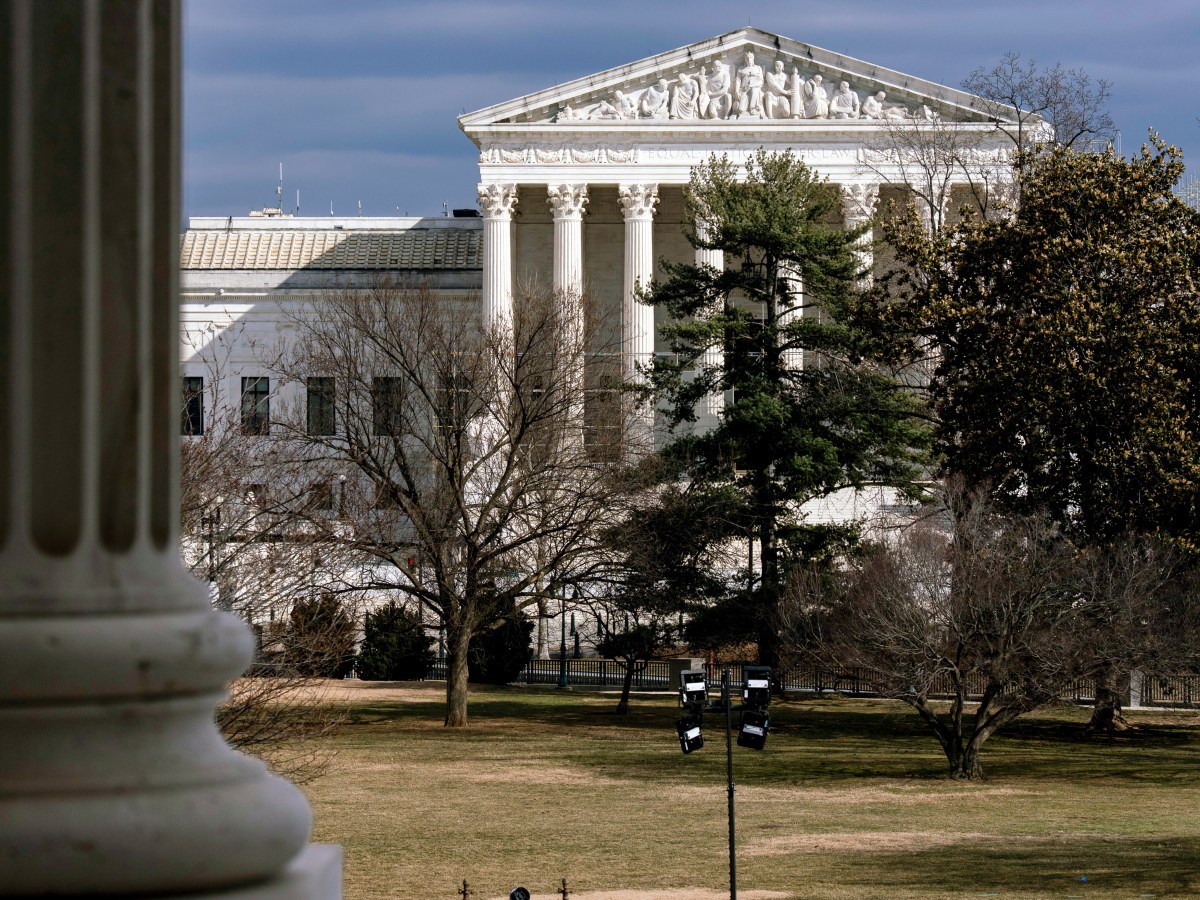
SOUTH BURLINGTON — The U.S. Supreme Court ruled Friday that many of the Trump administration’s international tariffs from the past year were levied illegally. Despite ongoing uncertainty over a new set of tariffs the White House announced over the weekend, Sen. Peter Welch, D-Vt., called the decision “good news” in a press conference Monday.
“The Supreme Court finally stood up and limited the overreach of President Trump,” he said. “These tariffs have done incredible damage to our country, to our economy and to our small businesses.”
During President Donald Trump’s second term, his administration has imposed high and fast-changing tariffs on places including Canada, China and the European Union and declared a national emergency over the U.S. trade deficit. In Vermont, economists have been particularly critical of the president’s trade policy and rhetoric in relation to Canada — the state’s largest trade partner — saying his actions have contributed to a drop in tourism.
“I think our Canadian friends know how much Vermont values their friendship and our relationship, but they’ve seen arbitrary action on the part of President Trump,” Welch said Monday. “That’s going to take some time to heal.”
The Supreme Court’s decision answered questions raised by several cases filed last year, two of which involved Vermont parties. Burlington-based Terry Precision Cycling, a women’s cycling apparel store, was among five small businesses that sued the Trump administration over its tariffs in the U.S. Court of International Trade last April. In the same court nearly simultaneously, Vermont Attorney General Charity Clark joined a multistate lawsuit that similarly challenged the tariffs’ constitutionality.
“We have seen these repeated attempts by the president to expand the power of the executive,” Clark said in an interview Monday. “That is unconstitutional.”

She said Friday marked “the first time that the Supreme Court has taken the opportunity to draw that boundary and say no to the president.”
Clark’s optimism at Friday’s ruling was echoed by other state officials.
“These tariffs represented one of the biggest tax increases in history on working- and middle-class Americans,” Vermont State Treasurer Mike Pieciak said in a statement on Friday.
Pieciak acknowledged, however, that some results of the ruling are still “not entirely clear.”
The president announced a new global tariff of 15% on Saturday that was “effective immediately,” citing authority based in a little-used clause of U.S. trade law. Many items that are protected from tariffs by existing trade agreements — such as certain goods from Canada and Mexico — may remain exempt, the White House has indicated.
It’s also possible that the federal government will ultimately be required to issue refunds for illegal tariffs paid by U.S. businesses, a potential complication that Clark called a “gigantic, avoidable mess.”
Calef Letorney, CEO of auto parts seller Rovers North in Westford, said about half of his tariff burden was initially lifted by Friday’s ruling. But the new global tariff may essentially replace the old rate, he said.
Letorney said he has seen sales crater by 30% as he’s been forced to increase prices quickly due to unpredictable tariffs. He has also needed to let 20% of his staff go — the first time layoffs have been necessary in the company’s 47-year history.
“Most of what we’re buying just isn’t available locally, and it’s just a tax on the American consumer,” Letorney said of recent tariffs at Monday’s press conference.
Meanwhile, some existing tariffs remain untouched by the Supreme Court decision, such as the 50% tariff on steel.
For Candy King, co-founder of wood stove vendor Hearthlink International in Randolph, the financial burden of importing steel products shows no signs of lightening. Since last spring, King said her company has paid out over $300,000 in duties, compared with a previous annual customs bill of about $5,000.
By laying off her entire sales team — leaving a staff of three — and increasing her prices, King has been able to diminish her losses.
“We’re down to the bare minimum,” she said in an interview Monday. “I don’t really take a salary at this point.”
King recently participated in a nationwide campaign called “Small Businesses Against Tariffs,” which seeks to raise public awareness around the economic impact of such trade fees. As a small-scale operation, King said it has sometimes been hard to feel heard on such broad issues.
“The little guys, as usual, always get ignored here,” King said.