

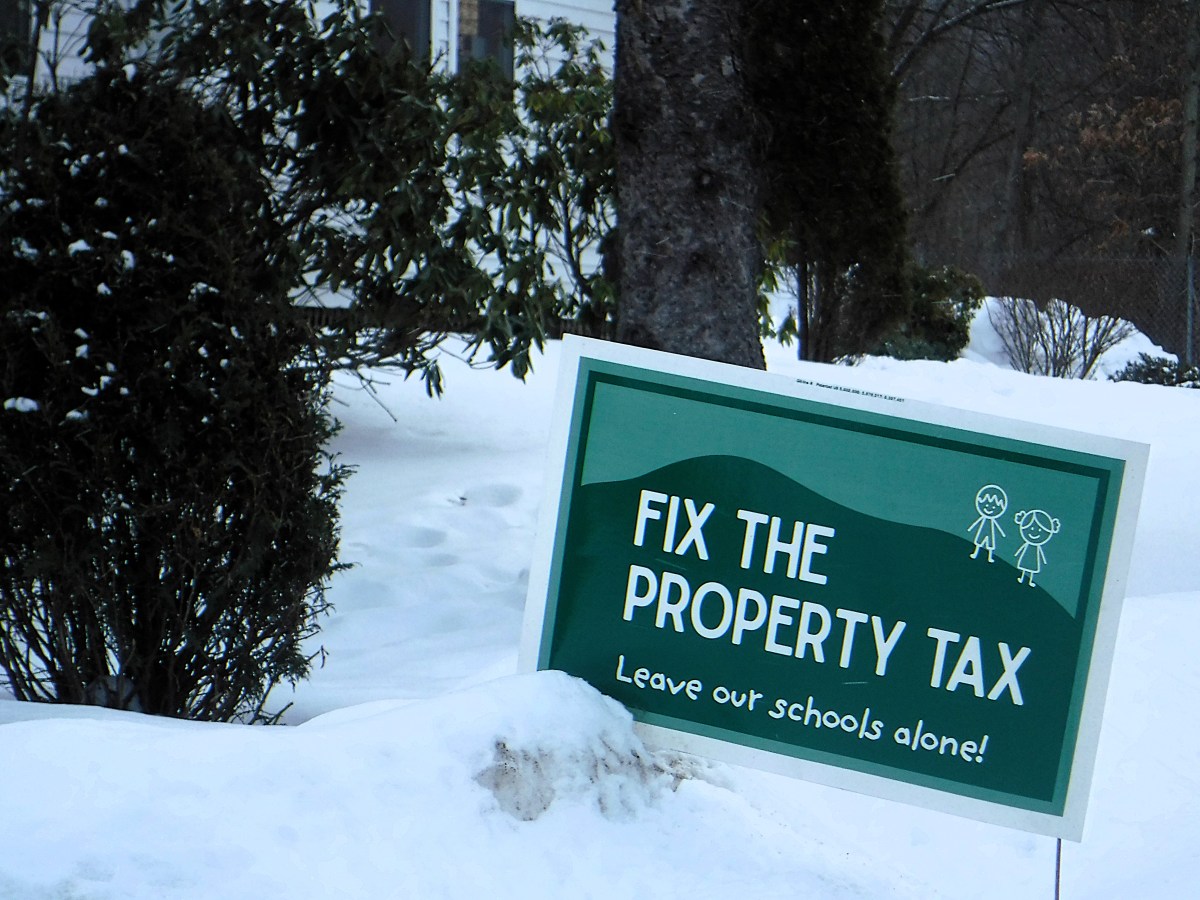
As Vermont municipalities aim to pinch pennies this March Town Meeting season, a rising number are seeking to pull in more spare change by piggybacking on state taxes and proposing their own 1% local charges on rooms, meals, alcohol and sales.
Voters in almost 20 cities and towns will be asked to join the nearly 40 now accessing some combination of such fees, according to a VTDigger survey that shows ballot items in Bolton, Bristol, Castleton, Chester, Hardwick, Londonderry, Mendon, Milton, Morristown, Pittsfield, Pomfret, Roxbury, Swanton, Vergennes, Waitsfield, Westmore and West Windsor.
Vermont already charges a tax of 6% on sales, 9% on rooms and meals and 10% on alcohol. Municipalities with their own 1% fee reaped more than $50 million collectively this past year, the state reports, with the figure rising as more cities and towns learn that such local charges apply to short-term rentals and online shopping.
“The only revenue authority for some places is the local property tax rate, which they’ve been holding down as long as possible,” Samantha Sheehan, municipal policy and advocacy specialist with the Vermont League of Cities and Towns, told VTDigger. “Even communities without big commercial centers are realizing they have an opportunity with local option taxes.”
Stowe, for its part, will weigh whether to increase its figure to 2%, a move that, unlike other communities’ 1% charge, would require a local charter amendment and state legislative approval.
“A primary goal of the Stowe Selectboard is to maintain fiscal stability and deliver vital public services without disproportionately burdening property owners,” it recently wrote in a resolution. “A significant portion of the revenue from the local option tax is generated by visitors and non-residents, allowing the town to fund initiatives that benefit the entire community, including public infrastructure and safety, while shifting some of the tax burden.”
Bond, budget requests
Public concerns about affordability have sparked a dip in municipal requests this year for capital projects, both in Vermont’s 29 largest municipalities (those with 5,000 or more people report an 84% drop in infrastructure improvement items) and the 218 communities with smaller populations, according to VTDigger’s survey.
In the biggest single general bond proposal statewide, the Mountain Views School District towns of Bridgewater, Barnard, Plymouth, Killington, Reading, Pomfret and Woodstock will vote on whether to build a new $111 million Woodstock Union High and Middle School.
The district rejected a similar request in 2024, leading school officials to draft new plans with stipulations that the project would cover at least 25% of the sum with federal, state or private funds, and the Vermont Legislature would curb spending penalties tied to capital construction debt.

On the same ballot, Woodstock also will vote on a $35 million upgrade of its main wastewater treatment facility.
In other smaller community requests of $1 million or more:
— Berlin wants $6.8 million to replace its town garage and $2.6 million to reconstruct its sewage pump station.
— Windsor is asking for $1.5 million to repair a dam, complete a skate park and construct town highways, and $500,000 for a ladder truck.
— Williamstown is seeking $1 million for road rehabilitation.
— And just shy of the $1 million threshold, Plainfield will consider $700,000 to replace waterlines and $250,000 to repave Main Street.
While most communities aren’t adding much to budgets, several are requesting more money for public safety. Bradford wants $250,000 to increase its police officer count from two to four. Alburgh will weigh returning to a 44-hour weekly county sheriff’s contract after reducing it to 30 hours this past year. And Leicester will seek an additional $20,000 for traffic enforcement.
Advisory articles
More than a dozen cities and towns will vote on nonbinding advisory petitions submitted by residents.
At least eight communities — Brandon, Bristol, Cornwall, Middlebury, Putney, Ripton, Salisbury and Weybridge — are set to consider whether to ask the Vermont Legislature to vote this session on House bill 433, which would launch the “incremental implementation” of a state universal health care plan.
An “apartheid-free community” pledge considered by almost a dozen municipalities in the past will be weighed this year in Hartford, Montpelier, Richmond and Underhill.
Westminster has placed a citizen-requested advisory item on its agenda seeking the removal of President Donald Trump and Vice President JD Vance “for crimes against the United States Constitution.”
Putney will be asked to support the Vermont Secretary of State for refusing a Trump administration request to turn over information on registered voters, “thus following Vermont law and protecting the privacy of our residents.”
And Royalton will decide whether to impose a five-year moratorium on the local siting and construction of data centers for artificial intelligence or cryptocurrency, even though none have been proposed.
Local governance changes
Municipal officials have faced the challenge of filling local posts for at least a decade, as more residents say they don’t have the time or expertise to serve. As proof, several communities are set to vote on switching from harder-to-find elected laypeople to easier-to-hire appointed professionals.
Chittenden, Granville and Ryegate want to join others that have moved from citizen auditors to public accountants.
“It has become difficult to find interested people capable of performing the task,” Granville Town Clerk Cheryl Sargeant told VTDigger.
Shaftsbury and Vernon will ask to move from electing to appointing a treasurer. Cornwall wants to hire, rather than vote, on a delinquent tax collector. And Berkshire and Ferrisburgh are seeking to switch from citizen listers (charged with determining the value of local taxable property) to professional assessors.
“We do have amazing listers, but they all recognized that it was time for a change,” Ferrisburgh Town Clerk Jessica James said. “Modern property assessment requires more specialized training than the traditional part-time lister role.”
Amid such citizen cutbacks, some local governments are aiming to expand. Coventry, for example, will vote on increasing its selectboard from three to five members, while Braintree will decide whether to raise its number of cemetery commissioners from three to five.
Other municipal matters
Town Meeting voters also will chew over a smorgasbord of other subjects.
Castleton, for example, will consider whether to sell 18 acres of town land to a developer seeking to build a four-story, 99-unit senior housing complex.
Wolcott will weigh the potential purchase of a third of an acre of land on Route 15 for a municipal parking lot.
Marlboro will cast ballots on whether to close its elementary school (where the student count is projected to drop below 50 by fall) and pay tuition to other towns.
Waterford will ask residents if municipal employees should begin covering 10% of their health insurance premiums in 2027 and 20% in 2028.
Killington will decide whether to authorize and fund an independent forensic audit of its past three years of financial records — a review estimated to cost $200,000.
And several communities, including Benson, Charlotte and Lincoln, will consider whether to move from voting en masse at Town Meetings to all-day balloting at polling places.
In the meantime, Lincoln residents will gather for a traditional meeting this year to test out remote control-like electronic voting devices with “yes” and “no” buttons and collective results projected on a screen.
“We are hoping this will speed up the process,” Lincoln Town Clerk Sally Ober said. “As far as I am aware, we might be the first town in Vermont to be using this.”
