

Theo Wells-Spackman is a Report for America corps member who reports for VTDigger.
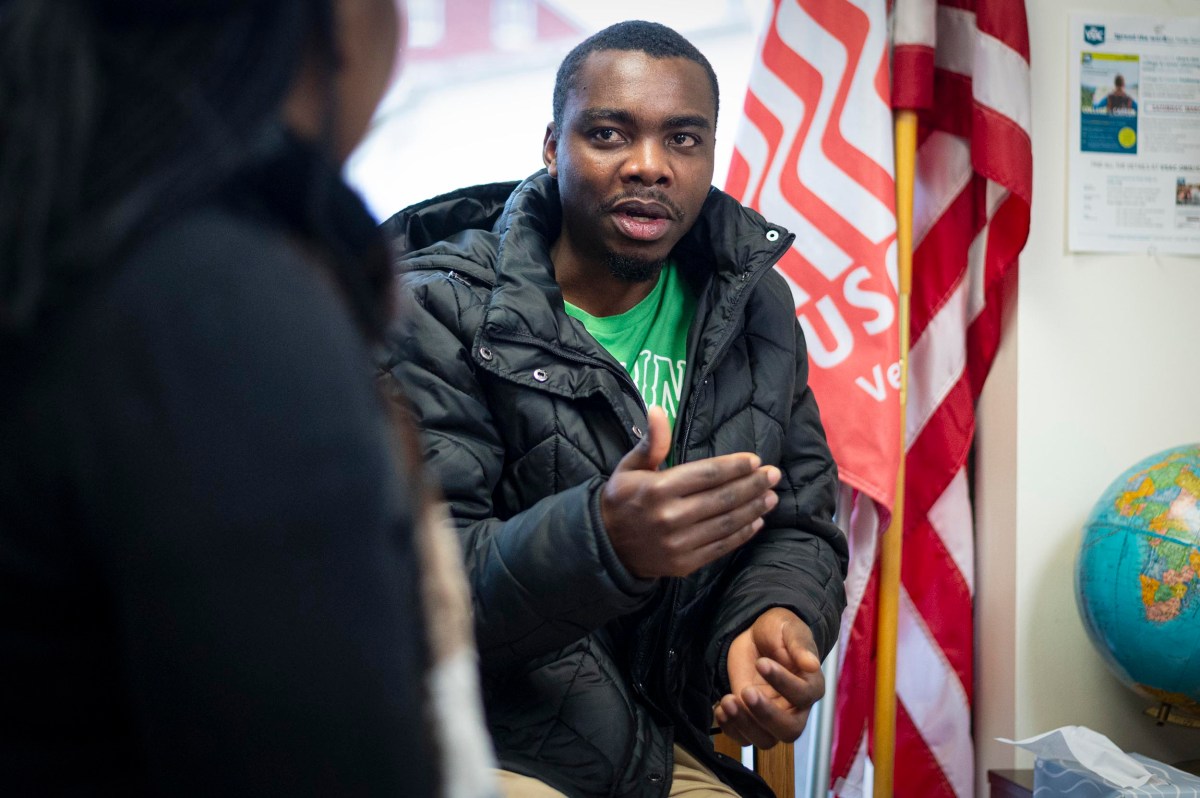
When Juvenari Kambale arrived in Vermont last December, he felt huge relief — his family was safe, and his children could attend school. He arrived through the now-suspended U.S. Refugee Admissions Program from his home country, the Democratic Republic of the Congo, via a refugee camp in Uganda.
Kambale, 25, lives in Burlington with his wife and three children, aged 5, 3 and 1 month. He works “as (many) hours as possible” at the shipping department of a local business.
“I like Burlington so much,” Kambale said. “I like the schools … I’m able to find work.”
But in October, his family abruptly stopped receiving the food assistance they rely on.
Kambale’s is one of over 140 noncitizen households legally residing in Vermont who have experienced a loss of or decrease in nutrition benefits due to visa status, following changes implemented after the congressional passage of July’s One Big Beautiful Bill Act. Many are humanitarian entrants, meaning they relocated to the United States having fled serious threats to their safety at home.
The 3SquaresVT program — Vermont’s version of the federal Supplemental Nutrition Assistance Program, or SNAP — has tightened restrictions in a number of areas this year, including expanded work requirements and cuts to the widely used “heat and eat” utility allowance program. For noncitizens, the cuts have been sweeping, eliminating many — including those with green cards — from the program entirely.
New guidance from the U.S. Department of Agriculture required Vermont to amend its rules for the program this week. A spokesperson for the Department for Children and Families confirmed Thursday that refugees and asylees with green cards, in addition to Afghan Special Immigrant Visa holders, are once again eligible for 3SquaresVT, contrary to the state’s previous position.
Roughly 90 people total will begin receiving benefits again starting as early as next week, including retroactive payments that were withheld in recent months, the spokesperson said.
Refugees like Kambale, who do not yet have green cards, will remain ineligible regardless. His kids — except the youngest, a U.S. citizen — have been removed from the program along with him and his wife.
Kambale said he is applying for a green card now, which under the latest guidance would eventually return food benefits to his household. It’s a protracted process, but one in which he would ordinarily have a high probability of success given his status as a refugee. However, in late November, a U.S. Citizenship and Immigration Services memo halted all such applications for refugees who arrived under former President Joe Biden, Reuters reported.
When Kambale was given the opportunity to relocate to the U.S. last year, he accepted it gratefully.
“Congo is not stable,” Kambale said in an interview translated from Kinyarwanda — a central African language — by Ernestine Tuyishime, a case worker at the Vermont office of the U.S. Committee for Refugees and Immigrants. “I was forced to flee,” he said.
Prior to acceptance, refugees must demonstrate to U.S. immigration officials that they are escaping persecution, a legal term with a high burden of proof.
A United Nations report last year said recent escalations in armed conflict between militias and other actors in the Congo and Rwanda had “worsened the already dire humanitarian crisis” in the region, with violence often carried out against civilians directly.
Last week, the Trump administration announced that Congo was one of 19 countries that will see all U.S. visa applications paused.
Though providing for his family had never been easy for Kambale, who is the sole earner in his household, he had been making it work financially prior to October.
“But now things have changed, with the SNAP cards — we’re not able to get the food that my family would like to have,” he said. “It’s really hard.”
Kambale’s work fluctuates seasonally, he said, and the hours are somewhat unpredictable. He’s looked for other jobs before, but most pay less than he currently earns, or don’t allow for overtime. Learning English, a vital skill for many workplaces, is a “luxury” that Kambale said he doesn’t have right now. He’s often skipped attending language classes, which are often provided to clients by the U.S. Committee for Refugees and Immigrants, or USCRI, in order to work more hours while he can.
“During the wintertime, I may not be working as much,” he said. “So things are gonna get worse for me and my family.”
The safety Kambale thought he had gained just months ago no longer feels assured, he said, and he feels some of the old pressures returning.
“It kind of now feels like the same as where I’m coming from,” he said. “There’s that fear for what’s gonna happen next.”
‘Next month we don’t have anything’
When Hafiza, 53, and her young adult daughter arrived in Vermont earlier this year from Afghanistan, they left everything behind.
Hafiza’s husband, who worked in the U.S. embassy in Kabul during the war, had applied for a Special Immigrant Visa, a program created to allow safe passage for Afghans and Iraqis who have risked persecution to assist the U.S. military. But by the time the visa was approved, Hafiza’s husband had passed away from Covid-19 at the height of the pandemic, and six of their seven children had aged out of the program’s family protection provisions.
VTDigger is withholding Hafiza’s last name, and her daughter’s name, at their request for the safety of their family.
After four long months in Islamabad, Pakistan — consular processing in Kabul collapsed after the Taliban seized power in 2021 — Hafiza and her daughter arrived in Vermont alone. They had to move several times to find a home that could accommodate Hafiza, who is now ill herself, and cannot climb stairs, her daughter said.
In October, the two women were cut off from SNAP benefits, which was initially difficult for them to understand, they said. Sonali Samarasinghe, director of USCRI Vermont, said many of her clients had been confused by the flurry of notifications from 3SquaresVT program officials. Not only had many of them contained contradictory information as federal policy shifted rapidly, Samarasinghe said, but many people hadn’t received notifications in a language they spoke.
The loss in benefits came as a result of Vermont’s interpretation of July’s budget law, which, according to state officials, subjected Special Immigrant Visa holders to a five-year waiting period before they become eligible for food assistance. As the state only began accepting visa holders in this group in 2021, very few individuals, if any, in that community remained eligible for SNAP.
Special Immigrant Visa holders like Hafiza and her daughter should soon begin to receive food assistance again following the latest USDA guidance, officials said Thursday.
Despite the difficulties she has encountered, Hafiza said she primarily feels grateful to be in the U.S.
“I’m here, and I’m with my daughter,” she said in an interview translated from Dari by USCRI caseworker Hasina Mohammadi. “It’s good — (I) feel happy.”
Her daughter attends the local high school. She’s focused on finishing her education right now, the daughter said, and learning English as soon as possible so she can find a good job.
While glad to be in Vermont, Hafiza hopes desperately that the siblings who were forced to remain in Afghanistan will be able to join her soon. Given their father’s work employment with U.S. agents, she is concerned about retribution from the Taliban.
One of her other daughters, who is unmarried, calls often from Kabul, crying, Hafiza said.
“I left her alone,” she said. “It’s very hard for me.”
Hafiza’s daughter said what little money she and her mother have been able to save would soon be spent. Benefits restarting will be crucial for them.
“Next month we don’t have anything,” she said, referring to December.

‘I’m just thinking about my kids’
Other Afghans on Special Immigrant Visas in Vermont said they had encountered similar struggles.
Mohammed waited for years with his family in Afghanistan before receiving visa approval from the United States. During the war, he had been hired as an airport security guard in Jalalabad. His name is being withheld for his safety and that of his family.
He now lives in Colchester with his wife and six children. Because the kids are all minors, and Mohammed has a green card, he still receives a fraction of the food benefits he used to receive. Because Mohammed is the sole provider for the household, with the high cost of food, transportation and other necessities, it’s been hard to make ends meet, much less plan ahead, he said.
“It’s not enough,” Mohammed said of the reduced payments, in an interview translated from Pashto by Mohammadi. “These things (are) expensive.”
He’s asked for money from a friend, which should help for now. But his options for earning are limited — an injury has forced him to temporarily leave his job at a food manufacturing operation.
“Everything is heavy, physical … they don’t have anything else for me to do,” he said of his employer. “I’m looking for a different job.”
Lately, he’s been finding it difficult to think straight, Mohammed said. He’s inundated with high-stakes paperwork that he can’t understand without help, and with worry for his family.
He produced a photo of his youngest daughter, gazing back at the camera through large sunglasses.
“I’m responsible for everything,” Mohammed said. “I’m just thinking about my kids.”
Several state lawmakers in Vermont had raised the alarm on the issue of food assistance for people like Mohammed, including House Human Services Committee chair Rep. Theresa Wood, D-Waterbury.
“These were people that we specifically welcomed to Vermont,” she said of Special Immigrant Visa holders last week. “We have a moral obligation to do what we can to help people who … assisted the United States government.”
Roughly 650 Afghans live in Vermont, many of whom hold Special Immigrant Visas.
Molly Gray, executive director of the Vermont Afghan Alliance, said her team had offered to assist the state and “reenroll eligible individuals as quickly as possible.” Gray emphasized that for her clients, food assistance is generally a temporary measure to help them find their feet.
Ending SNAP for noncitizen groups blocks them from other programs that use food assistance eligibility as their own bar for access, Gray noted, such as the Crop Cash nutrition program run by the Northeast Organic Farming Alliance of Vermont. She’s also concerned that the same groups will soon lose other benefits, like Medicaid, come next year.
Samarasinghe’s team, as well as other providers around the state, are fundraising to try and help those who remain ineligible for benefits where they can, she said.
But for those like Kambale and his family, no clear reprieve is in sight.
“I’m able to pay for housing,” Kambale said, “but with the cuts (to food assistance) it kind of complicates everything.”
“It’s really kind of threatening to my family, and my stay here,” he said.

