


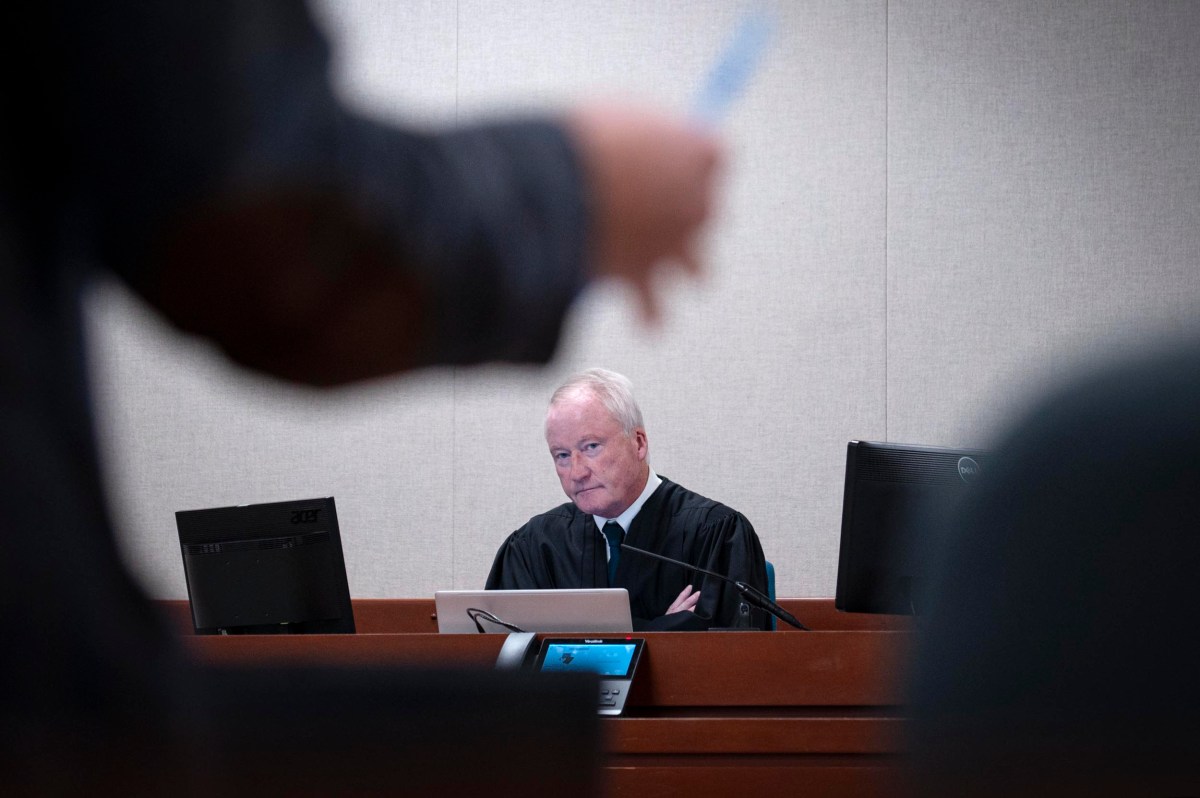
BURLINGTON — A defendant appeared in court on a Wednesday morning in an oversized crewneck with her hands cuffed in front of her. Judge Martin Maley said she was already looking healthier after spending time in jail since her last court date.
The defendant’s case, involving theft charges, was one of four scheduled that day in Chittenden County’s new community accountability court. The initiative by Gov. Phil Scott started in October aims to address the backlog of court cases by directing resources to cases involving defendants who have five or more pending cases against them.
The special court was part of Scott’s “short term action plan” to help address public safety challenges in Burlington. In his October announcement, Scott touted the court’s mission to not only move through cases quickly but also to better connect defendants with social services.

Cases are prosecuted by Zach Weight, who was appointed by Scott, and are heard by Maley, who was named by the chief Superior Court judge.
On a recent day in court, two employees of Vermont’s Agency of Human Services sat with Hope Love, program manager of Therapeutic Works, a mental health services organization. The three often whispered, then pulled the defense lawyer aside to discuss treatment options for defendants.
During court proceedings, Maley spoke from the bench about trying to help defendants gain stability before looking for accountability from people who have racked up multiple offenses. In one case, a defendant facing several retail theft charges pleaded guilty to four of the misdemeanors in exchange for 120 days to 18 months to serve. The defendant told the judge the charges came as he has battled substance use disorder and relapsed after being clean for five years.
Before his sentence was imposed, the man apologized for his actions.
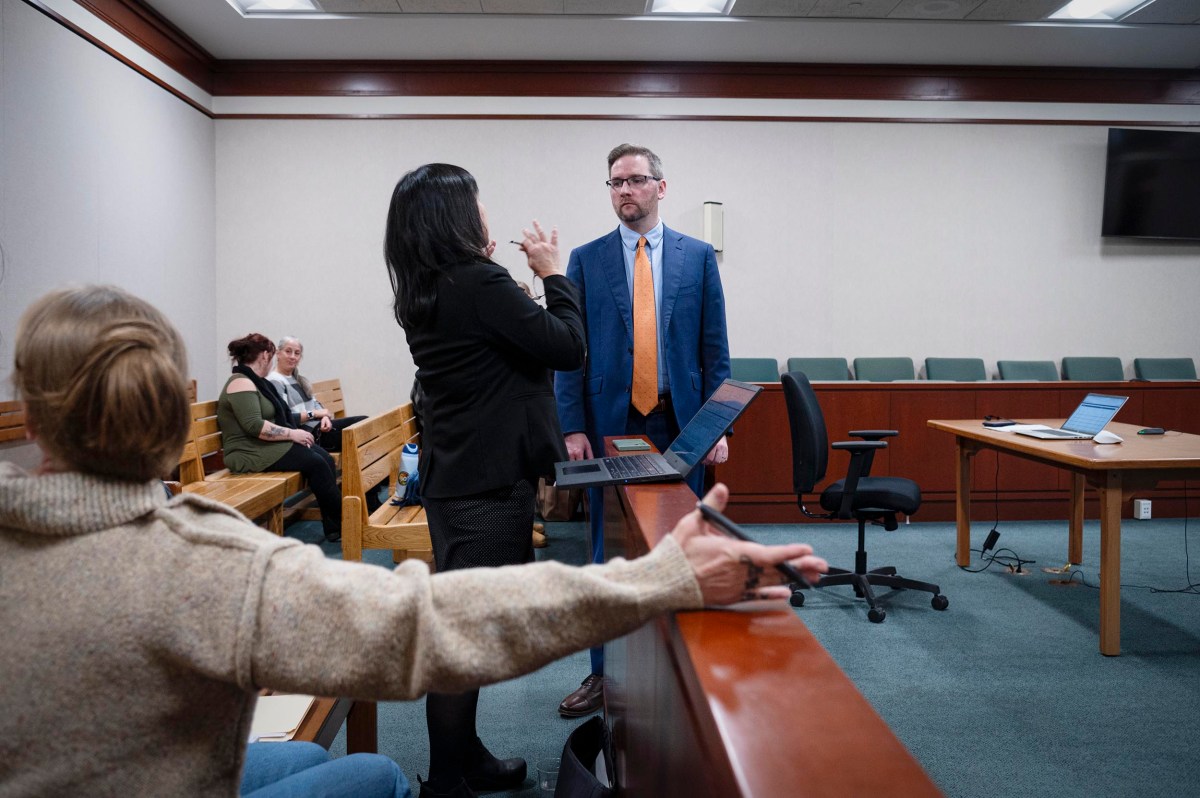
“Appreciate hearing that,” Maley said to him, adding, “Hopefully, you’ll find yourself in a place where you’re clean and sober, and I expect you’ll do well.”
As of Nov. 20, 18 defendants in the court had their cases resolved, according to Chief Superior Judge Thomas Zonay. Because those people had many legal cases against them, the court has resolved 152 cases. Also, 87 defendants had cases in the docket yet to be resolved, Zonay said.
The court’s pilot period is projected to run through February, according to Tim Lueders-Dumont, executive director of the state Department of State’s Attorneys and Sheriffs.
With about three months left, the case of the defendant who appeared that Wednesday offers a look at how attorneys and the judge are grappling with the court’s mission and resources in the cases they review. VTDigger is not naming the defendants in this story because their cases are not the type of prosecutions the publication would generally cover.
Maley began a court hearing on her case with a question for the defense: “What’s happened since we were here last?”
The defendant has been stabilized in prison, she’s on medication and reading books, said her attorney, Harley Brown. He proposed a sentence that would allow her to be released under the supervision of the Department of Corrections.
Maley said that Brown’s proposed sentence might make Maley “swallow hard and wonder why,” about the light sentence. The new court affords the lawyers and judge “the luxury of spending more time with folks and having these conversations,” Maley said.
Weight said in court that prosecuting the case of the defendant in court on that Wednesday is complicated: She is facing multiple charges for alleged thefts from vehicles. In some of those cases the victims drove in from out of state and Weight can’t even get them on the phone, let alone appear in court, he said.
The defendant has struggled with housing. She’s been trying to get a hotel room, but they’re hard to find, Brown said.
“I mean, prison is not the answer to homelessness, I get that,” Maley said. But Maley said he was concerned about releasing the defendant into the community without any housing or support, especially when she seems to be getting healthier in jail.
Both parties discussed the possibility of letting the defendant go to Oregon, where she has family she asked to be with. But Maley said he doesn’t like the idea of passing off the case for other states to deal with.
Weight said that a lot of defendants in the court docket have to leave the county or state to get the services they need. Many have gone to New Hampshire to get into a sober living program, he said.
Weight said that while the defendant has many cases against her for a range of crimes, he didn’t want to propose a sentence out of line with what other defendants around the state are receiving for similar crimes.
“I don’t want to come in here with a sledgehammer and punish people exponentially worse because they ended up in front of Your Honor,” Weight said.
On another day, 14 cases were scheduled to be heard by the court. In many of those cases, the defendant had a warrant out for their arrest and did not appear in court. It’s unusual for a court to review those cases, Maley said, but he wanted to make sure they weren’t forgotten about.
Not all cases were straightforward. In one, Weight believed that defendant was recently arrested in Florida. Both parties discussed with Maley how it might not be worth it to spend the state resources and money to transport someone back to Vermont if they were only facing minor charges.
In another case, a man facing two charges of aggravated assault appeared to be heading to trial on at least one charge and the next available trial dates weren’t until the end of January. If a resolution to the cases was reached short of a trial, Maley told the parties, he would get them back in sooner.
When both parties weighed how to resolve the case of the defendant with the theft charges, Weight said, “I have tried to take the approach of being creative in resolving these cases.”
Both sides weighed the pros and cons of different arrangements that might let her out into the community. However, they wanted to make sure the defendant had stable housing so she could continue to make progress.
The judge agreed to a request from Weight to set the matter for another hearing.
That would buy everyone some time, the prosecutor told Maley, to “put a plan together so that she’s not released to a tent on the street.”
