


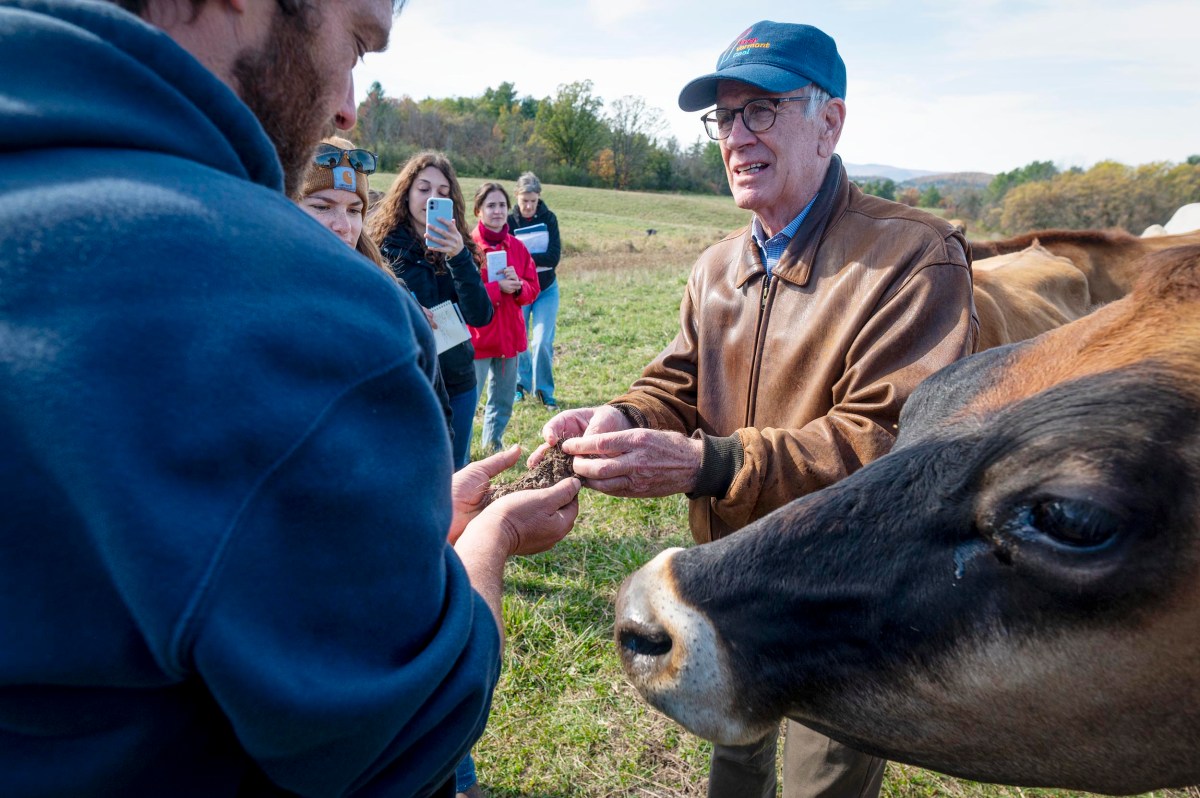
ORWELL — Jesse Wilbur, owner of Lazy Dog Farm, stood among his cows out in the dry pasture with U.S. Sen. Peter Welch, D-Vt., on Friday morning. Wilbur pointed to brown cracks in the soil, where he said he stuck his hand a foot deep a day before.
Wilbur, in his dusted farm pants, picked up a clump of stiff grass, yellow around the edges, and put it in Welch’s hand.
“Now, is that a piece of lettuce that you’d want to eat?” Wilbur asked.
Welch had gathered with a handful of neighboring farmers at Wilbur’s farm in Addison County to reflect on how Vermont’s historic drought is stressing the state’s farmers.
Drought conditions have stunted Wilbur’s feed production on his dairy farm and stressed him financially. And Wilbur is just one of many farmers feeling the drought’s effects.
On the last day of September, Vermont officials wrote a letter to the U.S. Department of Agriculture and asked them to issue a statewide disaster designation, which would open up federal aid to assist Vermont’s farmers. But the federal government shut down the next day — halting work at the federal department.
Now Vermont’s letter is awaiting reply.
The disaster designation could provide Vermont farmers with “a bevy of programs,” said Anson Tebbetts, secretary of Vermont’s Agency of Agriculture, Food and Markets. Those programs include low-interest loans and emergency funding to cover losses in livestock or crops.
On Friday morning, the state agency launched a survey to get input from farmers about damages they’re facing as a result of persistent drought. It’s open until Dec. 15. Documenting the effects of drought goes a long way when pushing for policy change or asking for aid from Washington, Welch said.
Welch and Tebbetts urged farmers gathered outside of Wilbur’s big red barn to fill out the survey. In turn, the farmers shared stories about how they’re hurting.
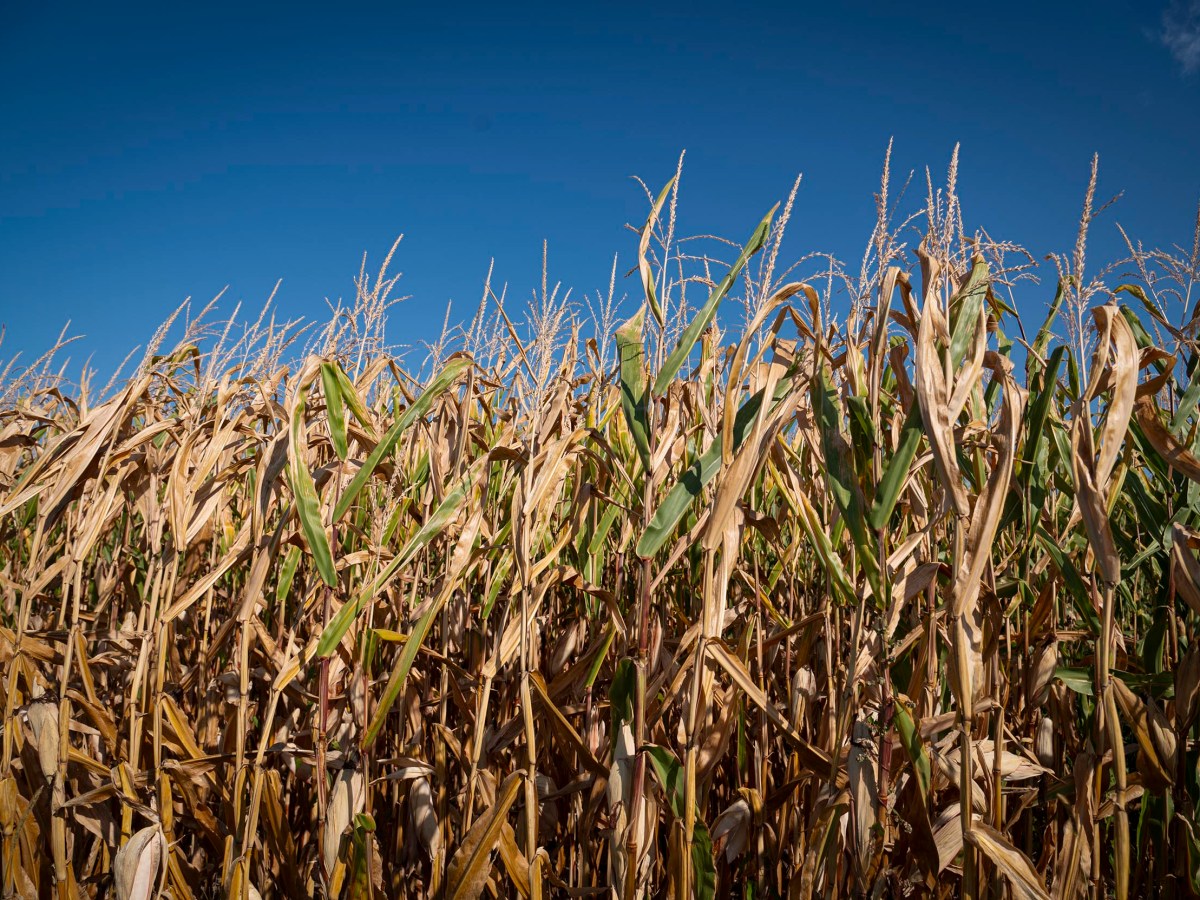
Jon Lucas, who owns the Lucas Dairy Farm in Orwell, was the first one to speak. He said that rain in April and May pushed back planting of his crops. But then it stopped raining altogether, which made it hard for the crops to grow and delayed cutting them.
The wells that supported Lucas’s cattle went dry, he said. Then the pond did too. Now he borrows a truck to haul water from a creek down the road.
“We just put in a well last week. It’s not up and running yet, but we had to spend money in getting more water,” he said. He had a new well drilled because he doesn’t want to haul water during the winter and isn’t sure how much longer the drought will continue.
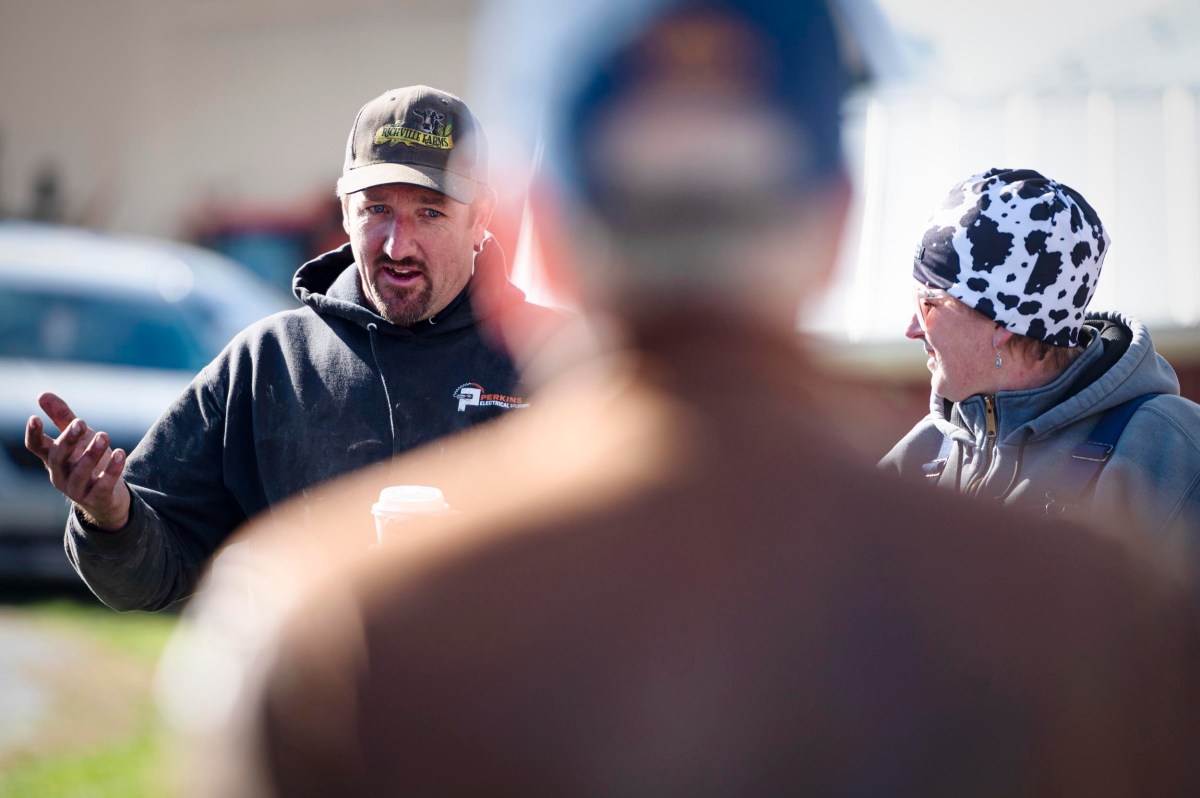
Kylie and Jeremy Chittenden, who run nearby Richville Farms, said the quality of their feed was bad as a result of the drought, and they had to compensate by buying grain to feed their cows.
“Maybe one of the greatest things about farmers is we’re eternally hopeful for a better day,” Kylie Chittenden said. “And so we’re like, well, we’re just going to keep going because it’s going to rain soon, but soon just didn’t come.”
The farm had to source 4,000 tons of corn from out of state and will probably have to source 2,000 more, she said. And while their crop insurance alleviates some costs, it is still going to be a significant expense, according to Kylie Chittenden.
Some farmers said they bought feed from Canada, but many said they have to truck in feed from further states because the whole Northeast has been impacted by the drought.
The Vermont Agency of Agriculture also maintains a Feed-Finder Marketplace page to connect farmers and help them find feed to buy.
Jesse Wilbur, the owner of Lazy Dog Farm, said that even if the state received the disaster designation for the drought, it would probably still take time to receive funds, as farmers are only now receiving funds for the losses they suffered from heavy rainfall and flooding in 2023 and 2024.
Welch said that he wants government aid to help farmers get through the drought. He said it was “terrible” that farmers have to grapple with drought conditions when they’re still reeling from the financial losses caused by flooding.
“We had some other assets we were able to sell and move around to cover our expenses,” Wilbur said, explaining that he used that money to buy feed.
“We’re able to survive through it, which is good,” he said, but added that many of his fellow farmers are “a bit more financially unstable.”
Jessica Hays Lucas, an organizer for The Northeast Organic Farming Association of Vermont, said that her group is pushing the state to fund an emergency relief fund for farmers.

Last legislative session, the organization lobbied for the Farm Security Fund, which would reimburse farmers for up to 50% of uninsured or uncovered losses. The organization is asking the state to buy into that fund, Hays Lucas said. In the spring, a bill to create the fund cleared the Vermont Senate before being left behind in a House committee.
Aid from a state fund “can be more nimble” than federal assistance and would have gone a long way this fall, Hays Lucas said.
“I’m fearful that there isn’t that many of us in agriculture anymore,” Kylie Chittenden said. “Our numbers start to shrink really quick when we don’t have the resources to take care of our business, like our cows and feed.”
