


In Berlin, an elder care facility that serves about 150 people saw all of its wells go dry. Now the town — which is getting 50% less water from its own wells — has to jury-rig a system to make sure Berlin Health and Rehabilitation Center stays up and running.
“I run a fire hose over to their storage tanks,” said Craig Pelletier, the town’s public works supervisor.
Berlin isn’t alone. According to the U.S. Drought Monitor, almost 94% of Vermont is in a severe drought, while almost 24% of the state is in an extreme drought, with Orange County, Windsor County and Rutland County being the most impacted.

Though many residents hoped recent rain would provide relief, any solace will be piecemeal. Rainfall throughout the week of Sept. 21 is “mostly going to be a drop in the bucket,” said Robert Haynes, a meteorologist with the National Weather Service in Burlington.
After Sept. 28, warm temperatures accompanied with a high pressure system are expected to exacerbate the drought, Haynes said.
One effect of climate change is that it often leads to a “swing between extremes,” Haynes said. In 2023, Vermont had its wettest summer on record, while this year’s summer has been extremely dry — a huge change in just a matter of two years, he said.

According to the National Integrated Drought Information System, this past August has been the driest on record in Vermont since 1895.
With scientists predicting that drought will persist in the coming weeks, Vermonters say low water levels around the state are prompting towns to conserve water, affecting aquatic ecosystems, and creating barriers to recreation.
‘It’s just that bad, I guess’
In Berlin, one of the town’s four industrial-size wells recently went dry, Pelletier said. He estimates that the town’s overall water production is down by about 50%, he said.
The significant decline in production prompted Pelletier to issue a water conservation notice last week. The town issued the mandatory notice to its approximately 115 connected users, most of which are commercial businesses, Pelletier said.
“This wasn’t a ‘pretty please’ thing. It was kind of, we need to do this to get through this drought together,” Pelletier said, referring to the notice.

Pelletier is working with state officials and well-drilling companies to see if the town can find a stopgap fix and reach some untapped aquifers underground to keep everyone up and running.
“They’re drilled really deep. You know, they’re supposed to have plenty of storage — and it’s just that bad, I guess,” Pelletier said.
Until then, he said, the town is carefully threading the needle.
Neighboring city Montpelier issued a similar conservation notice on Sept. 18 after water levels in Berlin Pond, the city’s primary water source, dipped below the threshold for conservation. The city asked businesses and residents to cut back on water use and be mindful of when they’re turning on their taps.
Another Washington County town, Plainfield, issued a conservation notice on Sept. 16. The town gets the majority of its water supply from a number of springs nearby, but those springs haven’t been able to meet the town’s demand in recent months, said Tristan MacGregor-Stewart, the town’s chief water system operator.
Luckily, the town has a number of backup wells that it’s begun to draw from periodically since August. But pumping water from the wells is more expensive, MacGregor-Stewart said. The notice is a preliminary measure, to start conserving before the town has a big problem, he said.
One of Lunenburg’s fire districts is also under a water conservation notice. “Our water resources are depleted and the daily usage of customers needs to drop immediately,” said the town’s notice from Buddy Ball, the chief water systems operator.
Since Aug. 22, the state has received 398 reports of drinking water supply shortages or outages, mainly from private homeowners, according to Ben Montross, with the Vermont Department of Environmental Conservation, who said this is the worst drought he has seen statewide in 12 years. Of those reports, 77% represent shallow groundwater meaning a spring or a dug well, and 20% represent drilled wells.
Residents in Orange County, in the driest part of the state, submitted the most reports, making up 21% of all reported shortages.
At least five water systems across the state have also reported using alternate sources of water, according to Stephanie Brackin, a spokesperson for the Agency of Natural Resources. Those neighborhoods range in location from Pownal to Newbury.
It’s possible that more towns and cities are operating under water conservation notices, but municipalities aren’t required to alert state officials when they issue the local warnings, Brackin said.
In Corinth, an Orange County town that was one of the first in Vermont to see extreme drought conditions, residents are suffering.
People who live in town have been going to the town hall for water because their wells have gone dry, said Martha Brough, the town’s clerk. Margaret Loftus, who owns a farm in town, said she’s heard of people showering in local schools.
Low water levels
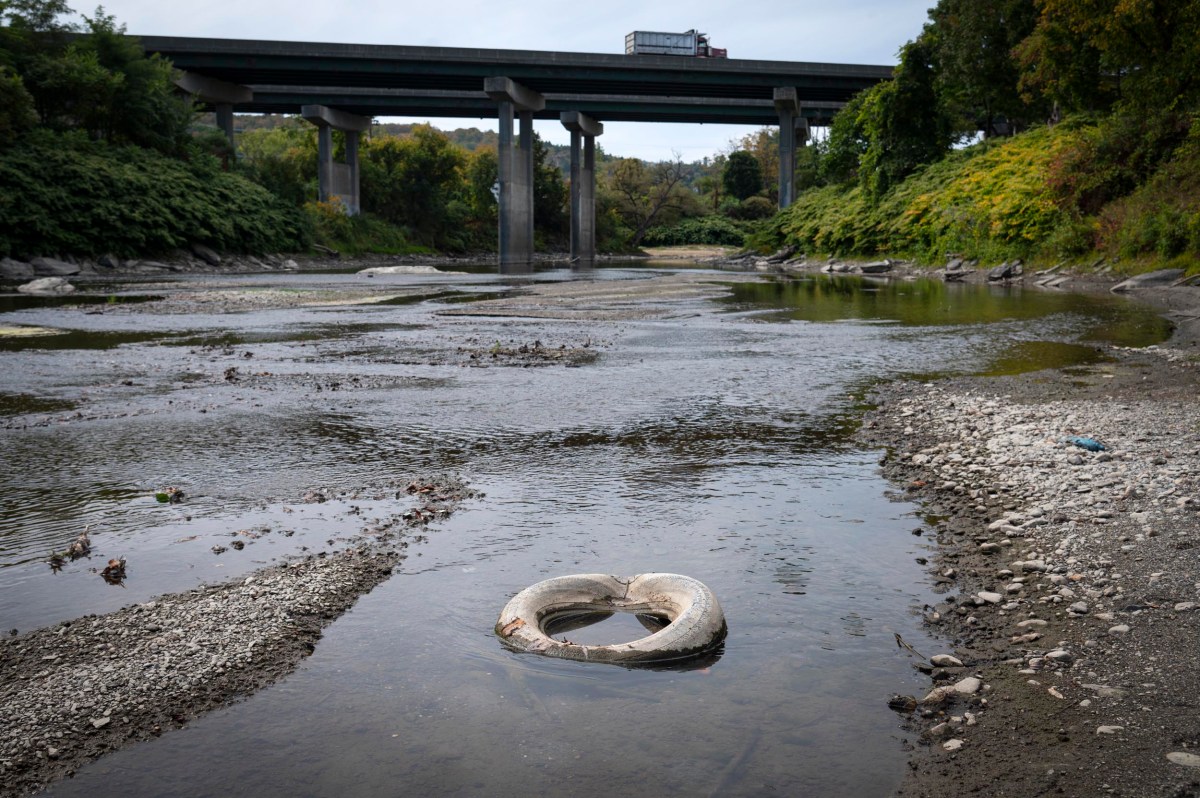
While sources of drinking water are drying up around Vermont, lakes, rivers, and streams have also been drastically impacted.
“A number of them are recording their lowest value on record,” state climatologist Lesley-Ann Dupigny-Giroux said.
Vermont is experiencing at least five types of droughts at once, according to Dupigny-Giroux. A meteorological drought, driven by scarce precipitation, has dried out soil and led to agricultural drought. As conditions worsened, lakes, rivers and streams were hit by a hydrological drought, while the impacts on food production and prices pushed the state into a socioeconomic drought.
“A lot of the impacts that we’re seeing were exacerbated by how quickly the summer drought kicked off, which is a flash drought,” Dupigny-Giroux said. The flash drought — a rapid onset drought that deteriorates quickly — began between June and July but then ramped up in August, she added.
Although Vermont has experienced droughts in the past, what’s unusual this time, Dupigny-Giroux said, is that the state has been experiencing a flash drought coupled with the hydrological drought since last year.

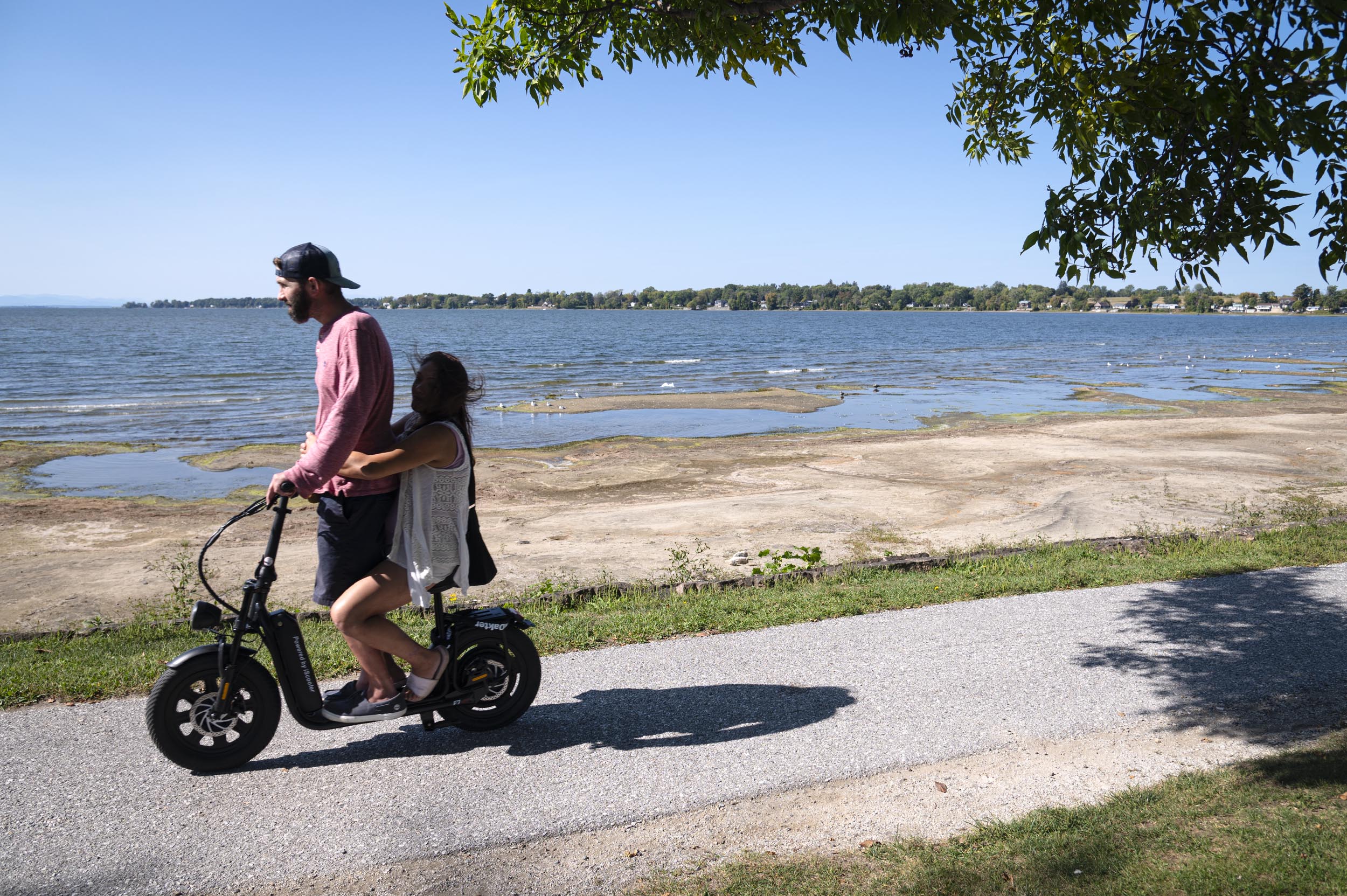
“I spent most of my life in and around Lake Champlain ever since I was a kid, and I really have not seen water levels like this before,” said Julie Silverman, Lake Champlain lakekeeper with the Conservation Law Foundation.
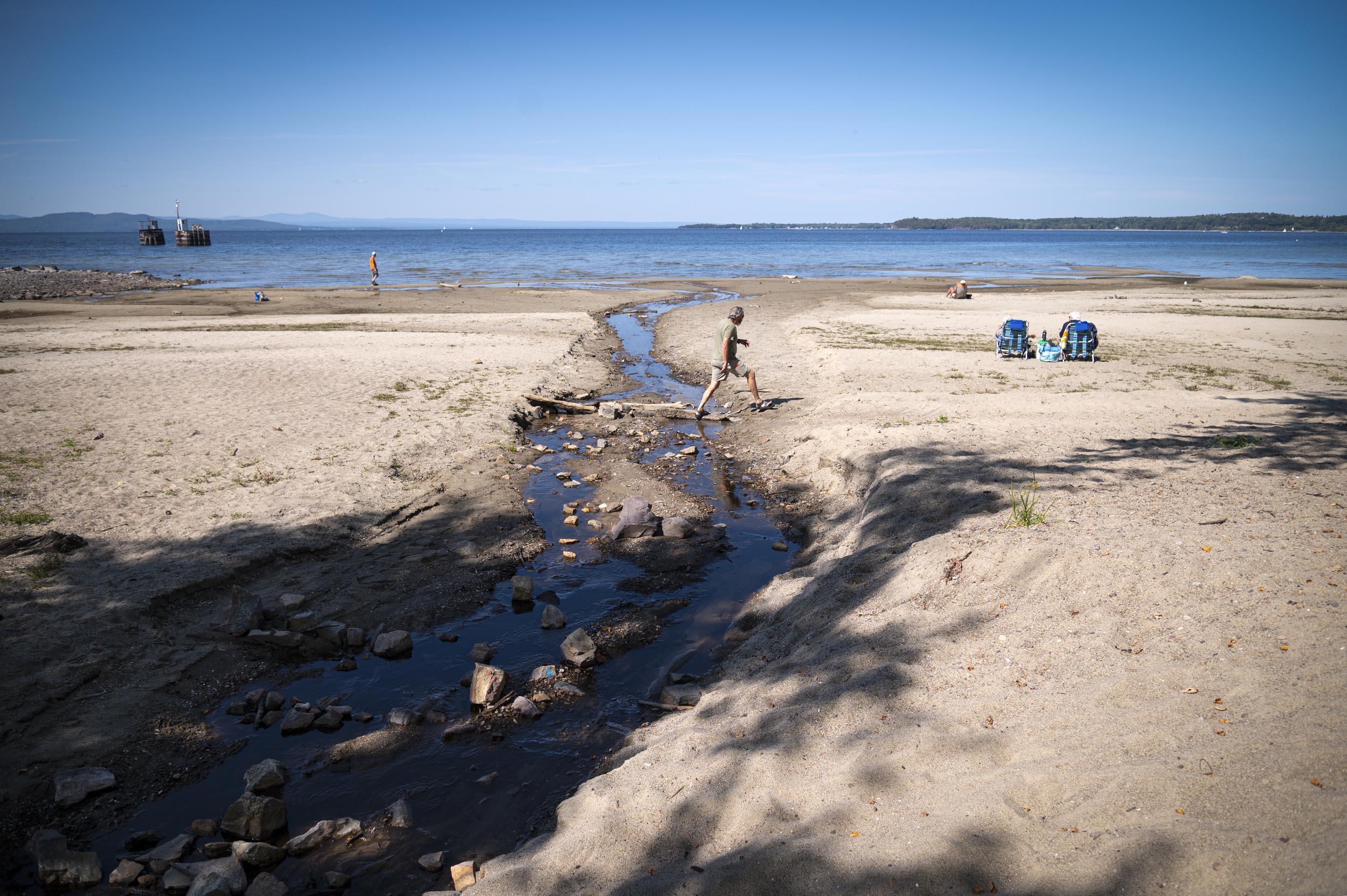
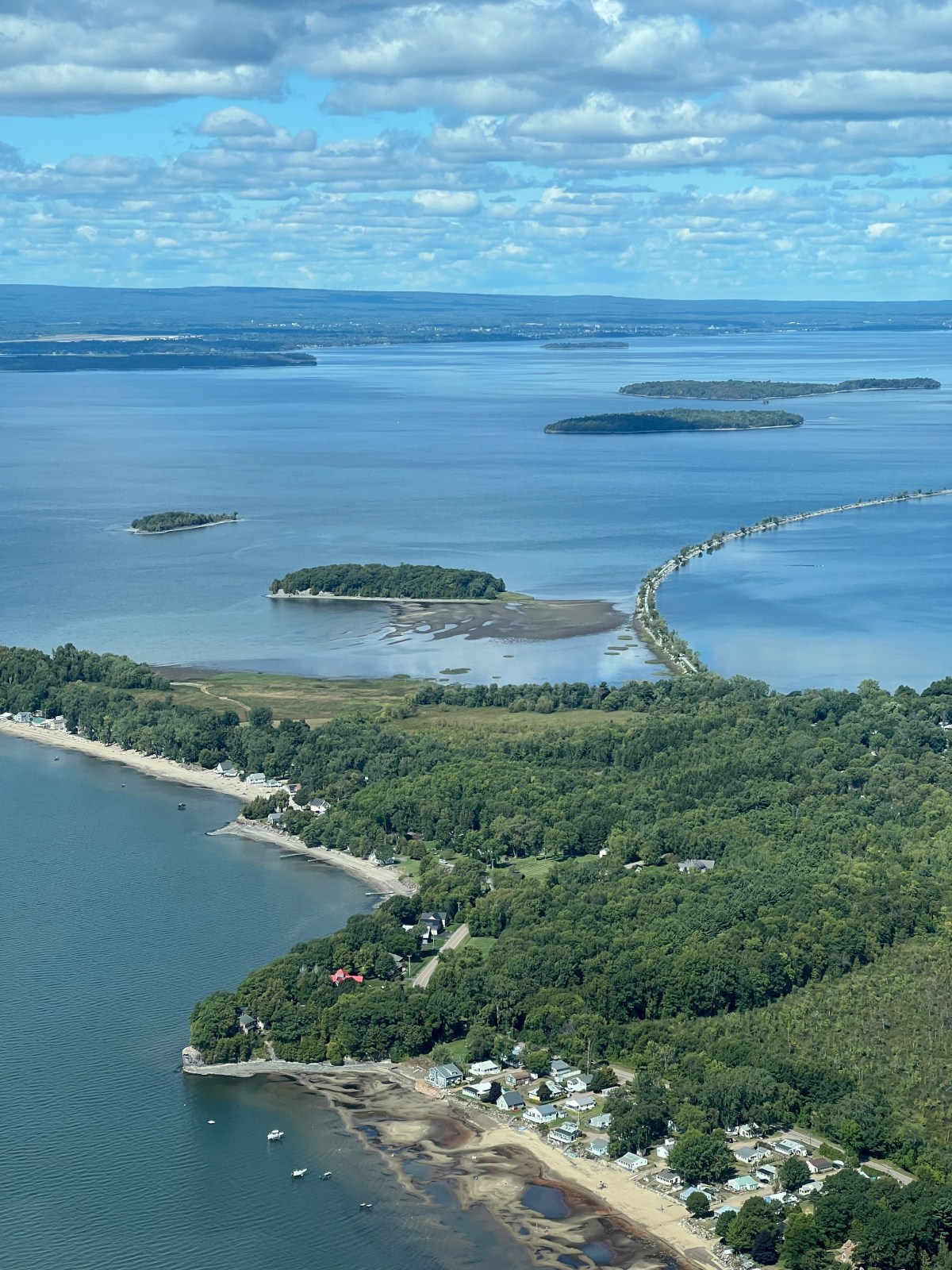
During her monitoring activities in the lake, Silverman said she was struggling to paddle to Law Island in Lake Champlain due to the lower water level. “People are actually able to walk to islands and other parts of Lake Champlain that they’ve never really had access to before by foot,” she said.
The fluctuations the lake has experienced between floods and extreme drought impact the entire ecosystem, Silverman said. “These are really dramatic extremes that put a tremendous amount of stress on animals as well as plants.”
“The lake is so low that we’ve lost a lot of shallow water habitat,” said Jason Stockwell, director of the Rubenstein Ecosystem Science Laboratory at the University of Vermont. “The decrease in water level will affect the availability of such habitat for young fish to find food to eat and also to hide from predators.”
As the water level decreases, and the water temperature rises, different species are forced to share a shrinking band of livable habitat, with surface waters too warm and low-oxygen areas at the bottom of the lake expanding, according to Stockwell.
The phenomenon intensifies competition among species, Stockwell said, leaving fish such as rainbow smelt, which would normally be in cold waters at the bottom of the lake, more vulnerable to predators and exposing spawning sites to anglers, wind storms and waves.
According to Dupigny-Giroux, the state climatologist, collecting data on drought impacts can help determine if Vermont is also going through an ecological drought, in which the landscape changes and cannot be reverted to what it once was. If some streams become permanently dry or some species leave and don’t come back next year, for example, the state would have experienced an ecological drought.
For this reason, Vermont officials encourage people to report drought impacts they notice across the state.
“Reporting impacts, reporting any observations are so critical for us to be able to piece together all of the parts of this jigsaw,” state climatologist Dupigny-Giroux said.

Limits to recreation
While Vermont’s water bodies run low, Vermonters are seeing their aquatic activities limited around the state.
In Burlington, “several weeks ago, we actually started to move boats that were in more shallow areas,” said Robert Peterson, the city’s Parks, Recreation and Waterfront’s marina manager.
Peterson said they had to move 10 or 12 boats from Perkins Pier to the Burlington Boathouse Marina, which is deeper, and pull some boats at the Boathouse Marina further back into the water or move them to deeper slips.
“We’ve certainly had low lake levels before, but just not to this extent and not this early,” he said.
Joe Tyson, state parks regional manager for the Northwest region of Vermont, said park staff have been contacting people with reservations at the park to inform them that, with water levels so low, it may be challenging to access the parks by boat or launch a boat from there, especially with motor boats.
“At Grand Isle State Park and Burton Island State Park, we proactively reached out to folks to let them know that it’s going to look different this year than it has in the past,” Tyson said.
Victoria Edwards-White, coach of the rowing team at the University of Vermont, said the team generally heads to Lake Champlain from the Lamoille River, but lately they have been facing some challenges due to the low water levels. While the boats used by the athletes aren’t very deep, the coaches drive boats with outboard motors that go deeper into the water, which are needed to reach the athletes in case there are any problems.
“We’re getting to the point where, if we don’t see any rain in the next few weeks, we are at risk of not being able to operate at all,” Edwards-White said, adding that a lower water level would risk damaging their equipment.
With low water levels, weeds and reeds are getting stuck in the oars and the engines, Edwards-White said, and the team hasn’t been able to access part of the river because of that.
On other bodies of water around the state, anglers are feeling the impacts of low water levels on their local fishing spots.
Nick Mahood, who oversees the fly-fishing program at the Woodstock Inn & Resort, said his guides usually lead groups on fishing trips into the Ottauquechee River, the White River and smaller tributaries near Woodstock. But this year’s low water levels have completely changed the game.
“The water levels are so low, we’ve had to pretty much completely stop any sort of small stream creek fishing for brook trout or native wild trout. That’s been really challenging,” Mahood said.
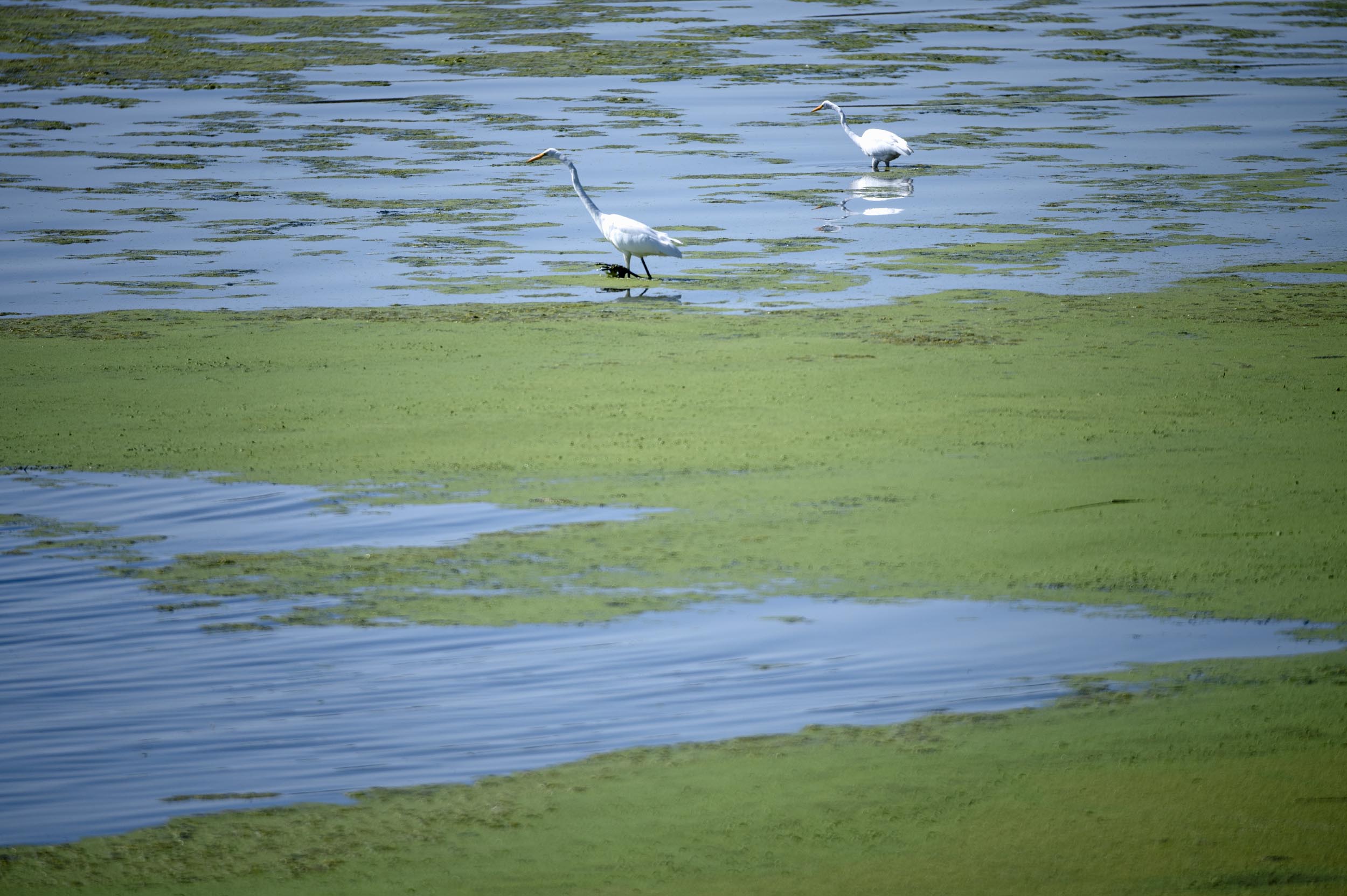
His guides no longer consider smaller rivers suitable for fishing, and the program hasn’t been able to fish the Ottauquechee River in the last five or six weeks, Mahood said.
Fishing for trout is usually a big part of the inn’s program, Mahood said. But when water runs low, its temperature rises faster, even in large rivers.
Trout don’t do well in water above 68 degrees Fahrenheit, and this year, water temps surpassed that marker early in the summer, leaving anglers to fish mostly smallmouth bass in the White River, he said.
Northeast of Mahood is Bob Shannon, who owns the Fly Rod Shop in Stowe, a business that also takes anglers out on guided trips. In the fall, he mostly books trips to fish brook trout on mountain streams. Usually he takes groups out to Miller Brook, Ranch Brook, Notch Brook and Gold Brook — but this year those streams are so low there isn’t enough water to fish in them.
Shannon has adapted by mostly taking groups to ponds and lakes nearby, but sometimes that isn’t the trip more experienced anglers want — and he’s seen it affect his business.
“Most of our fly fishing clients would rather fish in moving water on, you know, a beautiful fall foliage stream,” Shannon said.
Auditi Guha contributed reporting.
