

This commentary is by Ella Shaffer, of Johnson. Shaffer works in the Department of Vermont Health Access. Her commentary does not reflect the opinion of her employer.

Just before Labor Day weekend, state workers received a memo informing of the governor’s intent to erode labor rights by having employees return to office a minimum of three days per week. Whether this timing was intentional or simply poorly thought out, the optics are not lost on me. Communications from senior leadership thus far surrounding this change have only felt like further cheapshots to the gut. The secretary of administration sends updates about office camaraderie and mentoring colleagues, about small talk in the hallways and personal connections.
In a video sent to all employees, Scott himself waxes on about the connection to our community that the office brings, as if at the office we aren’t siloed into cubicles behind locked doors. I can’t help but wonder if those who are making this decision have worked in an average office since the Covid-19 pandemic. They seem to imagine an office as some out-of-touch reality, aspiring to recreate something reminiscent of an ’80s sitcom watercooler. Our world has changed, and the way we work has adapted with it, though our leadership fails to follow the trend.
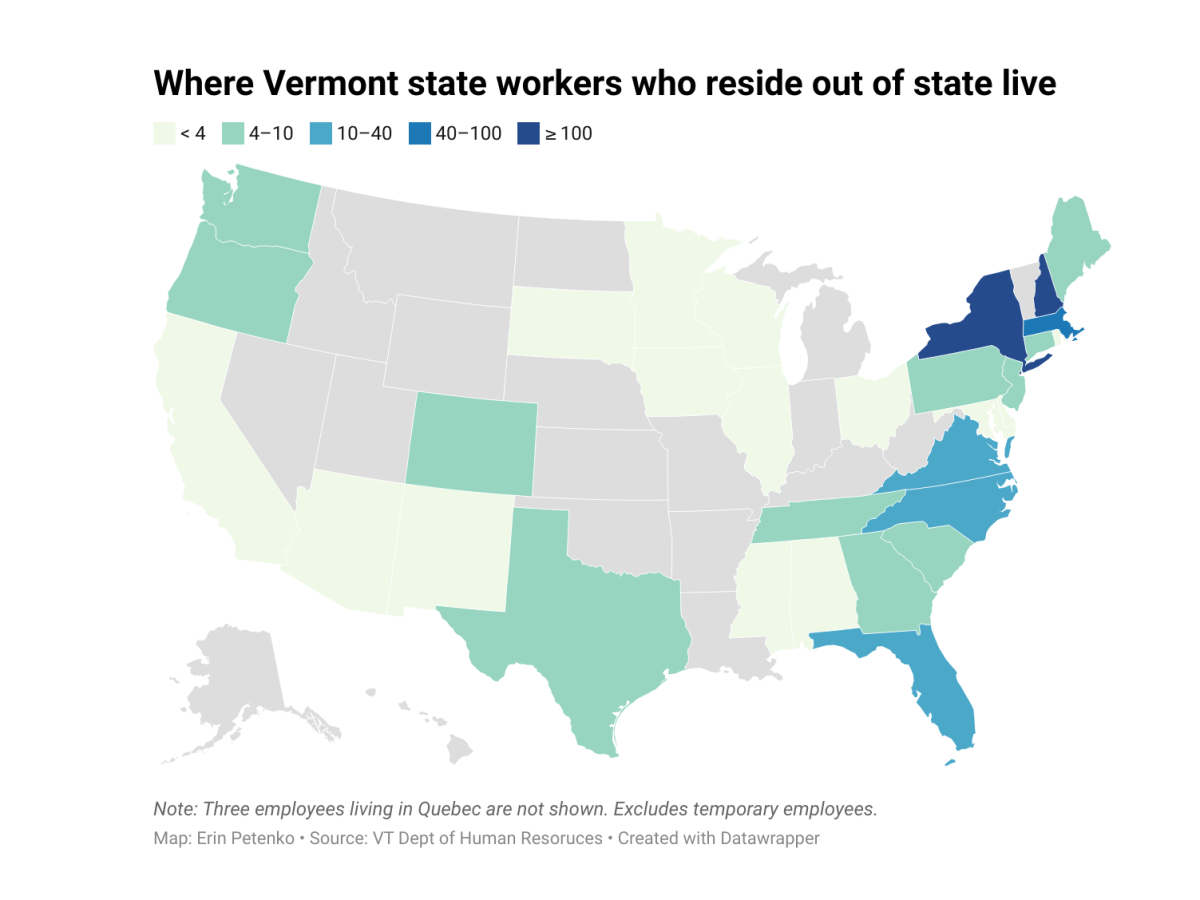
My department conducts an annual employee engagement survey. Routinely, we see remote work as a top benefit enjoyed by employees. It affords a work-life balance we are privileged to have and one I personally would fight for all workers to enjoy whenever able. To this end, my department recently consolidated employees from multiple buildings into one space and moved to an even more remote schedule. I’m not sure that we will all fit in the remaining space with the new proposed schedule, and I’m not sure the governor’s office has considered this. In fact, the Scott administration has not consulted our department leadership at all — at least, from what I understand.
Despite this more remote schedule, my team is more collaborative than ever. We meet twice weekly on morning check-in calls to discuss the week. We share nature pictures and family stories via email. We discuss weekend plans and share inspirational quotes every Friday. On our office days, we get lunch together (a potluck or takeout from somewhere local) and play games while eating. Our commissioner hosts office hours and town halls to field questions, and our admin staff prepares newsletters of local events, farmer’s markets, and tips for well-being. This is what modern connection and collaboration looks like. In the years since the pandemic, we have totally transformed to thrive in this remote environment and our culture is stronger than ever. Unfortunately for us, the culture we have created does not involve the hallway chitchat nor the copy-room small talk that the governor and secretary of administration so desire.
The past few months have been tough. We’ve seen the erosion of civil rights nationally, the decimation of federal career civil servants and the financial strain of mindless tariffs. As a state employee, it is a struggle to focus some days when everything in the news is so bleak. How do you go on with the day-to-day when it feels like the world is crumbling? We are looking down the barrel of massive funding cuts in the coming years, and still our sole focus is to continue to help Vermonters. I can’t shake the feeling that these budget cuts are the impetus for this all.
Scott’s order to limit remote work will only serve to burn us out further. To spend hours more commuting, paying for gas and car maintenance; to find childcare or eldercare; to spend more on take-out meals — all just to sit in an office staring at the same screen we’d be staring at at home. We’ll sit in the office and video chat. We’ll continue to receive voicemails. Send emails. Review medical documentation, sent to us digitally. We will do all the same work that was done previously, but we’ll be more tired from it. More run ragged. More irate. Service will suffer. We’re already short-staffed; my colleagues who live far from the office may look for other opportunities, and any potential new hires will have fewer incentives to join our team.
Scott’s proposed policy feels like a slap in the face. He suggests that we are missing something that only in-person work can provide, yet neglects to share data backing this up. In troubling times like these, I would hope to see our elected leaders support civil servants. I would hope to see them stand up for Vermonters. I would hope to see them plant our flag and defend our own. Because I’ve seen the alternative, like what has happened to the federal workforce, and I am afraid that it will catch us here, too. If they won’t stand up for us now, will they stand up for us when worse comes knocking? Perhaps the governor should focus less on sending our state workers into disarray and more on protecting Vermont from what is playing out on the federal stage.
