

The Department of Corrections is familiar with crises. Whether deaths in custody, violence against staff and incarcerated people, smuggling of contraband or widespread (and mostly unsubstantiated) HR investigations, incidents regularly require examination.
So lawmakers created the corrections investigations unit, a group tasked with internal investigations and housed outside the primary DOC office. Staffed in February last year, the unit focuses on incidents including deaths, escapes, contraband movement, threats to staff and people in custody and allegations related to the federal Prison Rape Elimination Act.
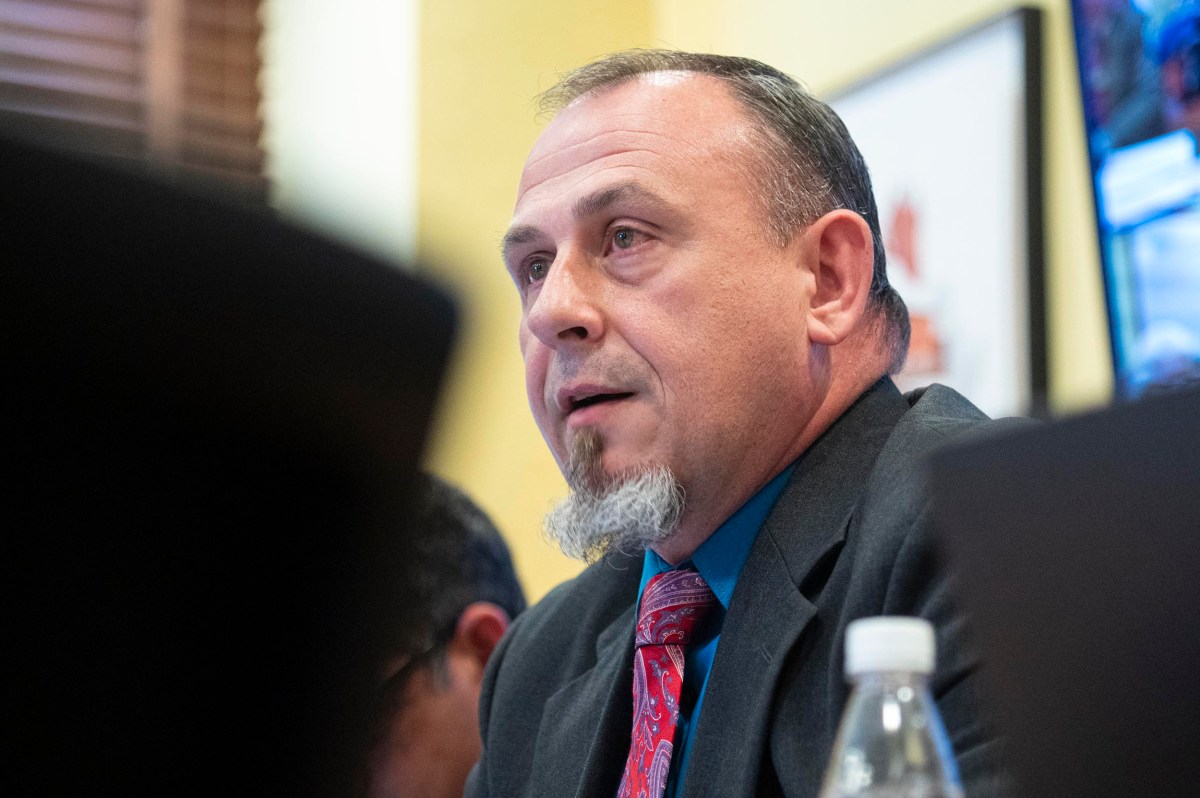
To date in 2025, the unit has dealt primarily with the latter: 56% of 88 cases investigated have involved sexual harassment or abuse, according to Aaron Reichert, the unit’s director. Roughly 5% of the unit’s cases have revealed a substantiated allegation, he told lawmakers in the House Corrections and Institutions Committee Thursday morning. And if incarcerated people are found to have made a false report, they can face punishment for lying, including being sent to solitary confinement.
According to Reichert’s testimony, his team — he and two other investigators — has increasingly tracked the movement of narcotics inside Vermont’s prison, including one unusual intoxicant: paper soaked in insecticide.
“They’re trying to get into facilities so they can get that impairment that they’re looking for. There are several internet sites dedicated to selling the paper already pre-soaked so somebody doesn’t have to get the chemicals themselves to do so,” Reichert told the committee. “This is a problem nationwide.”
Sometimes, the paper arrives in mail marked “legal confidential,” Reichert said, which corrections staff aren’t allowed to open.
To suss out infractions, the investigations unit surveils the state-issued tablets provided to most incarcerated individuals and used for messaging people outside prison. By targeting certain terms, Reichert said the unit has identified people communicating about using banned substances, such as asking friends or family members to make payments for drugs.
“If they’re a heavy user, they incur a substantial debt,” Reichert said. “We had one individual from October last year to mid-January of this year, we had established that he had … using friends and family and girlfriends, he had spent $15,000.”
—Ethan Weinstein
In the know
Rite Aid expects to close or sell off all five of its Vermont locations as the struggling national pharmacy chain goes through bankruptcy proceedings.
In court filings, the company has said it plans to wind down operations at the more than 1,200 drugstores it operates nationwide in the coming months. Among those are locations in Bethel, Brattleboro, Randolph, Springfield and Windsor. Closure would leave at least two of those communities without a pharmacy.
Read more about the bankruptcy filings here.
— Habib Sabet
On the move
The House and Senate this week agreed on a state budget proposal for the 2026 fiscal year, which starts in July. The chambers’ joint $9.01 billion spending plan — which includes provisions legislators say could limit the impacts of potential federal funding cuts — now heads to Gov. Phil Scott for his consideration.
Over several recent meetings, a joint panel of legislative leaders whittled down the bill’s proposed “base” spending — money to fund recurring expenses year-over-year — by about $21 million compared to the version of the bill that was passed by the Senate.
Scott, a Republican, had criticized the level of spending in that chamber’s proposal and urged legislators to cut it back. Ultimately, the House and Senate’s joint proposal is still slightly larger than the $8.99 billion spending plan Scott presented to them in January.
The compromise version of the budget, H.493, nevertheless won near-unanimous approval in floor votes in both chambers this week. The Senate voted by voice, so no members’ individual votes were on the record; in the House, just three members voted against the bill.
Amanda Wheeler, a spokesperson for Scott’s office, signaled support for the budget bill on Thursday afternoon, though she said the governor still needed to review it in full.
Read more about the budget compromise here.
— Shaun Robinson
Gov. Scott signed into law on Thursday S.27, which would use $1 million in funds appropriated to the Treasurer’s Office to erase $100 million in Vermonters’ medical debt, though his announcement also listed a few concerns about the bill.
First, he said, the debt has already been written off and, thus, contributed to higher insurance rates. Second, the program’s funding requirements may grow as debt increases. Finally, he worried “we may be disincentivizing repayment.”
The bill, which takes effect July 1, also will prohibit credit reporting agencies from taking into account Vermonters’ medical debt when determining their credit scores.
— Kristen Fountain
Visit our 2025 bill tracker for the latest updates on major legislation we are following.
Fashion police
The House rejected a motion Thursday by Rep. Brian Cina, P/D-Burlington, that was meant to give his colleagues formal permission to be able to take off their dress jackets while on the floor. Going jacket-less is, by some interpretations, against House rules, which state that members must wear “business professional attire” while the chamber is in session.
Thus, when the weather warms up each year, it’s tradition for a House member to ask that the rules be suspended for purposes of personal comfort. But Cina, who has been in the chamber for nearly a decade, said in an interview Thursday that he could not recall a year when such a proposal got voted down.
After Cina moved to suspend House rules, Speaker Jill Krowinski called a voice vote. But the “nays” sounded extremely similar to the “yeas,” prompting Krowinski to say, “whoof.” Someone then called for a division vote, where members stand to have their votes tallied.
The result of the vote was 83 in favor, 38 against — not enough to cross the three-quarters threshold needed for a rules suspension. The vote prompted a mix of laughs and bewildered looks around the chamber. Cina, for his part, said he was genuinely upset by the result.
“I’d like to make a point of personal privilege and express disappointment that people would vote to choose for others to suffer needlessly,” he told his colleagues. “And I think that this is telling and symbolic of where we’re at as a civilization.”
The Burlington Rep. said he plans to make the motion again Friday morning.
— Shaun Robinson
