

Theo Wells-Spackman is a Report for America corps member who reports for VTDigger.
Funds from an anti-poverty grant program targeted by the Trump administration have been unusually delayed, drawing sharp criticism from Vermont’s congressional delegation.
The monthslong wait for this year’s federal Community Service Block Grant funds comes amid a push from the White House to eliminate the program entirely from the federal budget. Service providers in Vermont say federal grants have become increasingly unreliable, and that losing this funding stream would be a deep blow to the housing, food and fuel assistance programs the money helps support.
U.S. Sen. Bernie Sanders, I-Vt., U.S. Sen. Peter Welch, D-Vt., and U.S. Rep. Becca Balint, D-Vt., demanded in a letter last week to Health and Human Services Secretary Robert F. Kennedy Jr. that the Trump administration release the funds immediately.
“We write to express our strong opposition to the illegal and unconstitutional decision by the Trump Administration to delay over $810 million in funding for the Community Services Block Grant (CSBG) program,” read the joint letter.
In Vermont, the program delivers roughly $4 million in annual support to the state’s Community Action agencies. That amount is broken into multiple payments each year — but the state is still waiting for more than $3 million in funds for the fiscal year ending in September.
“We see it as a critical piece of the infrastructure in Vermont to respond to community needs,” said Lily Sojourner, who heads the state Office of Economic Opportunity.
Though it’s normal for grants like these to have somewhat unpredictable timelines, Sojourner said in an interview Monday her office had expected the remaining funds to arrive earlier. Federal officials have told her the funds will arrive eventually but have not provided an estimated timeline, she said. The federal Office of Community Services, which administers the grant, also experienced staffing cuts recently, Sojourner noted.
In the meantime, she said, her office has floated the money providers need to run their programs. But at a certain point, Sojourner said, the state would have to decrease or freeze the available grant money until her team has the grant funding in hand.
“Hopefully it won’t come to that,” she said.
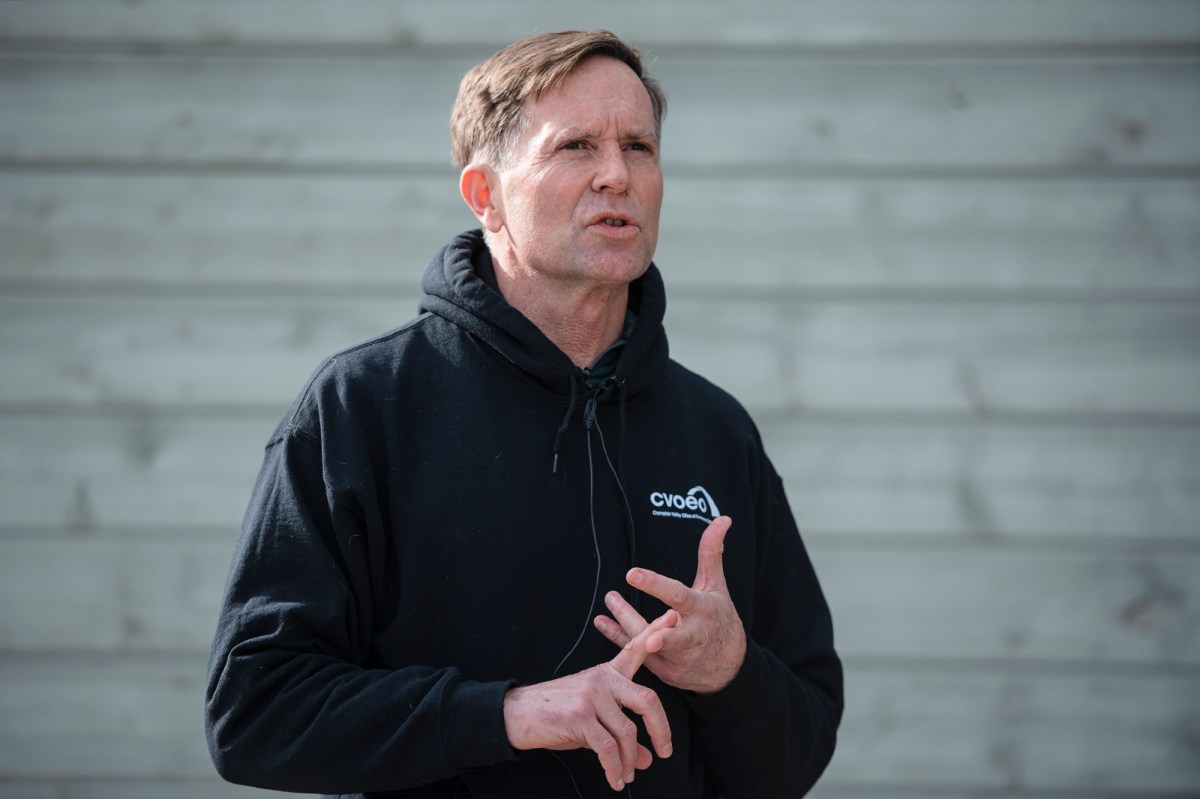
The block grant helps support shelters, food assistance and emergency fuel help, among other programs, according to Paul Dragon, who leads the Champlain Valley Office of Economic Opportunity.
Nearly all federal grants come with strict rules for appropriate use, Dragon said. The $1.1 million his organization receives through the block grant is a rare flexible funding source — though reporting requirements are extensive — and has become an “operational lifeblood” for Dragon’s team. He can shore up staff costs when necessary using these resources, he said, and generally prepare for the unexpected.
In the last year, the unexpected has become routine. Dragon’s organization lost a federal grant overnight in March 2025 that would have funded health checks for refugees in cooperation with the Vermont Department of Health. Other federal funds to help especially vulnerable people access housing also dried up temporarily last year, he said.
A freeze or cancellation of the Community Services Block Grant would be “disruptive” in the short term and “a big step backwards” in the long term for his organization’s mission, according to Dragon.
“We’ve built our budgets on this,” he said.
In its joint letter, Vermont’s congressional delegation pointed to the Trump administration’s last budget proposal, which sought to eliminate the Community Services Block Grant altogether. The program, the White House said, has been “hijacked from true poverty reduction to things such as equity-building and green energy initiatives.”
In recommendations for next year’s federal budget released last week, Trump again asked lawmakers to end the program.
Sanders, Welch and Balint reiterated that current funding must be released.
“These programs are literally a matter of life and death for some of the most vulnerable people in America,” they said in the letter. “Under our Constitution, you do not have the right to determine which laws you will follow and which laws you will ignore.”

