


In central Vermont towns, questions about the future have piled up faster than the debris left behind by floodwaters.
The lack of answers is just as disheartening as the destruction left in the wake of the July 10 storm, according to Plainfield Town Clerk and Treasurer Bram Towbin.
“It’s just very hard to have somebody come into your office who’s lost everything, and, you know, you don’t have answers for them,” he said. “Because the system is not designed for this.”
Plainfield’s town center was washed away last month when the Great Brook — a tributary of the Winooski River — ripped through local roads, taking bridges, culverts and homes with it.
A month later, Plainfield is still “apocalyptic,” said Dan Fingas, Plainfield’s volunteer coordinator. The town is staring down about $15 million in damage, he said. That’s about 10 times the town’s annual budget, according to Towbin — not including the $320,000 worth of repairs made after the July 2023 floods.
The lack of funding is just part of the problem, Towbin said. Plainfield, like most small towns, doesn’t have enough staff to respond to flood crises, infrastructure that can withstand torrential rain, or sufficient guidance from emergency preparedness and response experts, he said.
“It’s Plainfield now. It could be your small town or big town later,” Towbin said. “There needs to be a paradigm shift in thinking about how we manage these catastrophes because they’re going to keep on coming.”
Small towns bear the burden
The main problem with flood recovery, according to Towbin, is that the people who are the most overwhelmed and overworked — town officials and flood-affected residents — are the people responsible for picking up the pieces, without much financial or logistical support.
While he said he’s thankful for grants and Federal Emergency Management Agency aid that Plainfield has received since the 2023 floods, it’s not enough to fund recovery, let alone prepare the town for the future.
In nearby Middlesex, it cost $4.7 million to recover from the July 2023 floods, former town Treasurer Dorinda Crowell said during a public forum on Aug. 6. The town has added more than $500,000 to its tab in the weeks since this summer’s flood, she said.
But Middlesex has only received $530,000 in FEMA funding over the past year, according to Crowell.
“We thought we would have more by now,” she said, and she thinks Middlesex has “slipped through the cracks.”
The town has been reassigned to five different FEMA project managers since July 2023 and has needed to restart paperwork and application materials each time, she said at the forum. She spoke over the steady hum of dehumidifiers and fans that were drying out the recently flooded Rumney Memorial School where residents were gathered for the meeting.
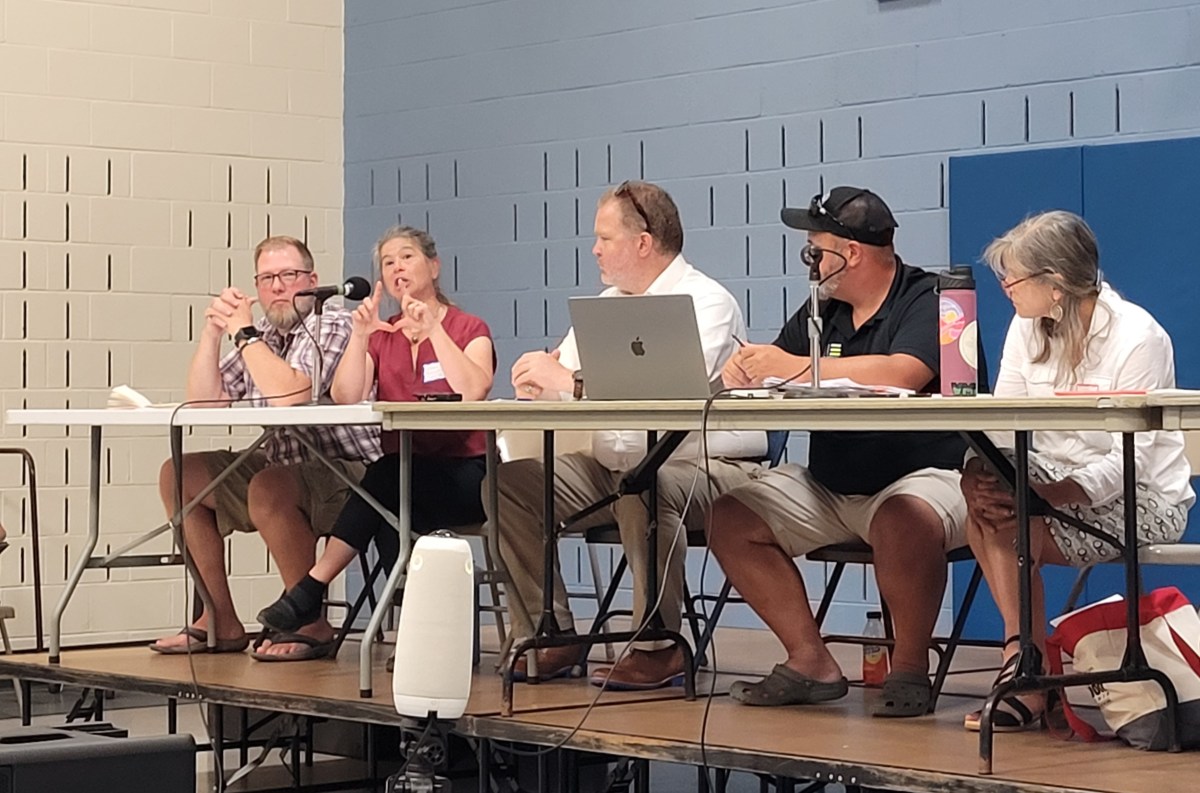
As small towns with little funding wait on an agency that operates on its own timeline, they cannot properly budget for other essential expenses, like funding school systems and paying town employees, Selectboard Chair Liz Scharf said at the forum.
Labor is just as big of a concern as money for small towns, Scharf said. Most of Middlesex’s emergency response has been coordinated by volunteers. While it’s inspiring to see the community come together, she said, “we’ve come to a point where we can’t rely on volunteers to do everything.”
In the first two weeks after this summer’s flood, there were often up to 100 volunteers a day working in Plainfield, Fingas said. They “helped in whatever way they could,” he said, whether that meant mucking out homes, running a donation center or ensuring residents had hot meals and clean water.
“But at the same time, we’re also advocating that the state and federal governments meet those needs in places that it doesn’t make sense for volunteers to,” Fingas said. Because in the height of a crisis, he said, volunteers have their own recovery work to worry about, too. And as floods become more common, they require more clean-up work as damages compound.
When every small town needs to rely on their own volunteers, road crew, emergency management director and other crucial town staff members, there often isn’t enough help to go around, Scharf said at the forum.
“This isn’t sustainable,” she said. “But I see hope for some change on a state level that really looks at our towns differently and thinks more on a regional level, rather than making our small towns bear the burden of what’s happening.”
County-wide collaboration could help with the cost of rebuilding, according to Reuben MacMartin, senior transportation planner of Central Vermont Regional Planning Commission. If towns pool their resources, they can purchase construction materials in bulk for cheaper prices and combine their road crews to tackle big projects, he said at the forum.
But Vermont’s government wasn’t built for regional collaboration, MacMartin said. Counties do not have authority over towns’ public utilities, zoning, emergency management and more essential services, according to a report from the National Association of Counties. With only about 70 county-level employees in the state — half of whom work full time — there’s not enough oversight to coordinate region-wide work, according to the report.
“The other potential obstacle there is going to be the cultural block of local control — the idea that somebody from outside is going to help us out,” MacMartin said during Middlesex’s community forum.
Vermont’s infrastructure wasn’t built for 100-year floods
While Scharf noted that local government structures were not designed for flood response, other members of the Middlesex forum said the very infrastructure that holds up Vermont’s towns wasn’t built for floods either.
Road infrastructure, such as culverts, were built to withstand day-to-day use, not statistically rare weather events plus the floodwaters and debris that are generated from them, according to Todd Eaton, manager of the Vermont Department of Transportation’s Vermont Local Roads program.

“Why do we not try to design a road to withstand what we call a 100-year flood? Because we can’t afford it,” Eaton said during the forum. Stronger infrastructure isn’t cheap to install or maintain, he said, and hasn’t historically been considered worth the cost.
But that thought process may be changing now that floods are becoming more common, said Staci Pomeroy, river scientist for the Vermont Department of Conservation’s watershed management division, who also spoke at the forum. Vermonters cannot change the weather or the erosion-susceptible clay and till that their homes and roads are built on, but they can control how they build them, she said.
“There are no easy answers. You are in for not a sprint, but a marathon,” she said. That means that while temporary fixes — such as placing “rip rap,” or large rocks, along roads to stop further erosion — may be economical in the short term, it may be best to start investing in long-term solutions.
A key strategy for flood prevention, Pomeroy said, is keeping rivers as stable as possible. That often means limiting dredging to strategic areas that are guaranteed to increase river and stream capacity. Even though Gov. Phil Scott issued an executive order that temporarily lifted certain recovery regulations, Pomeroy advised Vermonters to consult with the Department of Environmental Conservation about all intended dredging projects.
Removing debris and fallen trees can make rivers unstable when not strategically planned and executed, she said, adding that excessive dredging can make channels narrower and deeper, which triggers river wall failures and causes water to run faster during periods of heavy rainfall.
‘This is where the river wants to go’
Ultimately, it’s important to be realistic about the future, Pomeroy said. Areas that flooded last summer and this summer will likely flood again — and with more rain predicted for the rest of the summer, homeowners and town leaders need to consider how they can adapt to live with the water.
For homeowners, that means avoiding “like for like” repairs this summer, said Li Ling Young, lead engineering consultant for Efficiency Vermont, during an Aug. 7 webinar on flood resilience.

“When it comes time for rebuilding, you’re going to have a chance to maybe make improvements, and that might be the only upside to this,” Young said.
For some households, that could mean abandoning the idea of the traditional finished basement — “a hole in the ground, which is a hard place to defend” — Young said. Homeowners can consider sealing basement windows, replacing drywall with fiberglass, and mounting appliances to basement walls and ceilings or moving them upstairs entirely.
But in-home fixes won’t protect every Vermonter, Pomeroy said. In the areas with the highest flood risks, it may be time for homeowners to start having conversations about FEMA buyouts, she said. Meanwhile, town leaders could consider permanently abandoning roads to “give a little more room to the river” or shifting them to higher ground.
Middlesex residents gathered after the community forum to consider how much longer they’re willing to fight with floodwaters.
“At what point do we just say, ‘this is where the river wants to go’?” Middlesex resident Maribeth Domanski asked. “Maybe now. It’s a whole new ball game.”
Correction: A photo caption misspelled Staci Pomeroy’s first name.
