


Every year, there are so-called “miscellaneous” bills, chock-full of technical changes that often get far less attention than the budget or the big-ticket policy changes du jour. Take H.878, for instance: this year’s miscellaneous judiciary bill, which cleared the House late last month.
The bill would make dozens of tweaks to Vermont’s criminal justice statutes. Among them, though, is a proposal to scrap language that many people might be surprised to learn is still on the books here: measures prescribing the use of the death penalty and the method.
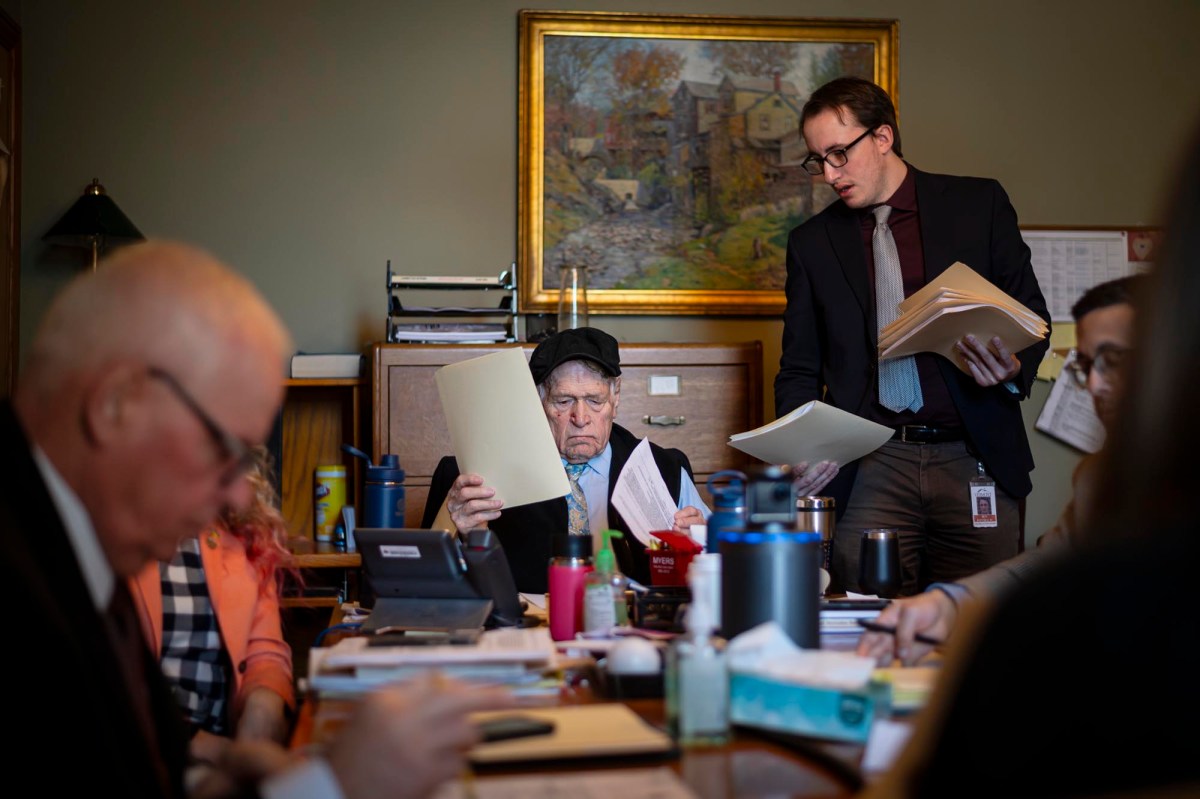
Notably, no one has been executed in Vermont since the 1950s. And Erik FitzPatrick, an attorney with the Office of Legislative Counsel, told the Senate Judiciary Committee on Thursday that the state’s laws on capital punishment have, actually, long been unconstitutional under a 1972 U.S. Supreme Court ruling.
“In order to reenact a capital punishment system — which many states did — they had to rewrite their statutes in order to comply with (that ruling),” FitzPatrick testified. “Vermont never did that.”
FitzPatrick also noted that there is only one offense on the books in Vermont today that, technically, still carries a capital sentence: treason.
“A person owing allegiance to this State, who levies war or conspires to levy war against the same, or adheres to the enemies thereof, giving them aid and comfort, within the State or elsewhere, shall be guilty of treason against this State and shall suffer the punishment of death,” reads 13 V.S.A. § 3401.
As part of the effort to remove references to the death penalty from state law, H.878 would change the punishment for treason to between 25 years and life in prison, plus a potential $50,000 fine. Still a hefty deterrence, if you ask me.
Partly for you, dear readers, but just as much for the AP U.S. History kid in me, I’ve been trying to figure out whether anyone has ever been convicted of treason under Vermont law. I asked a couple historians — including VTDigger’s crack history columnist, Mark Bushnell — but haven’t come across such a conviction just yet. Please, do let me know if you’ve got any leads.
— Shaun Robinson
In the know
Mark Levine, Vermont’s commissioner of health, now seems opposed to overdose prevention centers.
Levine voiced his opinion Thursday in the Vermont Senate committee on Health and Welfare. The committee is mulling H.72, a bill that would create a pilot program to allow for two overdose prevention centers, aka safe injection sites, with the goal of creating a staffed environment where people could be monitored while using drugs, reducing the risk of accidental overdose.
Levine told Vermont Public last month that he supported the use of such facilities in Vermont.
“I am in support of the Opioid Settlement Advisory Committee’s recommendation that overdose prevention centers become part of Vermont’s multi-pronged strategy,” he told the outlet, referencing suggestions from the state body tasked with determining how to spend settlement cash from nationwide lawsuits against pharmaceutical companies.
In his latest statements, the testimony to the committee, however, Levine backed away from that view.
“I’ve struggled with this million-dollar question,” Levine said. “My position is framed by an updated review and critical appraisal of the literature. And that position is that while I acknowledge overdose prevention centers can have many potential benefits and be part of a multi-pronged approach to the opioid epidemic, they ultimately may not represent the best option for a state such as Vermont at this time.”
That changed view, the commissioner said, was mostly based on his belief that the data about the facilities’ effectiveness is insufficient and outdated, and because of the challenges of operating and accessing such a site in a rural setting.
Gov. Phil Scott, meanwhile, has consistently expressed opposition to the sites.
— Peter D’Auria
Gov. Scott is continuing his campaign to boost support for Zoie Saunders, his pick to be Vermont’s next education secretary.
On Thursday, he brought out the moms.
More specifically, a handful of moms in his cabinet and senior staff issued a press release in support of Saunders: Secretary of the Agency of Administration Kristin Clouser, Agency of Natural Resources Secretary Julie Moore, Communications Director Rebecca Kelley, Policy and Legislative Affairs Director Kendal Smith, and the state’s Chief Prevention Officer Monica Hutt.
All five “were part of the team who interviewed candidates for our next secretary,” they wrote, and all five said that they have kids who attend or attended Vermont’s public schools.
Saunders’ experience “developing innovative approaches for student achievement, increasing equity in education, creating successful partnerships, and demonstrably improving outcomes is exactly what we want for our own kids,” the five women wrote. “Notably, these achievements extend to both her time working with traditional public schools and public charter schools, despite the latter currently being used to stoke fear and suspicion here in Vermont.”
Opposition to Saunders’ is brewing, with senators considering whether to contest her nomination once she begins work April 15. The Secretary of Education requires majority approval from the 30-member senate, typically a pro-forma process.
Scott took the rare step last week of issuing a press blast chastising “misinformation” against Saunders and anyone who would villainize the “smart, extremely capable professional woman.”
Thursday’s message, which underscored the authors’ motherhood, similarly brought womanhood into the conversation. The five authors also have something else in common. None of them work explicitly in public education.
— Ethan Weinstein
On the move
It was quiet in both the House and the Senate on Thursday after some very long days of debate earlier in the week, particularly in the lower chamber. Each passed one bill in concurrence in short order and adjourned.
In the House, that was S.190, which sets strict guidelines on how and when legal depositions are to be taken from child victims of serious bodily injury or sexual assault under the age of 16, and allows for hearsay testimony (a witness recounting what the victim told them) in cases involving children age 12 or under or one with an intellectual or developmental disability.
In the Senate, after some technical difficulties, lawmakers passed H. 543, which approves Vermont entering into an interstate compact for social worker licensure.
— VTD Editors
Visit our 2024 Bill tracker for the latest updates on major legislation we are following.
Notable quotable
“I’m against treason.” — Sen. Dick Sears, D-Bennington, during Thursday morning’s Senate Judiciary Committee meeting.
What we’re reading
Vermont promotes travel and safety tips for an easier glimpse at the eclipse, VTDigger
In Vermont, the total solar eclipse will turn work life briefly upside down, Seven Days
State regulators approve rare mid-year budget increase for Copley Hospital, Vermont Public
