




Climate change is expensive.
Case in point: It’s going to take more than $600 million to recover from last summer’s flooding, and even more to build infrastructure that can help Vermont survive the floods of the future, which, thanks to a warming atmosphere, are almost sure to come.
According to the ominously-named Vermont Atlas of Disaster report, the Green Mountain State ranks fifth in the nation for per-capita spending on climate disasters. And conversations among lawmakers this year make clear that Vermont taxpayers don’t have much more to give.
Dozens of municipalities have reported budget deficits related to the summer’s flooding, Sen. Anne Watson, D-Washington, vice chair of the Senate Natural Resources and Energy Committee, said at a press conference on Tuesday.
“But let’s be clear,” she said. “Vulnerable Vermonters, mom and pop businesses, and small cities and towns are not the cause of this damage. That came from climate change.”
So, who should pay?
A slew of state lawmakers — 20 out of 30 senators and 87 out of 150 representatives — are invoking a precept from kindergarten: The person who made the mess should clean it up.
In this case, that’s the fossil fuel industry.
Those 100-plus lawmakers have sponsored two companion bills, H.809 in the House and S.259 in the Senate, that would establish a climate change “superfund.” At Tuesday’s press conference, some of them held signs that said “make big oil pay.” The issue is also a priority for environmental groups in the state, including Vermont Public Interest Group and Vermont Conservation Voters.
The idea is to target companies that produced fossil fuels between the start of 2000 and the end of 2019 resulting in the emission of at least one billion metric tons of greenhouse gasses. Each of those companies would be held liable for its proportion of the cost of those emissions to the state. The “cost recovery” payments would go into the “climate superfund” earmarked for infrastructure projects that help Vermont adapt to climate change.

Sen. Dick Sears, D-Bennington, who chairs the Senate Judiciary Committee, said he would have “absolutely opposed” such a bill 20 years ago. Chemical contamination in the Bennington area, which has permanently altered the lives of some of his constituents, changed his mind.
“Who’s going to pay for the damage done?” Sears said. “Is it going to be the taxpayer? Is it going to be the homeowner or the small business? Or is it going to be the company that contributed to the problem? I say it should be the company that contributed to the problem.”
Ok — so send the bill to the fossil fuel giants. Easy, right?
Not so much. First, Gov. Phil Scott isn’t sure where he stands. His spokesperson, Jason Maulucci, told VTDigger on Tuesday that the governor has not yet evaluated the bills.
And if Scott is on board — or if the bill were to survive his veto — it would still likely face legal opposition from the well-resourced fossil fuel industry.
Rep. Martin LaLonde, D-South Burlington, who is a lawyer himself, said lawmakers “can’t judge, in the end, whether this is going to make it all the way through the court cases.”
Still, he said lawmakers have worked with the Vermont Attorney General’s Office and legislative counsel, “and we’re all confident that we have a very good case to make.”
He hopes another rule from school days will win out.
“We have done our homework,” he said.
— Emma Cotton
In the know
After Barre City suffered extreme damage from the July 2023 floods, constituents began to approach Rep. Jonathan Williams, D-Barre City, saying they had no idea they lived in a home at risk of flooding.
Vermont is among a minority of states lacking a mandatory flood risk disclosure law for real estate transactions, leaving prospective homebuyers and renters with limited information as they decide where to live. But a number of state lawmakers are pushing this session to change that.
— Carly Berlin
State Auditor Doug Hoffer sued Attorney General Charity Clark and her office in November after he said they failed to provide him with a legal opinion he had sought in the course of conducting an audit related to the city of Burlington.
“We all have things to do that we do not want to do,” reads Hoffer’s lawsuit, filed in Chittenden County Superior civil court in Burlington. “The Attorney General has a statutory duty to provide legal opinions to officers of the State of Vermont. This is an action to enforce that duty.”

The Vermont Attorney General’s Office filed a motion last month seeking to dismiss the lawsuit, which called the action “unfortunate and legally unsound.”
— Alan Keays
Meanwhile, the results of the Burlington audit in question are out.
Hoffer announced Tuesday that he found “substantial mistakes” in a review of Burlington’s downtown tax increment financing district.
Tax increment financing, used throughout the state, allows municipalities to borrow money to pay for public infrastructure projects and pay back the debt using increased property tax revenues that result from the projects.
In a separate review one year ago, Hoffer found the city had made errors to the tune of millions of dollars in its waterfront TIF district.
“The Downtown TIF audit shows once again that even Vermont’s largest municipality struggles with the complexity of the TIF program,” Hoffer said in a press release that accompanied the full report on Tuesday.
In response, Burlington Mayor Miro Weinberger pushed back on one of the audit’s key findings, calling it “bogus.”
— Patrick Crowley
On the move
Since 2020, Vermont lawmakers have been trying to ban the sale of flavored tobacco.
Seeking to protect children and youth from getting hooked on enticing flavors in vaping liquid, legislators drafted bills that would prohibit stores from selling all flavored tobacco products.
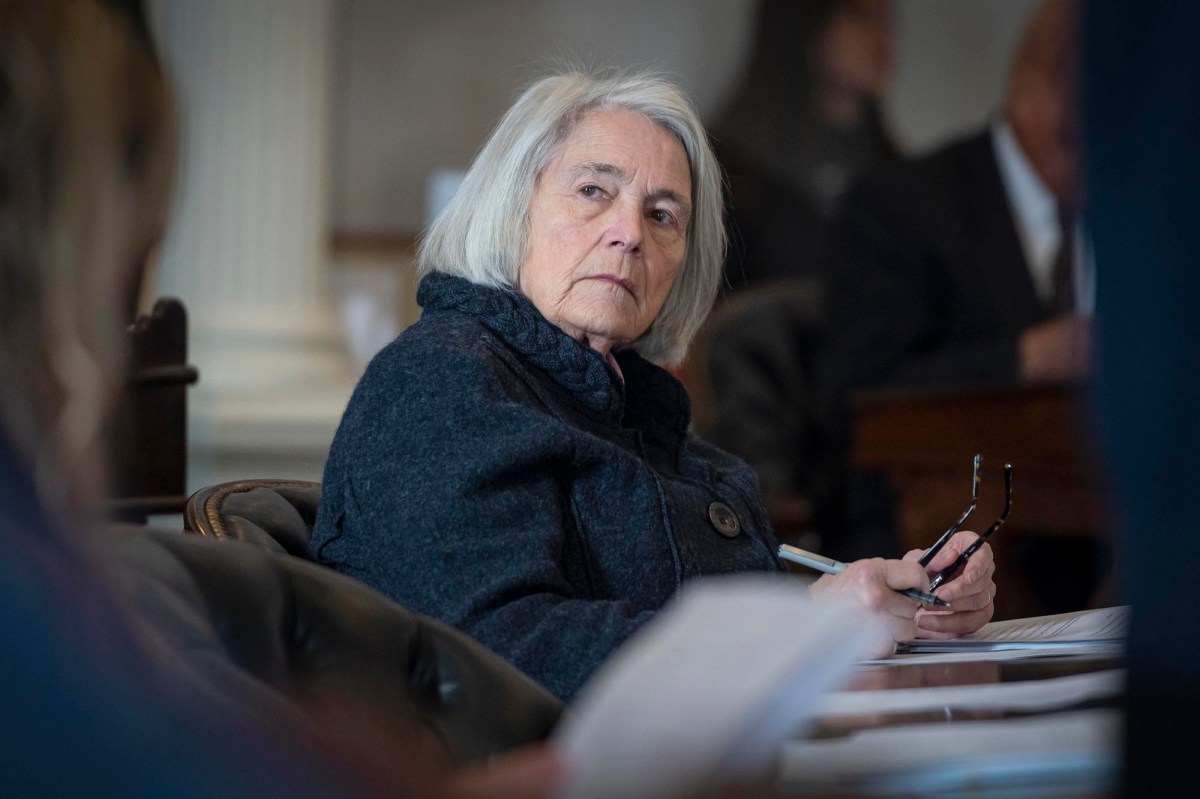
In past years, the legislation faltered amid the Covid-19 pandemic, stiff opposition from retailers and the tobacco industry, and a surge of turnover in the Statehouse. But this year, a ban appears to have a strong tailwind. The bill, S.18, passed the Senate last year and landed in the House Human Services Committee, where it is scheduled for a review and markup later this week.
Now, backers hope it can finally become law.
— Peter D’Auria
When South Hero decided to implement a local option tax, no one anticipated it would take two years.
Now town and state officials said they’re confident that the town is in the final stretch of securing the state’s approval — a far more complex process than they had anticipated. Last week a House committee took up H.554, which would authorize the town’s charter and allow the local option tax to go into effect.
In March 2022, residents of the Grand Isle County town voted to approve a 1% local option tax on meals and alcohol sales. When it headed to the Legislature for approval last year, local officials learned that state law required that the change be made in the town’s charter.
However, like most towns in Vermont, South Hero didn’t have a charter.
— Auditi Guha
Corrections section
The surname of University of Vermont Extension Program’s maple expert, Mark Isselhardt, was misspelled in Friday’s newsletter. We regret the error.
What we’re reading
Barre “cliffhangers” in limbo as city considers landslide buyouts, VTDigger
Buckle up: Lawmakers pitch traffic cameras as safety solution, Seven Days
