


Updated 7:07 p.m.
PITTSFORD — The sheriff of Franklin County is having his police certification revoked.
The Vermont Criminal Justice Council voted on Wednesday to permanently revoke John Grismore’s law enforcement officer certification, finding that the embattled sheriff violated the state’s use-of-force policy when he kicked a detained man last August.
All but one of the 16 voting council members opted for a revocation. Bill Sorrell, the panel’s chair, said he expects the change will take effect in two weeks.
Council members thought Grismore’s actions were “egregious,” Sorrell told reporters after the hearing. “Hopefully, law enforcement officers who might think of engaging in this kind of conduct will think not just twice — but many more times than twice.”
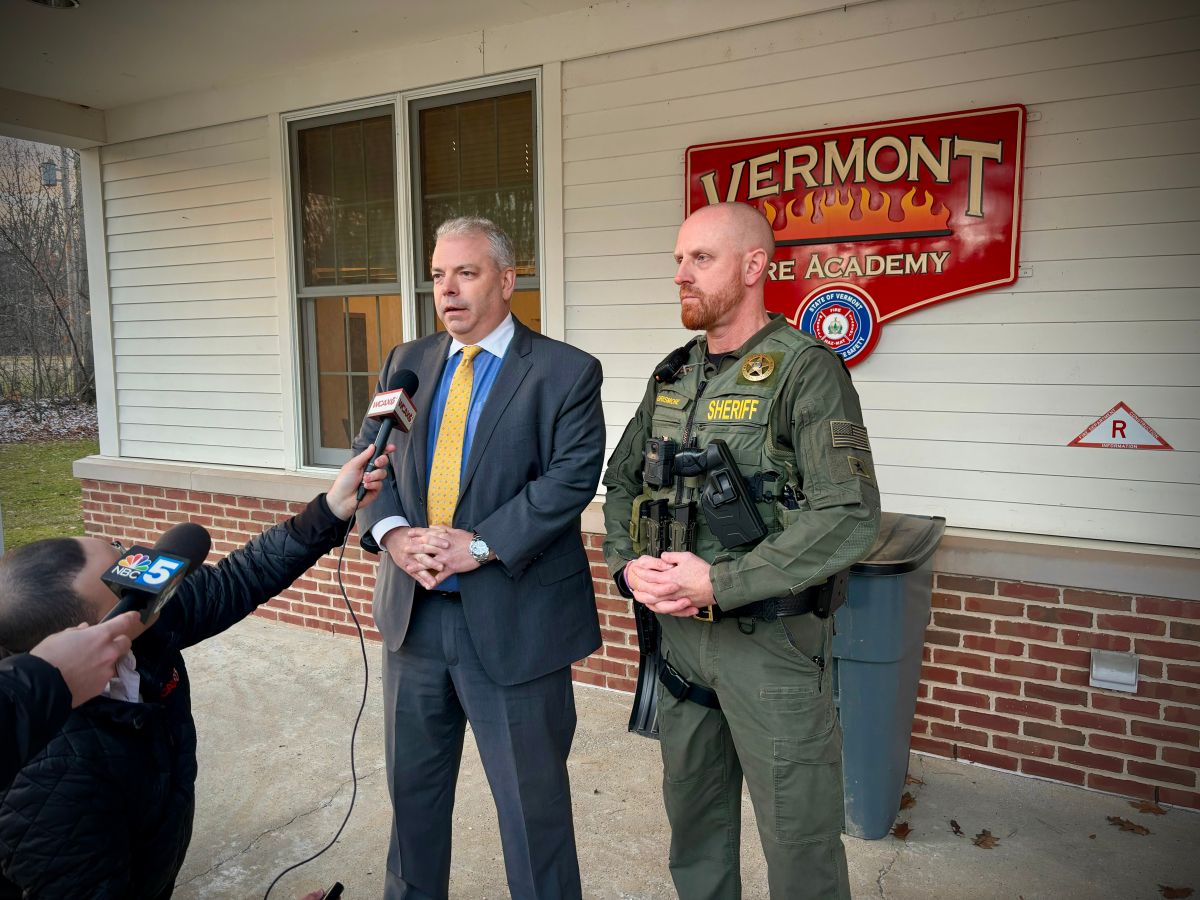
Grismore plans to appeal the council’s decision, said Robert Kaplan, his attorney. Kaplan stood next to Grismore outside the Vermont Fire Academy building in Pittsford, minutes after the council adjourned its meeting late Wednesday afternoon.
“We’re literally stunned,” the attorney said, adding that he and Grismore think the vote will have “an extreme chilling effect on law enforcement in this state.”
The council’s decision does not remove Grismore from his seat, since Vermont sheriffs are not required to be certified law enforcement officers. Grismore also faces potential impeachment in the Legislature, an assault charge stemming from the kicks and a Vermont State Police investigation into allegations that he mishandled finances.
But the decision means Grismore would no longer be allowed to do standard police work, such as investigating crimes or going out on patrols, according to Sorrell.
Grismore has also been barred from accessing key state and national police databases as a result of his simple assault charge, VTDigger reported previously, something the sheriff has since said makes it more difficult at times to do his job.
Instead, according to Sorrell, Grismore could serve only in an administrative capacity — “defrocked, if you will.” Grismore contended to reporters that he has no issue with this.
“I’m still the sheriff, regardless of whether the council wants me to be or not,” Grismore said, adding that he and his deputies “still have a lot of great work to do for the citizens that voted me in.”
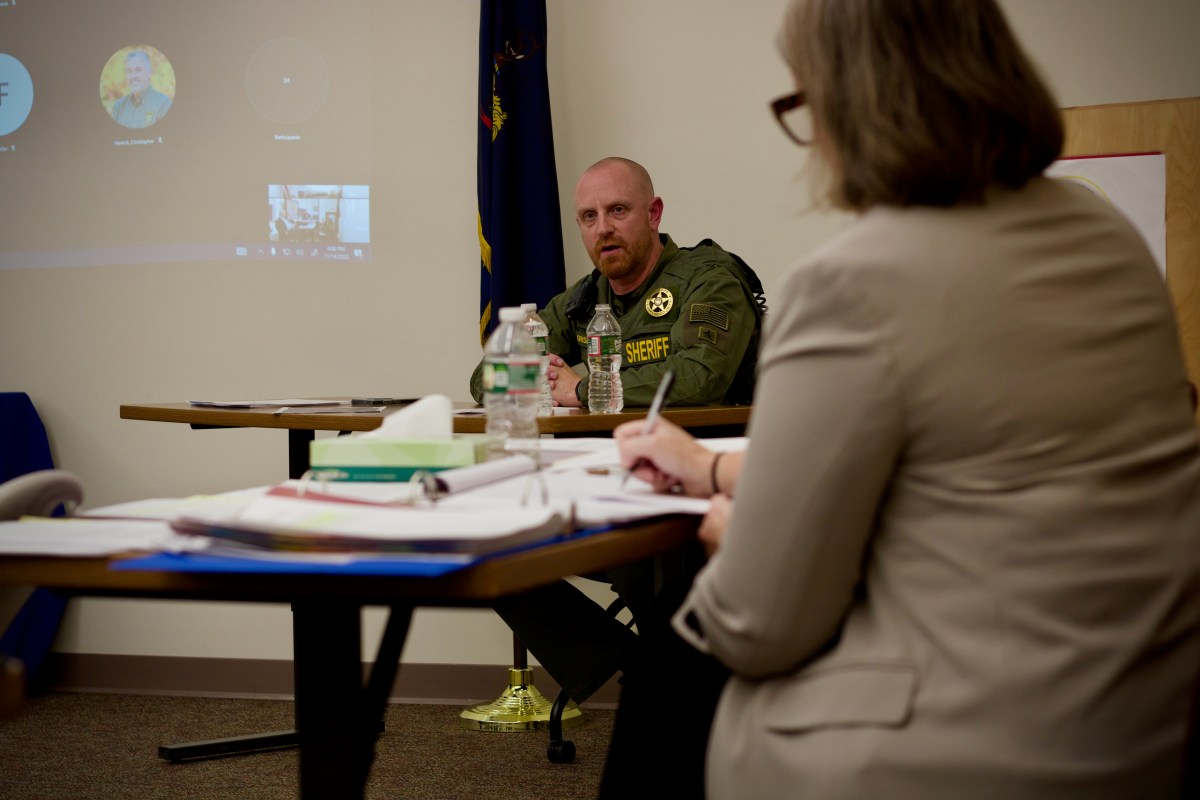
Council members reached their decision after hearing some eight hours of testimony over two days from attorneys, experts on police use of force, Grismore himself and three other deputies who were employed by the county sheriff’s office when the incident happened.
Grismore was a captain in the office at the time. He went on to win election to the top job three months later as the only sheriff candidate on the ballot.
The council determined after about two hours of deliberations in a session closed to the public that when Grismore kicked Jeremy Burrows multiple times, the sheriff committed “unprofessional conduct” and, as a result, should lose his Level II police certification.
Body camera footage of the incident shows Burrows, who appears intoxicated, shackled to a bench in the sheriff’s office before falling on his face. The other deputies come over and help Burrows up, but he resists their prompting to sit back down on the bench.
Grismore — who has said that he was standing in the doorway nearby watching the scene unfold — then enters the frame and kicks Burrows onto the bench, before pressing his foot into the man’s groin area. Burrows stands up again, and Grismore again kicks him onto the seat. Grismore then briefly leaves the frame and comes back to put a spit hood on Burrows.
At the heart of the testimony presented at Wednesday’s hearing, and the initial daylong hearing on Grismore’s case Nov. 14, was whether the then-captain’s conduct was in line with what an “objectively reasonable officer” would have done in the same situation.
Two use-of-force experts — one hired by the state, and one by Kaplan — gave contrasting answers to that question, and appeared to have interpreted the text of the Vermont use-of-force policy in different ways.
Eric Daigle, the state’s expert witness, testified in November that Grismore did not need to intervene in the situation because, among other reasons, the other deputies already had Burrows under control. Both of the deputies testified last month that they thought Grismore’s involvement was unnecessary.
Meanwhile, Kaplan’s witness — Thomas Aveni — testified that Grismore acted appropriately to keep himself and the other deputies safe from Burrows, who Aveni thought appeared unlikely to comply with officers’ demands otherwise. Grismore faced an “imminent threat” that Burrows could spit on his face, Aveni said, noting that additional body camera footage shows Burrows spitting on one of the other deputies earlier.
After the vote was tallied Wednesday, just one member of the criminal justice council, other than Sorrell, spoke. Erin Jacobsen pointed to a broader impact of the council’s decision, too, though said she thinks it would be felt by citizens, not police officers.
“We saw — we witnessed — video of an individual being harmed,” Jacobsen said, referring to Burrows. “And when that happens, that harms that individual. But also, it implicates, in a negative way, the public’s trust of law enforcement — and can make people afraid to call the police if and when they need help.”
