





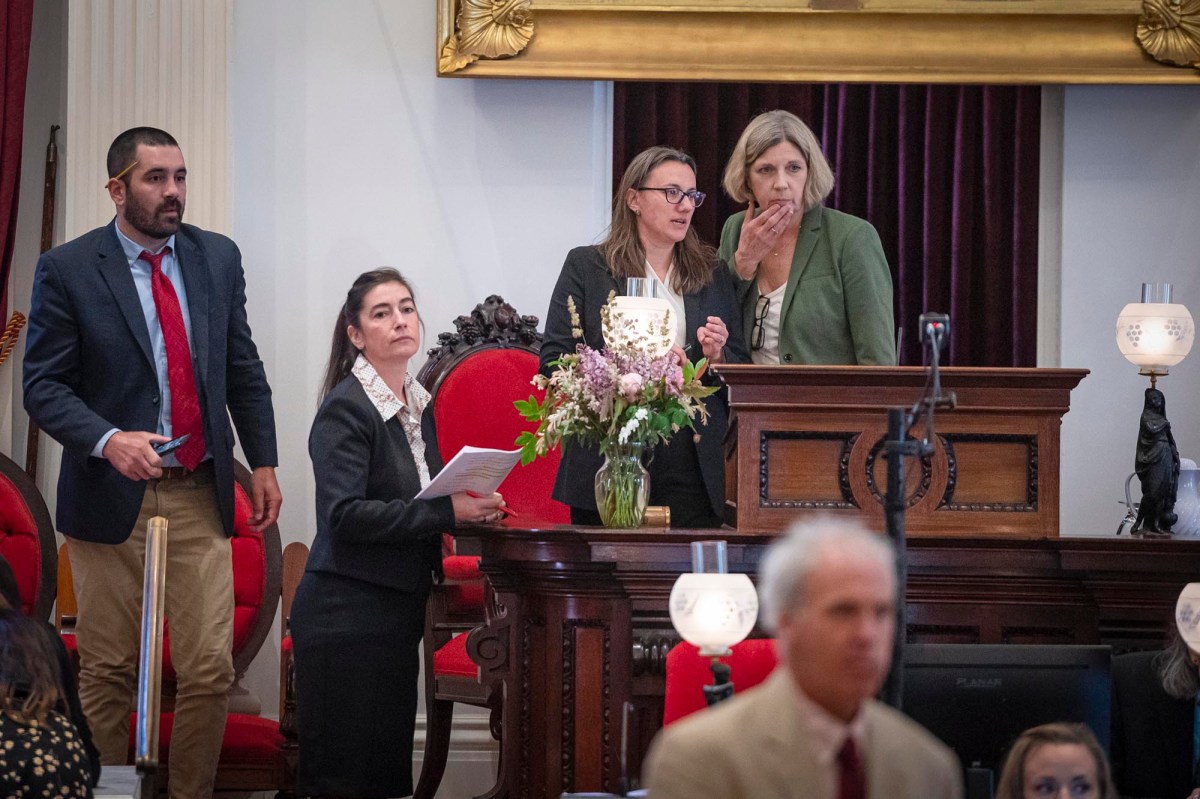
During a tumultuous and unexpectedly brief veto session Tuesday, Vermont lawmakers successfully overrode the governor’s vetoes of a number of their priority measures but left several other bills by the wayside.
Lawmakers filtered back into the Statehouse Tuesday morning for what was scheduled to be a three-day session to reconsider bills struck down by Republican Gov. Phil Scott’s veto. But they plowed through their agenda in a single day and, by 5:12 p.m., the House adjourned to a round of applause. Six minutes later, the Senate followed suit.
Legislators made history on Tuesday, overriding five gubernatorial vetoes in a single day. Previously, only 14 vetoes had been overridden in Vermont. In more than six years in office, Scott has issued a record number of vetoes from a single governor.
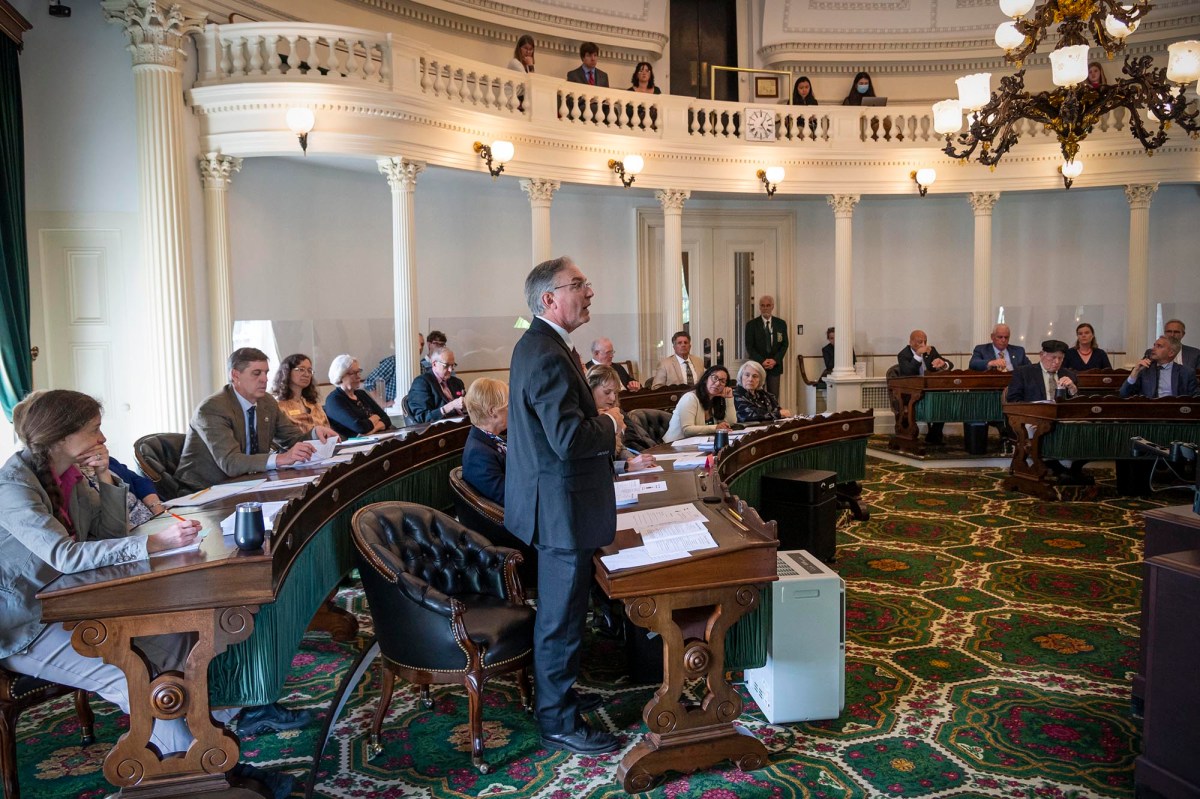
At the top of legislators’ list was the state budget, the only piece of legislation that was necessary to pass in order to keep the government funded. For weeks, it was an open question whether House Democrats could whip the votes necessary to override Scott’s veto, due to intra-party disagreement over the state’s plan to cease its emergency motel housing program. But thanks to a last-minute deal to extend the program, the budget prevailed on Tuesday by a 105-42 vote in the House and a 25-5 vote in the Senate.
Also at the top of the list was this year’s hallmark bill: child care reform, H.217, which is set to inject $120 million a year into the flailing industry. By a 116-31 vote in the House and a 23-7 vote in the Senate, legislators overrode Scott’s veto, approving the bill and instituting a payroll tax of 0.44% starting July 1, 2024. Employers will be required to cover at least 75% of the new levy.
Juvenile deception
Not every bill considered Tuesday overcame Scott’s veto. For police reform advocates, S.6, a bill which would have barred law enforcement from lying to Vermonters under age 22 during police interrogations, was a top priority.
Proponents of S.6 argued that lying to anyone, especially young people, in an interrogation setting is a deceptive and coercive technique that can elicit false confessions. Opponents of the bill countered that the tactic is a key tool in law enforcement’s toolbox when investigating crimes.
Scott’s veto of the bill earlier this month was widely unexpected, and legislative leadership pledged at the time to override it. Senate President Pro Tempore Phil Baruth, D/P-Chittenden Central, told VTDigger then that “it’s hard to even make the case with a straight face” in favor of the interrogation technique.
A pressure campaign subsequently rose up to defeat the bill for good.
“Over the last week or so, state’s attorneys, the attorney general and victims advocates sort of joined forces, indicating they had some concerns about the bill,” Baruth told VTDigger Tuesday, after the Senate voted to send the bill back to its committee — in effect killing it for the year.
The opponents’ concerns were “twofold,” according to Baruth. First, they believed that 22 was too old a threshold and that the bill should have been limited only to using deceptive practices on Vermonters 18 years old and younger. Second, they pointed to cases of child sex predators — cases in which it’s common investigation practice for a law enforcement officer to pose as a minor online in order to lure a predator.
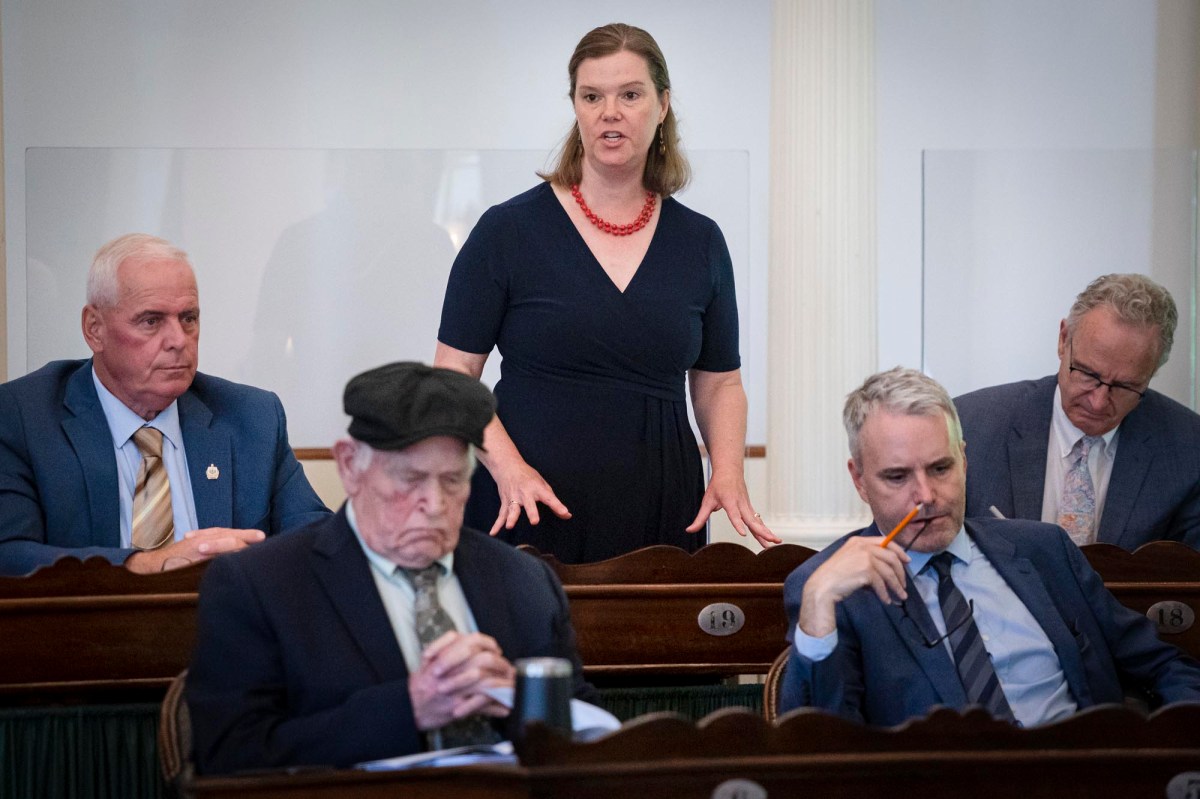
“The worry on their part was that, if they then in a custodial interrogation were not allowed to continue that cover story, then the person would clam up and they wouldn’t be able to prosecute,” Baruth said.
Still, the Senate Judiciary Committee agreed Tuesday morning to forge ahead with the bill. It was only minutes before the vote was to take place on the floor, Baruth said, that they realized they did not have the two-thirds majority required to override the veto. Senators opted instead to send the bill back to its committee of origin. Sen. Tanya Vyhovsky, P/D-Chittenden Central, was the only one to oppose that motion.
Among the bill’s most steadfast supporters was James Lyall, the executive director of the American Civil Liberties Union of Vermont. Reached by phone shortly after the Senate’s vote Tuesday afternoon, Lyall sounded defeated. What happened between Scott’s veto and Tuesday’s vote, according to Lyall, was another flex of law enforcement’s lobbying muscle.
“If there was any bill that we thought, ‘Well, this is so obvious, so common sense; of course police shouldn’t be able to lie to kids; this has got to pass’ — even that was a step too far for law enforcement,” Lyall said. “There’s really nothing that they won’t oppose if it limits their power or their authority.
“Too many state leaders are afraid of the police lobby and are unwilling to stand up to them, unwilling to go against them,” Lyall said.
Legislator compensation
Another bill that received much attention this year was S.39, which would have doubled state legislators’ compensation by 2027. It, too, met its fate on Tuesday in the Senate.
Scott staked out his opposition to S.39 early, saying that he would only agree to raise lawmakers’ pay if they limited legislative sessions to 90 days.

Advocates for raising legislator compensation from its current rate — $812 per week during the session, or about $15,000 per year — argue that Vermont lawmakers’ below-average pay translates to a body of lawmakers that is less representative of the state. Only Vermonters of a certain socioeconomic background can afford to serve, argued Sen. Ruth Hardy, D-Addison, the primary sponsor of the bill.
Low pay with no health or child care benefits also contributes to a disproportionately elderly legislature, according to Hardy. Numerous young lawmakers have resigned in recent years saying they were unable to juggle the schedule with raising a young family.
By Tuesday, S.39’s supporters did not have the two-thirds majority required to override Scott’s veto. According to Hardy’s count, they were one vote short.
She pointed to the “optics” of the bill, saying, “It’s a hard thing for legislators to vote to raise their own pay. … That was a really hard message to overcome with some of our colleagues.”
But she also said she grew frustrated as she picked up on a pattern among her colleagues’ support for S.39, or lack thereof. “There was a generational split and there was a gender split, frankly,” Hardy told VTDigger Tuesday after the floor vote.
“All of the women in the Senate were going to vote for the override, and all the nos were men,” Hardy said. “Women make, what is it, 82 cents on the dollar or so, compared to men. And so, even though we weren’t asking for a pay raise for ourselves, to be able to do it on behalf of our future sisters in the Legislature meant a lot to all of us. Then to have the override fail by one vote, because we didn’t get enough of our male colleagues to support it, was very frustrating.”
Elections changes
Some of legislators’ successful overrides overcame past failures. After a brief debate on Tuesday afternoon, the House voted 110-37 to override Scott’s veto of Brattleboro voters’ charter change to allow voters as young as 16 years old to participate in local elections. Narrowly clearing the required two-thirds majority, the Senate voted 20-10 to do the same.
The charter change had a longer journey. It won approval from Brattleboro voters on Town Meeting Day in 2019, but the Senate failed to override Scott’s veto of the bill last year. Three of Brattleboro’s representatives reintroduced similar legislation, H.386, this session.
Rep. Mollie Burke, P/D-Brattleboro, said on the House floor on Tuesday that she had heard from a number of young people excited by the opportunity to vote and “by showing our support for this we contribute to their excitement about participating in civic life.”
Yet Rep. Pattie McCoy, R-Poultney, said allowing youth to vote “flies in the face of all logic. If the brain is not fully developed to understand and make the correct decisions relative to a crime, then the brain is not fully developed at 16 to be allowed to vote on decisions affecting their community.”
Lawmakers also overrode Scott’s veto on a Burlington charter change approved overwhelmingly by voters on Town Meeting Day. The measure will allow noncitizen residents who are legally in the country to cast ballots in city elections. As a charter change, it required state approval, but Scott objected to the measure, saying he preferred a statewide approach.
The House voted 111-36 to override the governor’s veto of the bill, H.509, on Tuesday. In a 21-9 vote, the Senate followed suit.
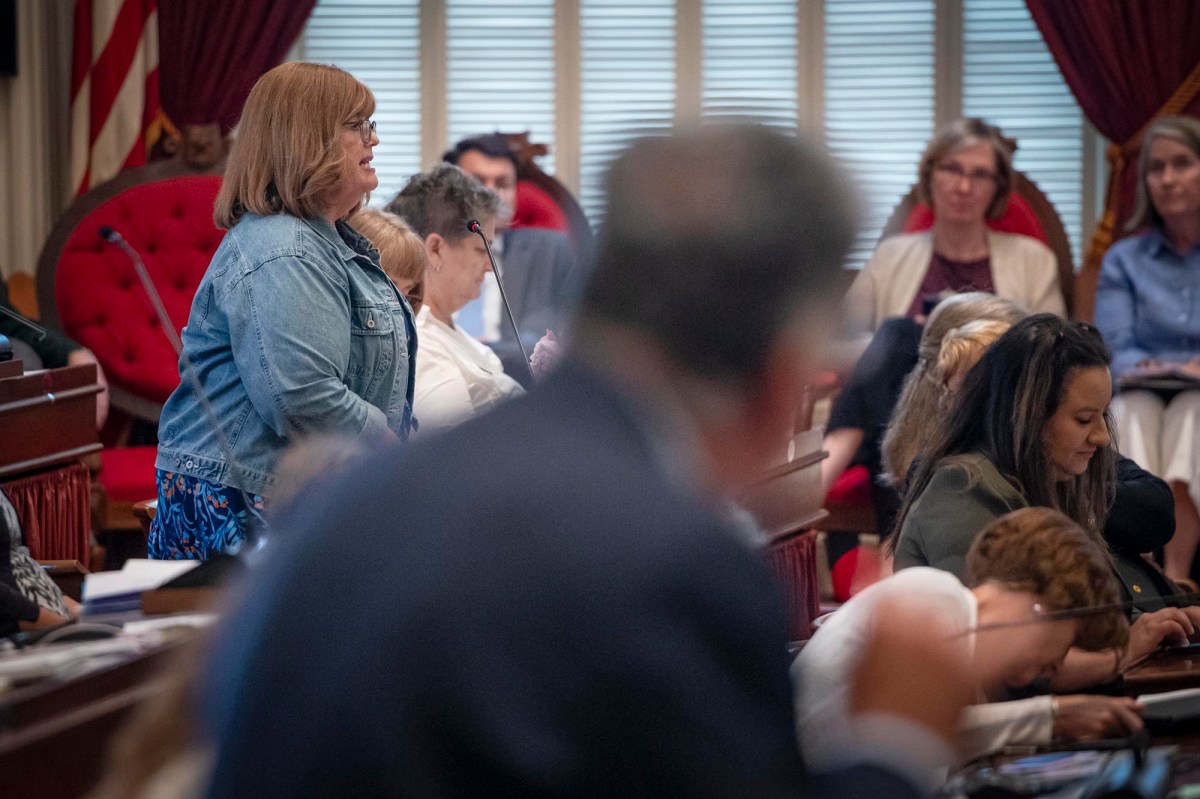
Burlington now joins Winooski and Montpelier in expanding local voting to noncitizens.
Not taking effect this year, however, is H.429, a wide-ranging elections bill that would have instituted new restrictions on candidates running in multiple party primaries, allowed for electronic ballot submissions in limited circumstances and eased the approval process for towns to adopt ranked-choice voting.
Concerns over ballot security and limitations on multi-party candidates derailed the bill in the final weeks of session last month and were not smoothed over before lawmakers reconvened. The Senate on Tuesday voted to send the bill back to its committee, halting it from progress until at least January — a result that was already widely anticipated last month.
Increased licensing fees
Lawmakers were successful in their override attempt of H.305, which will change a host of laws related to the Secretary of State’s Office of Professional Regulation.
The House surpassed the two-thirds majority required for an override on a vote of 109-38. Two hours later, the Senate confirmed the override on a 23-7 vote.
Among other measures, the law will increase licensing fees to account for inflation for the 51 professions regulated by the Office of Professional Regulation. The office will collect an additional $3.5 million, according to the Legislative Joint Fiscal Office.
In his veto letter, Scott had expressed concern over affordability and the “impact of raising licensing fees on workers we’re trying to attract.”
The new law will also allow pharmacists and pharmacy technicians to continue administering immunizations, including the Covid-19 vaccine. The Office of Professional Regulation will also determine streamlined certification procedures for music and art therapists.
