

Updated at 7:49 p.m.
BURLINGTON – An Afghan man held for 104 days without access to counsel or family was released Friday after a federal judge granted bond.
A long-haul truck driver living in Oregon, Enayetullah Walizada, 29, had been transporting food from Vermont to California when he inadvertently took a wrong turn that led him out of the United States and into a Canada border crossing. He was detained Sept. 5.
U.S. District Court Judge Christina Reiss did not issue a bond amount and ordered Walizada’s release on his own recognizance, finding no evidence of him being a flight risk or a danger to himself or the public.
“He has every incentive to appear in immigration proceedings as they present his only lawful opportunity to remain in the United States,” she said, adding that he was invited to the United States “after extensive vetting and after providing service to the U.S. military.”
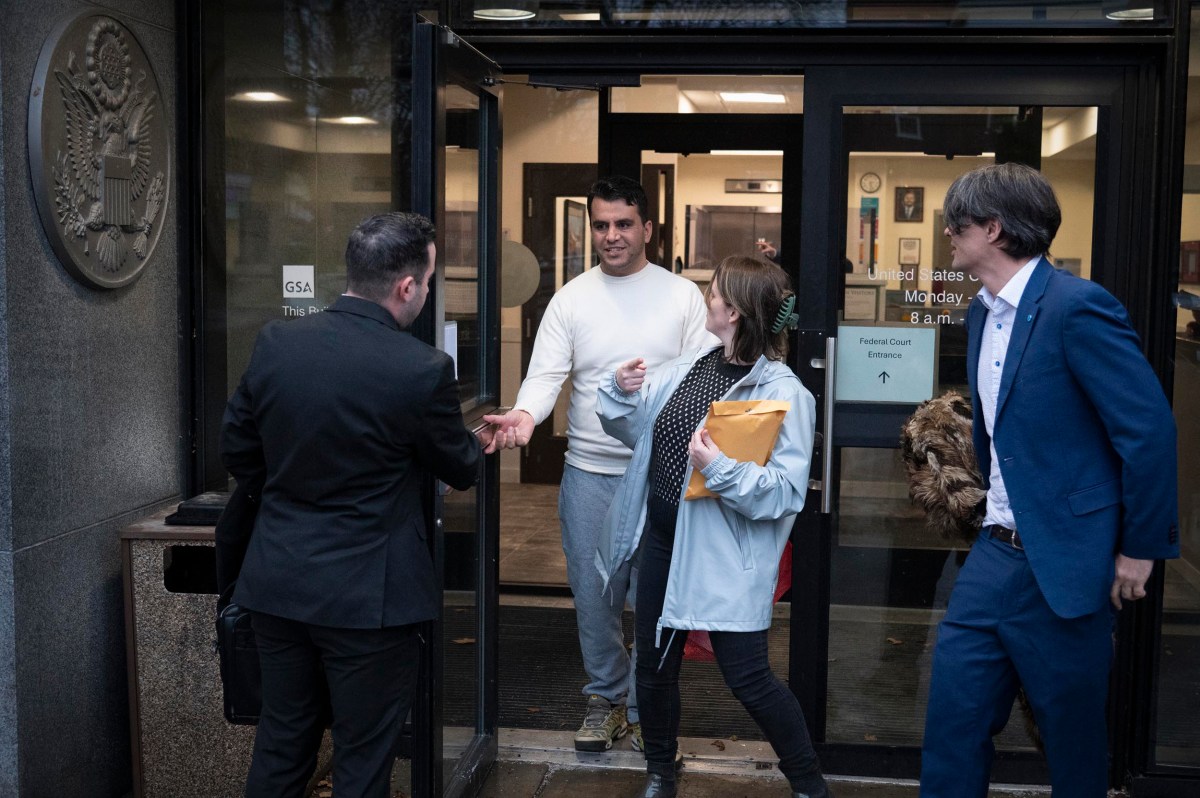
“This is great. He’s free. He can go home,” said Nathan Virag, an immigration lawyer at the Association of Africans Living in Vermont, as he exited the courthouse with Walizada.
Virag had filed a habeas petition in federal court soon after Walizada’s detention in September challenging the legality of his detention and represented him in court Friday.
This is the first time a federal judge in Vermont has held a bond hearing for an ICE detainee, which is typically held in immigration court, said Emma Matters, a staff attorney at the Vermont Asylum Assistance Project, which offers legal support to immigrants.
Given the backlog of cases in immigration court and the escalated crackdown on refugees, filing the habeas in federal court is a tool to fight back against prolonged and unlawful detentions like Walizada’s, she added.
The judge’s decision “protects him against further violations of his Fifth Amendment rights. So they can’t just pick him up at any time of day and re-detain him,” she said. It would not, however, protect him from being removed during the asylum process he is waiting on.
Walizada is among the 200,000 Afghans resettled in the United States through military efforts “Operation Allies Welcome” and “Operation Allies Refuge” after the fall of Kabul in 2021, Virag said in court. The lawyer said Walizada has employment authorization, a pending asylum case and no known criminal history.
“He was pulled into the United States because his life was in danger due to his work over several years for a company that delivered food and other supplies to the U.S. military in Afghanistan,” Reiss said. He was escorted into the United States “to relocate and reside in this country in recognition of the wartime services he provided.”
On Sept. 5, Walizada was driving a commercial semitruck with Ohio plates carrying cookies from New Hampshire to California via Vermont. He was following Google Maps directions when he inadvertently crossed the U.S.-Canda border to Stansted, Quebec. When he tried to re-enter the U.S. at Derby Line in Vermont, he was detained by the Canada Border Services Agency. William West, a supervisory U.S. Customs and Border Protection officer, said he did not have a passport on him, his refugee parolee status granting him temporary entry for humanitarian reasons had expired and he “did not have any lawful status to be in the United States.”
He was subsequently held at the port of entry for six days before being transferred to the Northwest State Correctional Facility in St. Albans, Vermont, court documents state.
Walizada’s lawsuit challenged the lack of due process and sought immediate release from the U.S. Immigration and Customs Enforcement custody.
He said in the lawsuit he was not allowed access to legal help for the first seven days of his detention despite his counsel’s “repeated attempts to contact him during this time.” He also alleged he “was never served with a charging document” and was unaware of any charges against him.
Federal respondents claim that Walizada signed a notice that placed him in “full removal proceedings.” The Department of Homeland Security argued in court documents that he is subject to removal as his parole expired on Aug. 28 and because he is an immigrant “not in possession of a valid unexpired immigrant visa, reentry permit, border crossing card, or other valid entry document.” An immigration judge denied him bond on Oct. 16.
Without any proposed timeline for either removal proceedings or his asylum status, Reiss found that the circumstances of his detention “violated the due process clause.”
An immigration court hearing is scheduled for Dec. 30, according to Matthew Greer, assistant U.S. Attorney.
The court decision comes in the wake of the Trump administration pausing all asylum decisions after an Afghan national was charged with the deadly shooting of a National Guard member in Washington D.C. last month. He has since pleaded not guilty.
Immigration advocates are concerned about the administration’s recent crackdown on legal immigration and particularly of Afghans resettled in the U.S.
These “sweeping changes to immigration policy” might ultimately separate families and leave those who risked their lives to support U.S. troops at the mercy of the Taliban in Afghanistan, said Molly Gray, executive director of the Vermont Afghan Alliance.
“Dozens of Afghan allies in Vermont remain separated from their wives and children who remain in hiding in Afghanistan. We don’t know what to tell them, we don’t know when or if they will ever be reunited as a family,” she said in an email, adding that Afghan allies are some of the most highly vetted immigrants coming to the U.S.
Approximately 650 Afghans have resettled in Vermont since 2021 and work in fields such as manufacturing, health care, engineering, the service industry and small businesses.
Refugees, including Afghans, contribute significantly to Vermont’s economy, schools and communities, said Tracy Dolan, director of Vermont’s State Refugee Office.
“We need them and they need us,” Dolan said, adding that the federal government reported a $123 billion dollar net benefit from refugees and asylum seekers 2005 to 2019.
Walizada has strong ties to the community in Oregon and has worked hard to build a new life in America, Virag said. He hopes to bring his wife and three children to the U.S. but has to first resolve his case.
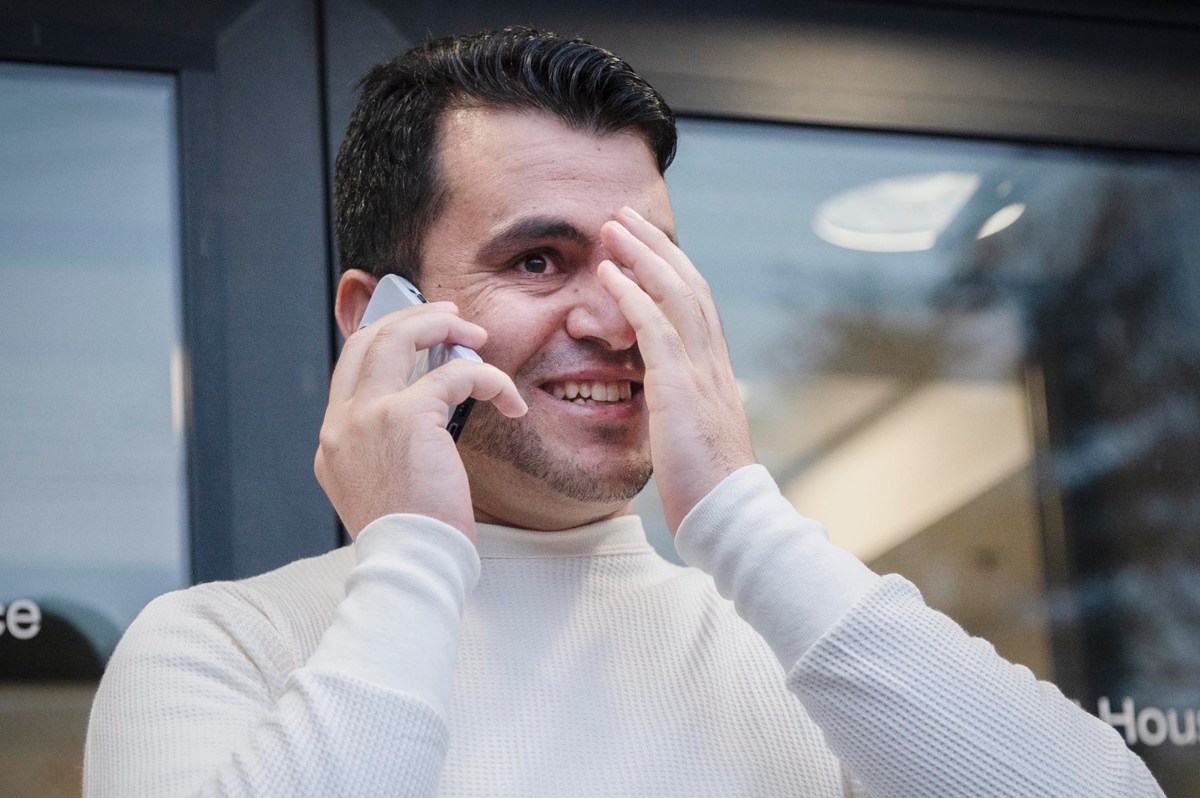
On a rainy Friday afternoon, Walizada stepped out of the courthouse all smiles, and made his first phone call to his wife in Afghanistan.
Correction: A previous version of this story stated the wrong number of days that Enayetullah Walizada spent in ICE custory.
