


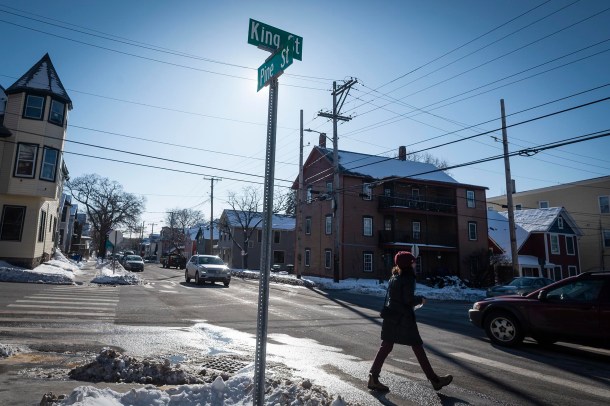
The Champlain Parkway — a long-embattled project that would add a new road to the grid of Burlington’s South End — is now projected to be more expensive than city officials recently believed.
The sole bid city officials received to construct the road’s first phase was about 57% more than they anticipated the work would cost, according to a Department of Public Works memo to the Burlington City Council. That would increase the price tag for the project’s first section by $14.5 million to $41 million.
Still, Burlington would only pay for 2% of the project’s added cost thanks to a now-phased-out funding model that was in place when the parkway was first introduced nearly six decades ago, officials said. Under that model, the state is slated to pitch in 3% and the federal government 95%.
The higher-than-anticipated cost is a result of multiple factors, according to Norm Baldwin, a senior engineer for the public works department.
Inflation and an increase in fuel prices stemming from the Russian invasion of Ukraine were top contributors, Baldwin said.
In addition, the lack of competition in the bidding process likely led to a higher asking amount, he said. Four companies initially expressed interest in the project. Two of them joined forces and made a single bid, while the others did not pursue the work any further.
Adding more strain to the process is an unusually high demand for contractors, caused in part by a barrage of capital projects made possible through last year’s $1 trillion federal infrastructure package, Baldwin said.
Despite the increased cost, officials said, the City Council would be wise to approve the proposed contract at the body’s next meeting, April 25. The conditions that have driven up prices don’t appear likely to change, according to city staff, and the city has had trouble attracting companies to contract with it.
“If this were to re-bid, we do not have any indication that folks that did bid would submit a bid again,” Public Works Director Chapin Spencer told city councilors at a Monday night meeting.
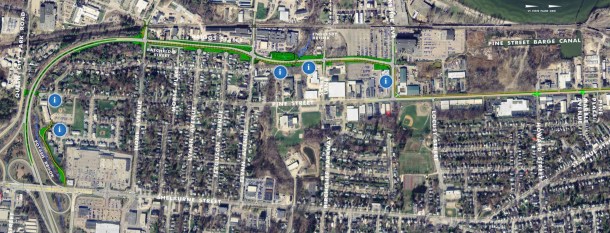
The Champlain Parkway’s first phase would create a new roadway from Home Avenue to Lakeside Avenue and repave existing streets from the new road’s intersection with Lakeside Avenue to the intersection of Pine and Kilburn streets.
A second phase of the project, which would require separate council approval, is expected to connect Home Avenue with Interstate 189, allowing traffic to flow from the highway toward downtown. But according to a plan developed by city officials, the connection of I-189 would not occur until the completion of the Railyard Enterprise Project — an initiative connecting Pine and Battery streets, bypassing the densely populated King and Maple neighborhood.
A coalition of parkway opponents is suing city, state and federal officials to halt the project. Its members allege that the project doesn’t adequately account for its impacts on the environment — a notion that parkway sponsors reject.
City councilors lamented the project’s increased cost Monday night but seemed to accept the plan by public works officials as the best path forward.
“We’ve said for some time that it’s not a perfect project,” Councilor Ben Traverse, D-Ward 5 told Spencer and Baldwin. “But I think it’s a more perfect project than when you first started saying that.”
Short-term rentals
Also at Monday night’s meeting, councilors sent a proposal that would regulate short-term rentals to the body’s ordinance committee, winding up another effort to pass restrictions around properties listed on sites such as Airbnb and Vrbo.
The 7-4-1 vote resurrected a two-year-plus effort to curb the conversion of long-term rentals into short-term rentals, after councilors were unable to pass a policy that satisfied Democratic Mayor Miro Weinberger during the body’s 2021-2022 session.
Weinberger vetoed an ordinance last month that would have severely clamped down on the type of accommodations hosts could offer and instead voiced support for the version that councilors preliminarily approved on Monday.
While not all councilors agreed with the language of the draft ordinance itself, a majority supported sending the measure to committee for further scrutiny. Others, however, saw the resolution as backing a proposal that was already shot down by last year’s council in a 6-6 vote.
Councilors Jack Hanson, P-East District; Gene Bergman, P-Ward 2; Ali House, P-Ward 8; and Joan Shannon, D-South District voted against sending the ordinance to committee. Councilor Ali Dieng, I-Ward 7, was absent.
The bill is set to reappear before the full council, with tweaks from the ordinance committee, by June 1.
