


After two years of deliberations, the Burlington City Council could approve regulations on short-term rentals — dwellings such as those advertised on Airbnb, Vrbo and similar sites that lodge guests for fewer than 30 consecutive nights — as soon as next month.
Councilors say the regulations would free up living space as the city faces a meager vacancy rate. They also hope to set standards for an industry that remains largely hidden from city officials’ oversight. While city officials know there are roughly 250 short-term rentals in Burlington, it has little data on where they are, what style of dwelling they are or who owns them.
But the push for regulation has met resistance from a vocal coalition of short-term rental owners, who argue that the regulations wouldn’t put a dent in Burlington’s housing crunch, and could ward off visitors in a region that depends on tourism.
The most controversial proposal is a requirement for “owner occupancy” — that is, short-term rental owners must reside on the premises of the unit they’re renting out.
“Burlington has much larger problems than 200 to 250 Airbnbs,” said Justin Holden, a short-term rental owner who compared the council’s effort to increase housing by regulating the properties to “mowing the lawn while the house is on fire.”
Still, supporters contend that Burlington needs as many long-term rental units as it can get, and that short-term rental owners took a risk by stepping into a legal “void.”
“They’ve set up a business model and their lives around something that was not a permitted use,” said Councilor Chip Mason, D-Ward 5, chair of the council’s Ordinance Committee.
A vote on short-term rental regulations is planned next month, city council President Max Tracy, P-Ward 2, told VTDigger, though the exact language of the ordinance has not yet been finalized.

Live-in host or toast?
Though councilors have yet to write the official regulations, the latest basis for the argument is a draft ordinance city planners presented to the council Nov. 8.
The proposal included two exceptions to the owner occupancy requirement: The first simply exempts homes that are listed by the assessor’s office as seasonal residences, while the other offers a more nuanced loophole.
If owners rent a long-term unit at a rate that meets the city’s affordable housing standards, the proposal states, they can also operate one short-term rental in that building without living on site.
In addition, by redefining the term “host,” the proposal allows another exemption to owner occupancy. The host — who must live on the property — is now the person who operates the short-term rental, not the person who owns it.
That means, for instance, that a long-term tenant living in a duplex could host for a short-term rental in the duplex’s other unit, while the owner of the building lives elsewhere.
Councilors from both parties expressed reservations about the Nov. 8 proposal.
Councilor Jack Hanson, P-East District, said the city’s affordable housing standard — as outlined in its inclusionary zoning guidelines — is too high for some low-income residents.
Councilor Joan Shannon, D-South District, said she wouldn’t support the proposal as written, because it still allows owners to convert long-term rentals into short-term rentals.
Some property owners contend that a more flexible short-term rental market allows them to keep the rates affordable for long-term rental units.
Lucas Jenson, 50, of Williston owns property in Burlington as a side gig to provide some cushion for his retirement. Years ago, when he couldn’t find a long-term tenant for one of his units, he advertised it on Airbnb.
The revenue he makes from that Airbnb helps lower the rent for his 30 or so long-term tenants, Jenson said.
Since he’s looking only to supplement his retirement savings, “I don’t feel the need to raise rent on tenants,” Jenson, who charges $950 for a one-bedroom apartment, told VTDigger. “I’m not a greedy person.”
Stories like Jenson’s, however, have not softened Shannon’s opposition.
“Which is better: one person gets a better deal on a rental unit, or two people actually get housing?” she told VTDigger.
In addition, Shannon argued, the more units that transition from short-term to long-term rental, the more supply there will be in the housing market, driving down prices across the city.
A hidden industry
Even with the exemptions, however, the owner occupancy requirement would effectively stamp out any short-term rentals in the city that consist of an entire single-family home.
But because there’s currently no registration process for short-term rentals, city officials don’t know for sure how many listings fall into that category.
The city does receive some data about its short-term rental landscape from Granicus, a company that monitors the industry in other cities. Burlington gets the Granicus data for free, said Scott Gustin, a principal planner for the city.
About 80% of Burlington’s short-term rentals are “whole unit” dwellings, meaning guests don’t share a living space with the host, according to the Granicus data.
The city also has data showing that slightly more than half of its short-term rentals are in single-family homes, while the rest are in multi-family dwellings.
Yet the data does not cross-categorize the listings, making it unclear how many of those single-family homes are rented out as whole units.
Short-term rental websites, like Airbnb and Vrbo, do collect that information — since they pay the city’s rooms and meals tax on behalf of their respective hosts — but do not share it with Burlington, officials in the planning department said.
Given the opaque portrait of the city’s short-term rental market, owners worry that an effort to regulate the industry will create unintended consequences.
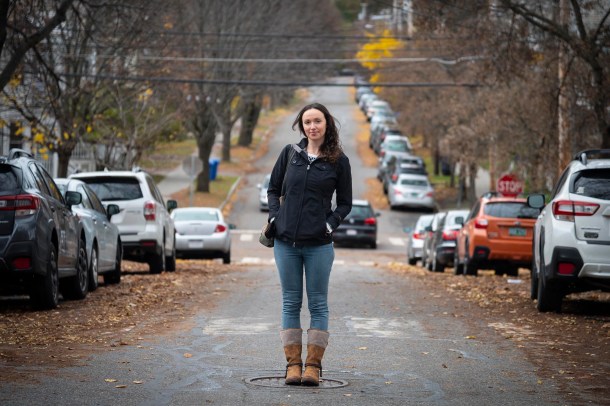
“They don’t have an understanding of the landscape of short-term rentals in Burlington currently,” said Julie Marks, executive director of the Vermont Short-Term Rental Association. “We’re the experts; we’re the ones who have been doing this.”
Marks’s organization — which she formed earlier this year when state legislators signaled a similar move on regulating short-term rentals — has set out to gather its own data to supplement the few metrics that are publicly available.
Of 42 Burlington short-term rental owners surveyed by Marks, 70% own one unit, she said.
“Generally, what we see is a really small-scale operation,” Marks said.
Marks also points to survey responses that suggest 60% of Burlington short-term rentals would not be converted to long-term rentals if the proposed ordinance passed.
Regardless of those numbers, Shannon and Mason say the ordinance will prevent future buyers from snapping up the city’s available housing and converting it to short-term rentals.
But to owners like Jenson, the ordinance is another failed attempt by councilors to make the city an affordable place to live.
“The city council,” Jenson said, “they’re making housing more expensive as they’re making housing less expensive.”

