


Katye Griswold likes to tell people she moved to Vermont accidentally.
The 30-year-old was a doctoral student at Pennsylvania State University in March 2020 when the country locked down in response to Covid-19. Barred from returning to school, she remained at her parents’ home in Andover, where she had been spending spring break.
What Griswold thought would be a matter of weeks turned into two years Sunday. In the time since, she said, she received her Ph.D., began dating her partner and started a new job in New York City — which she hasn’t shown up at in person because she’s now living in Marlboro.
But while the life she has on a remote Vermont mountainside may be accidental, it’s not one she’s trying to escape. She’s now planting roots in Windham County so that her partner, Spencer, can continue working his in-person job.
Griswold’s story is not unique. When Covid-19 upended life in Vermont, it ushered in what many called a “new normal.” Yet now, two years after having their lives disrupted, some Vermonters are embracing that transformation, finding purpose amid new realities.
If the world hit “pause” on March 13, 2020, people such as Griswold aren’t waiting to press “play” — they’ve already selected another option. They’ve adjusted to new circumstances — some by launching a new career or moving someplace different. Others through having a child or saying goodbye to a loved one. For Griswold, starting a new relationship; for others, letting one go.
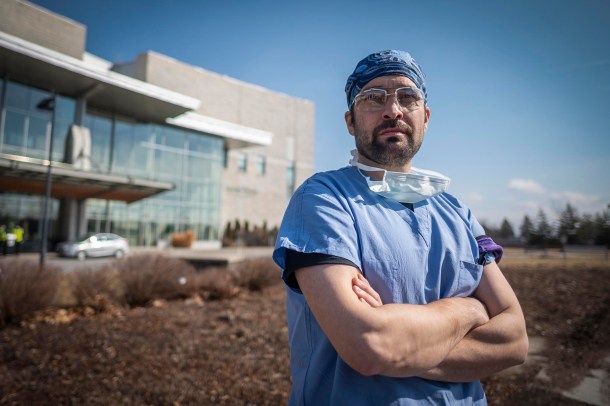
Those adjustments didn’t come without challenges. For Dr. Taylor Haring — who graduated from medical school in 2020 without a commencement ceremony — there was no opportunity for closure when he swapped his previous life in Oklahoma for his new one in Vermont.
“I didn’t get to say goodbye to my parents when I left Oklahoma, and I didn’t get to say goodbye to a lot of my friends. It was just like picking up and leaving,” said Haring, a resident at the University of Vermont Medical Center. “All these loose threads, I was just forced to leave them dangling around.”
To make things harder, the life he stepped into was not the one he applied to when researching residency programs before the pandemic, Haring said.
“There was a noticeable change in everyone’s attitude culture-wise,” Haring said. “It’s still a very happy place to work but obviously there was a lot of fear and a lot of doubt and a lot of death going on at that time.”
Still, Haring said he enjoys his work, and wouldn’t alter his decision to move to Burlington. The 35-year-old is not waiting for things to go back to normal.
“In a lot of ways, the pandemic is over. This is now endemic; it’s probably never going away,” he said. “We’re going to have to start to adapt to that and live around it.”
For Milo Tandy of Hardwick, adjusting to the pandemic meant acknowledging something he had not realized before: He was queer.
Sporadically employed in the summer of 2020, Tandy was able to turn inward and reflect on his identity without worrying about repercussions he otherwise might have, the 32-year-old said.
“I didn’t realize for a long time how much I was hiding from myself,” Tandy said, “and I finally broke those walls down.”
A year after coming out, Tandy and his wife, Katie, opened Birdsong Beer and Wine, the store they own at the center of Hardwick, and haven’t looked back.
“I don’t think it’s ever going to go back to how it used to be,” Tandy said. “This is just the next phase of human life.”
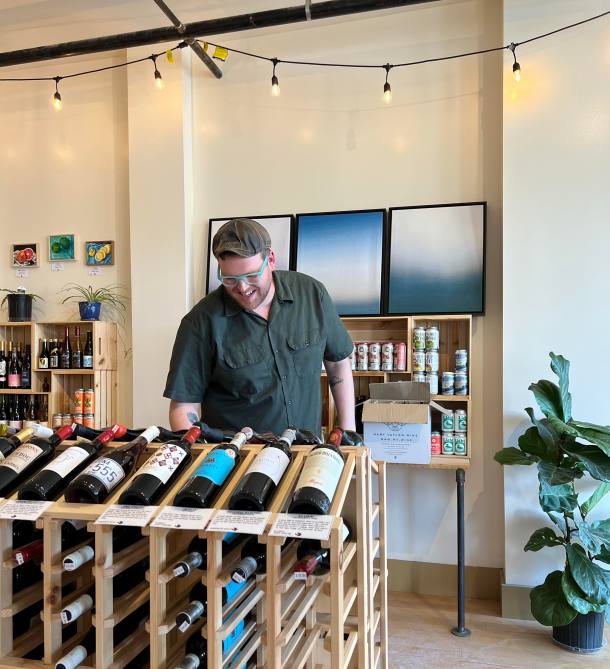
“The idea of a new normal is just strange to me, but I mean — every day is a new normal, no matter whether we’re having a pandemic or not, right?” he told VTDigger. “We can only take whatever the day throws us.”
Meagan Downey also started a business over the past two years. The 43-year-old Shelburne resident launched Shiki Wrap, a reusable wrapping paper company, after a career in consulting for nonprofits.
Growing a business meant that her life has not been on pause since March 2020, she said. When the pandemic comes to mind, she does not long for the past, but instead thinks about what lies ahead.
“It’s more about how to take everything that’s transpired over the past two years and make a go of things,” Downey said. “To build the future, basically.”
Like Downey, Michael Reynolds started a new enterprise over the pandemic — one that has made him think a lot about the future. Except it’s not a business; it’s raising a baby named Avery.
In February 2021, as more Americans started to get Pfizer or Moderna vaccines in their arms, Reynolds and his wife, Andrea, first held Avery in theirs. Their road to parenthood had already been stranger than they expected, Reynolds said.
When the couple planned Andrea’s baby shower, for instance, the onset of a second wave of Covid-19 cases prompted them to host a socially distanced, partially remote gathering. While better than nothing, Reynolds said, he wished his wife had gotten a more normal experience during her first pregnancy.
“Traditionally, the baby shower is a one-time thing for the first child and I do feel bad that we couldn’t realize that for her,” he said.
The pandemic also deprived his daughter and relatives of certain customary experiences, Reynolds said, such as meetings between grandparents and their grandchild.
“I feel like there are missed opportunities to just have these shared experiences in an organic way, not through FaceTime,” Reynolds said. “My mom is a first-time grandparent and she’s probably only seen Avery less than a half dozen times in person.”
Like Reynolds, Winooski resident Jen Leonard has only been a parent during a pandemic. She and her husband, Seth, welcomed a son, Asher, in August 2021.
Asher was born two months premature, Leonard said, meaning he was at risk of getting seriously ill from a number of different diseases, not just Covid-19. The new mom worries the extra caution with which she protected her son — while important — could affect his development down the road.
“In terms of socializing with other babies, I’m excited to take him to the Winooski pool this summer and get him on the splash pad and outside playing,” Leonard said. “It’ll be exciting for us and hopefully for him, developmentally, to be able to see some new faces and … expand his world beyond the walls of our own home.”
Asher’s limited exposure outside the home has kept Leonard from mastering the rituals that many parents eventually learn, she said.
“I don’t have a ton of practice driving with him in the car seat, bringing him places, setting up our stroller,” she said. “I think I’ve loaded that into our car maybe once or twice.”
But the challenges of pandemic parenting have not left Leonard remorseful that the world of March 2020 is gone, she said. In fact, she’s hopeful — an anxious hopeful.
“I really like thinking about all of those experiences that are yet to come,” she told VTDigger. “We will return to some sort of normal, but we always will carry some of these ideas and new norms.”
Leonard took a breath. “And maybe that’s not a bad thing.”

