


Updated at 7:32 p.m.
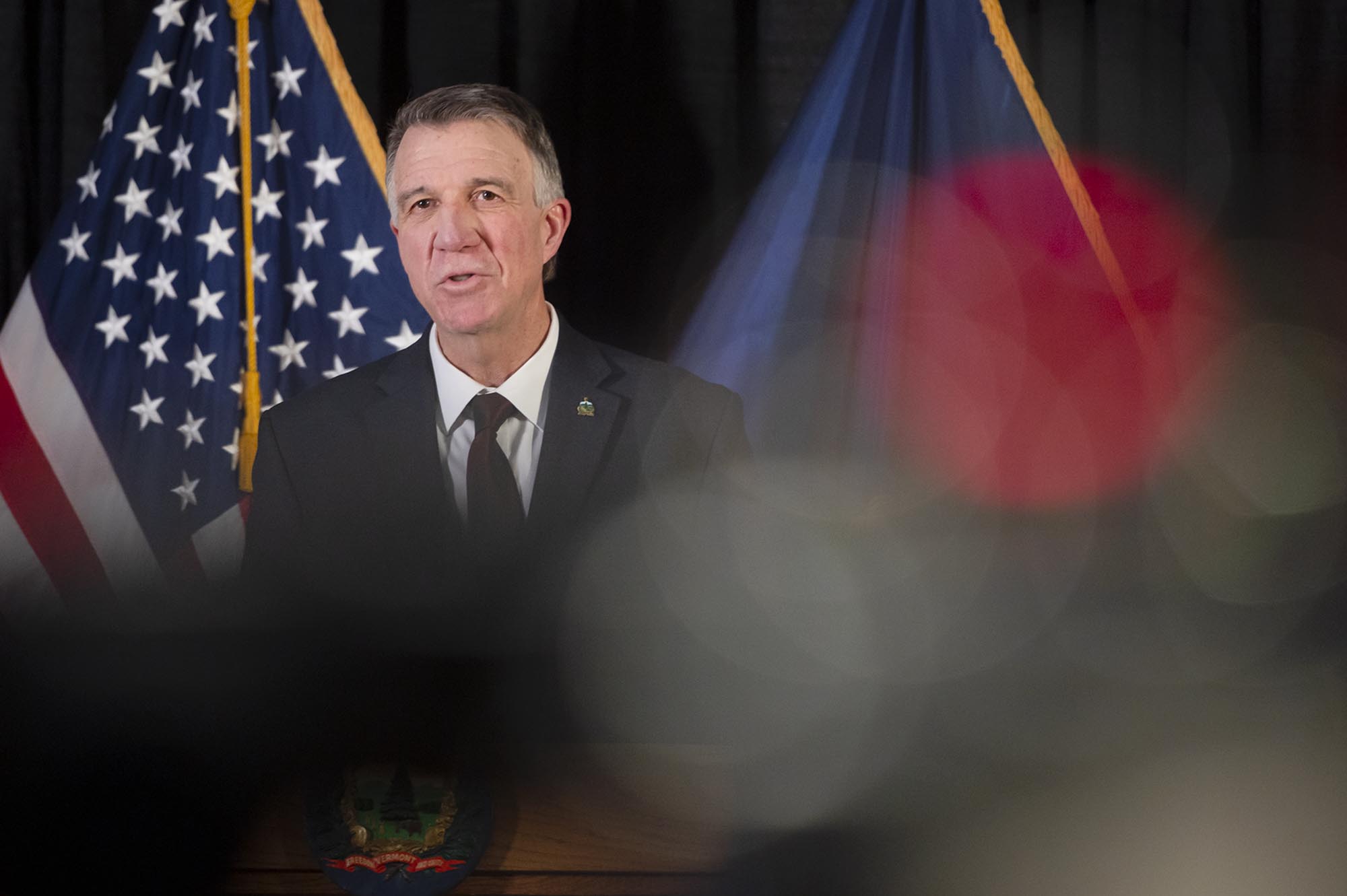
Despite an uncertain pandemic present, Gov. Phil Scott returned to themes of the past in his State of the State address on Wednesday — and sounded an emphatically optimistic note about the future.
The third-term Republican has long highlighted the state’s aging demographics, high cost of living and shrinking workforce as central problems for his administration to address. And while Vermont’s hospitals are rationing care as Covid-19 case counts continue to shatter records, Scott argued that the virus could not distract the state from tackling these longstanding concerns.
“We have to learn to manage life with this virus and cannot let it derail us from addressing our most fundamental challenges: our desperate need for more people in our communities and more workers to fill the tens of thousands of jobs available in Vermont today,” the governor said during his address, which was delivered remotely for the second year in a row as the state battles yet another variant-fueled surge.
Thanks to several historic Covid-relief and infrastructure aid packages, Vermont is expected to have billions in one-time federal funding at its disposal to spend in the coming years. The windfall is widely seen by the state’s leaders as an unprecedented opportunity to address many of Vermont’s long-deferred and most vexing problems, including broadband expansions, housing investments and climate change resiliency projects.
“Five years ago, I said, ‘When you are in a hole, stop digging.’ My friends, today I am happy to report: We are out of that hole, and we are sitting on a pile of bricks, mortar, lumber and steel,” Scott said.
The State of the State address, delivered in the opening days of the Legislative session, sets the stage for the major debates of the session and often teases major initiatives that will be outlined in more detail during a governor’s budget address later in January.
Wednesday’s speech plugged $80 million for new affordable housing initiatives the governor wants lawmakers to approve in the state’s mid-year budget adjustment act, plus another $100 million in next year’s budget. And with so much building to be done, Scott called on lawmakers to modernize Act 250, the state’s landmark — but more than 50-year-old — land-use law.
Scott also hinted at a new proposal to improve child care access via the state’s subsidy program for low-income Vermonters, and promised a tax cut package for retirees, middle-income families and young workers.
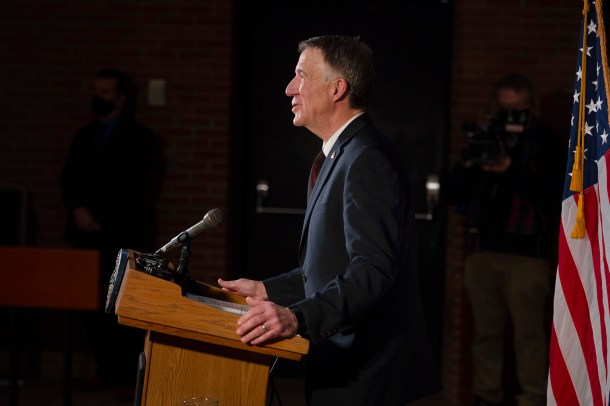
Even as the pandemic has consumed most of the state’s public health efforts, the opioid epidemic’s fatal toll has only continued to rise. Scott said Wednesday he would propose new investments to expand prevention, treatment and recovery efforts in his forthcoming budget proposal.
The governor also renewed his call to eliminate taxes on military pensions. And he said he would once again propose to fund — with some tweaks — a grant program that pays relocation expenses for new workers coming to Vermont.

Scott’s speech was warmly received by his fellow Republicans in the Legislature, who applauded his decision to make demographics and workforce the centerpiece of his address.
“The rural communities that once formed the fabric of our state are suffering from not only the COVID-19 pandemic, but dangerous demographic trends that existed long before the current health crisis was an issue,” House Minority Leader Pattie McCoy, R-Poultney, said in a statement.
“Gov. Scott’s remarks signaled not only a desire to attract new workers to Vermont, but also to foster our existing workforce with increased job training, affordable housing, a strong education system, and healthy and safe communities,” echoed Senate Minority Leader Randy Brock, R-Franklin.
And although they are members of the opposing party, Senate President Pro Tempore Becca Balint, D-Windham, and House Speaker Jill Krowinski, D-Burlington, said their policy priorities overlap with Scott’s.
Workforce development, housing, climate change mitigation and rebuilding from the pandemic are top of mind for them, too, they said during a joint press conference after his speech. Balint told reporters that “the distinction is going to be in the details.”
“We will easily agree on some policy goals, and we’ll have more contentious conversations about others,” the pro tem said. “I’m sure on some issues, we’ll agree on the end goal but may not think the same way about how to get there.”

One topic that seemed to garner immediate disagreement from Democratic leaders was Scott’s suggestion of potential tax cuts. Of course Democratic leaders want to provide tax relief, Balint said, but “the problem comes in if we still have bills that have come due that haven’t been paid,” like state employee pensions and benefits.
Krowinski said that if any tax cuts come down the pipeline this session, “it’s going to be laser focused on families with kids.”
“If we’re going to go and we’re going to be talking about tax policy, I think what’s incredibly important to us is that it’s something that really helps families with kids,” Krowinski said. “We come back to this theme about helping working families.”
Still, some on the Democratic side were more directly critical. The governor’s speech “didn’t speak to the true state of our State,” Sen. Kesha Ram Hinsdale, D-Chittenden, posted to Twitter just minutes after Scott concluded his remarks.
“He wants housing and child care, and no new revenue. He wants schools and businesses open, and hasn’t delivered on safety and testing. He wants to welcome refugees, and vetoed their right to vote locally,” she wrote.


