

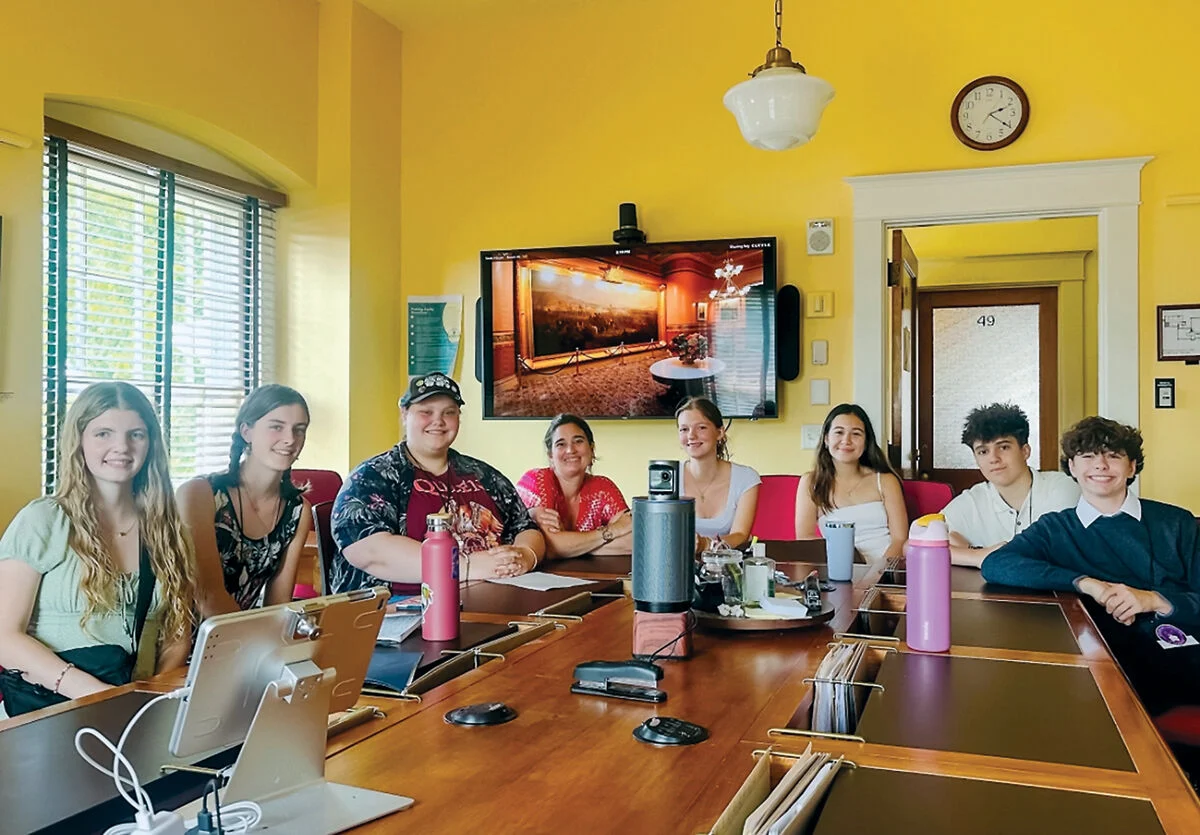
Isa Harrington, a South Burlington High School student, is a firm believer in the democratic process — even though she hasn’t had a chance to exercise her rights to the fullest extent yet, as she is only 17.
Still, the right to vote has been heavy on her mind since the summer months, when she joined the Governor’s Institute at Champlain College, which gave her some firsthand experience into just how powerful youth action can be. So powerful that a bill, spearheaded by Harrington and the student group, set to hit the House floor this legislative session is, for the first time in the state, attempting to give student representatives on school boards a binding vote on issues that come before the elected body.
Although the idea may be new to the state, it’s not entirely unheard of in the country, said Rep. Leanne Harple, D-Glover, a member of the House Committee on Education, who plans to sponsor the proposed legislation this session.
“In Maryland, eight of the state’s 24 local school districts have student board members with the right to cast votes,” she said. “This is not completely new territory that the students just made up.”
Harrington is heavily involved in school happenings, especially as a member of the student council. She says that although opportunities are available for students to become involved, it can, at times, seem more like an illusion of power.
“Student voice just doesn’t have as much power as it should when it comes to making decisions regarding education,” Harrington said. “It’s really hard to make policy that is for the students if you don’t have student input on what is necessary. And so often, what happens is there are policies that are being enacted that are focusing on the wrong priorities.”
The South Burlington School Board has historically had two student representatives, a junior and a senior from the high school, to represent the student body on the board. While those seats had never been able to cast a vote — even a non-binding one — this year, senior Ally Leduc and junior Momin Waqar, broached the topic with the board, who ultimately agreed to allow the students to cast a non-binding vote on issues.
But Waqar and Leduc explained that even having this added responsibility of taking an unofficial vote has added a new level of seriousness to their roles. Being a student representative is a hefty time commitment, and Waqar noted that having a binding vote in the future could add even more time commitments.
“If we’re also given a binding vote, then it’s our responsibility to be on top of that work, to stay informed on everything we’re voting on,” Waqar said. “Even when we got our non-binding vote, it was a really important conversation we had about being able to abstain from the vote if you’re not fully aware of what’s going on.”
Overall, both students agree that having a binding vote could be a step in the right direction to bring student perspective into the conversation, but details still need to be fleshed out before the duo takes a firm stance on the issue. They are, however, putting a lot of thought into both sides of the debate — as any responsible representative would.
Harrington touted Waqar and Leduc as excellent representations of the student body, but said their dedication is only one small glimpse into how passionate students are becoming about cultural, social and political issues — especially ones that affect their education.
“What you’re seeing more recently is that students are turning out,” she said. “You’re seeing an increase in young people who are participating in protests, getting engaged with their school boards, with their communities. They’re taking these steps to be involved. And that’s super important in general, to having a community, a country, a state, where everyone feels that their voice is being represented. It’s kind of foundational.”
The student body is, after all, the future, Harrington said. And that’s a responsibility she doesn’t take lightly. But she isn’t naive about the fact that others may not have the same ideas as she does, and for her, that’s OK, because that’s also part of the democratic process. She just hopes this opens more doors for students to have a seat at that table.
She noted that the conversation is especially timely given the current landscape of Vermont’s public education system. New legislation passed last year has promised that how schools are funded and governed is going to change in the coming years.
“I think helping create this platform for myself to prove that it was possible has made a whole world of difference in increasing the conviction I already had that it is so important for students to be able to make these changes,” Harrington said.
The bill, still in early draft form, dictates that school district boards include voting student members in grades nine, 10, 11 and 12 and non-voting members in grades seven and eight. The appointment would be overseen by the superintendent of the district through a process outlined by the given school board.
Harple, who is also a teacher at Hazen Union High School, noted that while she has heard from some legislators about an interest in co-sponsoring the bill, she is aware that there is likely to be some pushback.
But the ethos of the effort itself is worth it.
“This was legislation that students came up with, where they identified a problem, that they didn’t think they had a strong enough voice and huge decisions that are being made right now are affecting the future of their education,” Harple said. “And when asked to find a solution, they came up with the solution. And I was like, ‘That’s actually not a bad idea. I’m going to see it through.’ And that itself is a reason to see this through, that students are doing this work. We should help them see if they can get this into law.”
