

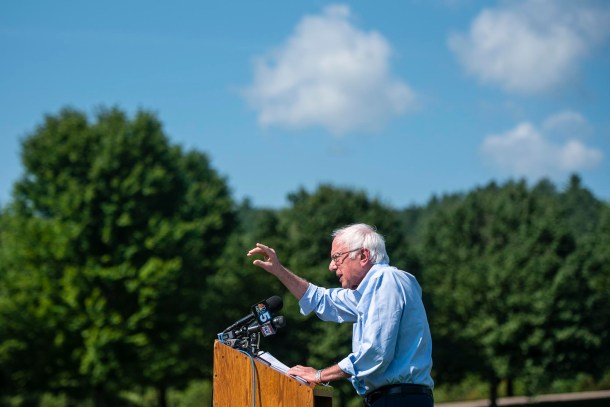
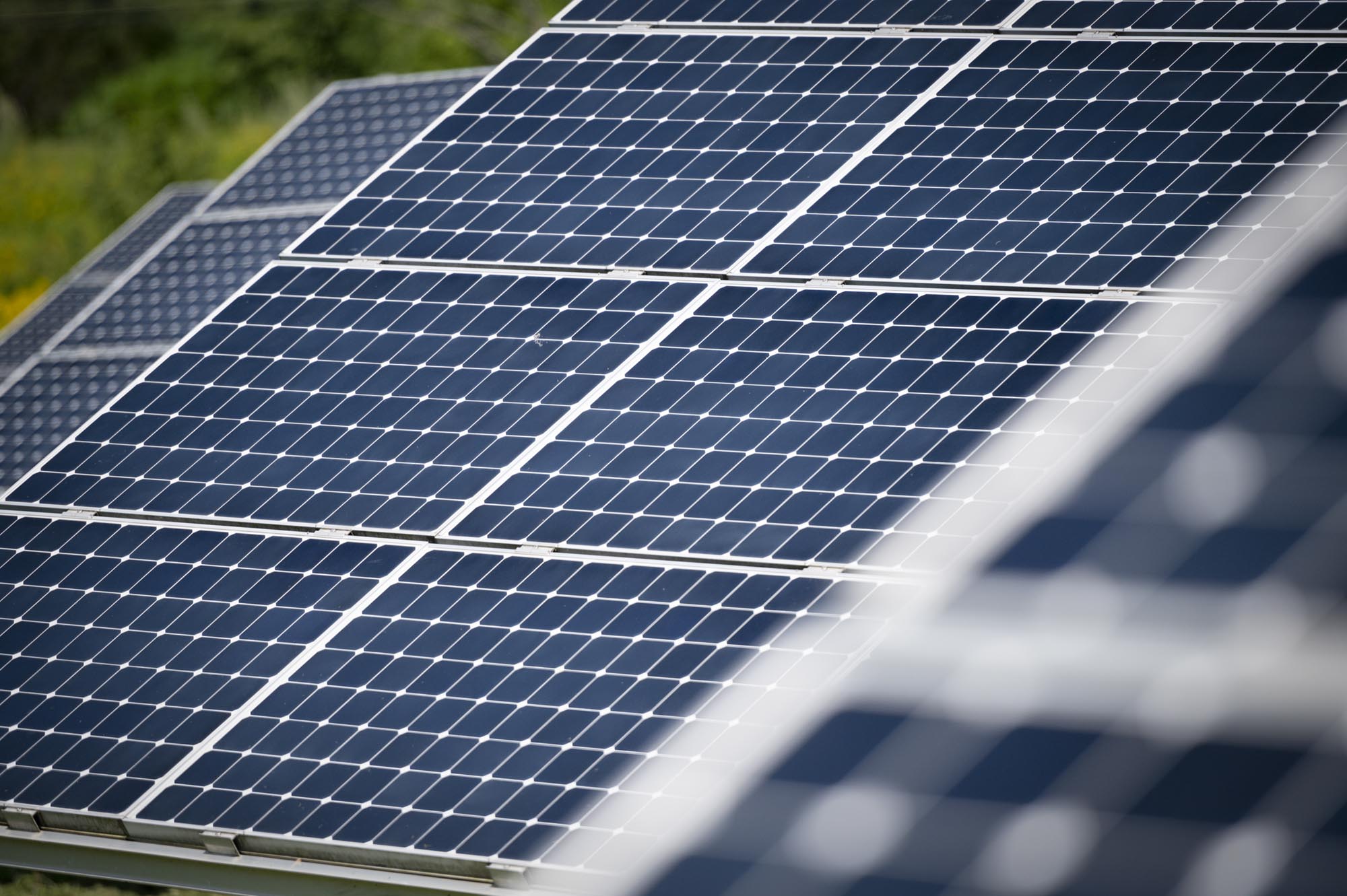
On a sweltering Wednesday morning, Sen. Bernie Sanders stood in front of a field of solar panels at Crossett Brook Middle School in Duxbury to talk about climate action.
By 1 p.m. the temperature had reached 89 degrees. On average, Vermont experiences 86-degree weather only six days a year — a number expected to go up in the coming years and already surpassed this summer.
“The future of the world is at stake,” the independent senator told a small gathering outside the school. He highlighted his push for climate action at the federal level in the form of the reconciliation bill he’s backed as Senate Budget Committee chair. The $3.5 trillion measure includes investments in transportation, agriculture, weatherization and sustainable energy.
“We’ve got to check every box,” Sanders said.
Meanwhile, the Vermont Legislature is awaiting a report from the state climate council, established last year with the passage of the Global Warming Solutions Act. Some lawmakers, however, are concerned that the 22-member council — composed of state government officials, citizen experts, scientists and activists — may not be able to deliver a comprehensive report by its Dec. 1 deadline.
The council is charged with coming up with pathways to meet emission reduction goals as well as ways for the state to respond to climate change. Sustainable energy solutions as well as infrastructure changes are an example of the types of legislation the council may recommend.
The timing of the report is important because it would allow the state Legislature to take action on climate change during the next legislative session, which begins in January.



When asked at the Duxbury event about possible delays to the climate council report, Sanders pushed the state Legislature to act swiftly.
“Delay is really … I mean I just have to say it again and again and again: What leading scientists in the world have told us is we have a handful of years. Every month counts, every week counts,” he said.
Sanders emphasized that should the $3.5 trillion budget reconciliation bill pass, billions of dollars would come to Vermont that the state government could allocate toward a variety of climate solutions.
“We better be prepared and we better be thinking right now, ‘How do we use that money cost-effectively?’” Sanders said.
“What are we doing on transportation? How are we more aggressive on solar and wind? What do we do with regard to agriculture, etc.?” he said. “So the money — with a little bit of luck — will be coming, and I hope this state will lead the country in being creative and smart about how those funds are used.”
The Covid-19 pandemic has sometimes interfered with the climate council’s ability to meet. Many members have full-time jobs outside of their work on the council, and the task they are charged with is no small feat.
“There have been some delays to the report but the [Dec. 1] deadline has not changed,” said Conor Kennedy, chief of staff for House Speaker Jill Krowinski, D-Burlington. Kennedy said members of the council have had to shuffle between roles because of changes to meeting schedules.
“We legally can’t change the deadline for this report because we’re out of session,” Kennedy said. “We understand that things were delayed because of the pandemic and that the council is working hard to bring forth recommendations of what to act on but this work is going to evolve for years.”

