


The recording sounded human at first, but had an unmistakable robotic quality.
A female voice — not unlike the type doctors and schools use for appointment reminders and snow days — asks if you’re listening. You press 1 to signal that you’re here. Later, the disembodied voice will helpfully offer to replay the whole thing if you press 2.
This routine is simple. You’ve done that a thousand times before.
The message isn’t. Your mom is at a nursing home. And now, there’s coronavirus there. A staff member tested positive. The Vermont Department of Health is involved. There will be no in-person visits for now.
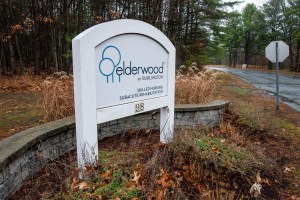
That was the news that family members of more than 100 residents at the Burlington location of Elderwood received by robocall after a staff member tested positive on Aug. 5, Elderwood spokesperson Chuck Hayes said on Friday. Another recording went out after a second staff member tested positive.
“It definitely worries me,” said a woman whose mother is at the nursing home. She did not want her name used to protect her relationship with Elderwood. “It worried me before and it worries me now.”
Her mother is in her 80s. Dementia clouds her mind. Macular degeneration has obscured her vision. She lived with family for years, but needs to be in a nursing home now, the daughter told VTDigger.
Now delta, a far more contagious variant of the virus, one that can spread even among vaccinated people, has found its way into some of Vermont’s long-term care facilities. As of Friday, the Vermont Department of Health had received reports of three outbreaks in those places, said spokesperson Ben Truman. He declined to provide the names of the other facilities, citing patient privacy.
Elderwood staff, meanwhile, reintroduced a tool they began using in the pandemic’s early days: recorded updates for families.
The Burlington nursing home isn’t alone in this strategy. Laura Pelosi, who represents the Vermont Health Care Association, a membership organization for long-term care facilities, said in an email Friday that the pandemic’s visitation restrictions forced staff members to find new ways to communicate with families. Recorded messages are just one tool.
Hayes, the Elderwood spokesperson, said Friday that this system appears to be working, with only a handful of follow-up calls from families.
“It’s clearly the most efficient way to do it,” he said. “It would be extremely taxing for our staff, and we would pull them away from the work of caring for our residents to make individual calls every day.”
Not everyone agrees.
Information gaps
Rumors have a way of filling the gaps between official updates. A member of the resident’s family, for example, heard from a staff member that the second coronavirus case at Elderwood this week prompted a policy of window visits with residents, rather than outdoor face-to-face interactions.
The woman decided to cancel her planned visit for that day, all the while wondering if she’d be able to see her mother in person in the coming days. She said staff work with family members on other ways to stay connected, from coordinating Zoom check ins with a loved one to sharing residents activity calendar with families as a way to foster connection from afar.
But dementia can complicate even the best of intentions. Zoom chats agitate her mother. Window visits aren’t easy to engineer either.
“Mom doesn’t have a window technically, so we can’t do that,” she said. “Mom isn’t going to understand that.”
When a recorded message the following morning made no mention of a new visitation policy, the woman called the nursing home and learned that staff had not suspended outdoor visits.
Hayes, for his part, said these issues are isolated at best.
“There tend to be some families who, for whatever reason, don’t always fully digest the information that they receive and call the facility frequently,” Hayes said. “We always take those calls, and we try to clarify things. But … we’re not receiving massive amounts of calls from family members who want to know what’s going on.”
‘Clear and open communication’
The return of coronavirus to nursing homes has been somewhat unexpected, especially as most people over 65 became vaccinated. In the early days, long-term care facilities, including nursing homes, were an epicenter of outbreaks in Vermont. Roughly half of the state’s coronavirus deaths happened there.
Elderwood was no different. The first documented case in the Chittenden County facility — a resident — was discovered late last summer. By November, the number of cases shot to 29. Those were the days before the Pfizer, Moderna and J&J vaccines. Almost every resident in the building got sick, Medicare records show. When it was all said and done, 93 residents were confirmed to have the virus. Fifteen died.
Just under 50 staff members also caught the virus, Medicare data shows. None died.
Hayes, of Elderwood, uses an analogy to describe those frantic early days.
“It’s like being the owner of a china shop and being castigated for having the most damage in an earthquake,” he said.
Almost 13 months after that first case, Elderwood is now considerably less fragile. More than 90 percent of residents and medical staff are fully vaccinated, according to Medicare. Hayes said he is confident the vaccine and other infection-control measures would keep residents safe.
Hayes believes the notification system would likely work as it had before if the ground starts shaking again. The federal government, it seems, may agree.
A May 2020 federal memorandum to nursing homes says that family members should be made aware of suspected or confirmed outbreaks by 5 p.m. the following day. The guidelines permit the use of “email listservs, website postings, paper notification, and/or recorded telephone messages.”
“We do not expect facilities to make individual telephone calls to each resident’s family or responsible party to inform them that a resident in the facility has laboratory-confirmed Covid-19,” the May memorandum says.
“However, we expect facilities to take reasonable efforts to make it easy for residents, their representatives, and families to obtain the information facilities are required to provide.”
Alicia Moyer, Vermont long-term care facilities ombudsman for Franklin and Chittenden counties, said family members with loved ones in long-term care facilities contacted her with transparency concerns on a regular basis in the early days of the pandemic.
They complained they didn’t know what was happening inside the facilities that housed their loved ones. Sometimes, families said that robocall recordings weren’t up to date. Families also said they couldn’t ask the recording for specific follow-up questions about their loved one. That would require a separate call.
The volume of those complaints declined as facilities’ case curve flattened. As the pandemic is entering a new phase that could include more cases in nursing homes, Moyer said, long term care facilities could stand to tweak their communication protocols.
“There needs to be clear and open communication for family members in a situation like this,” she said. “Especially if they can’t get in to see their loved one. There needs to be a designated line to reach a live person at some point during the day to get an update and be listened to patiently, even to have some compassion.”

