

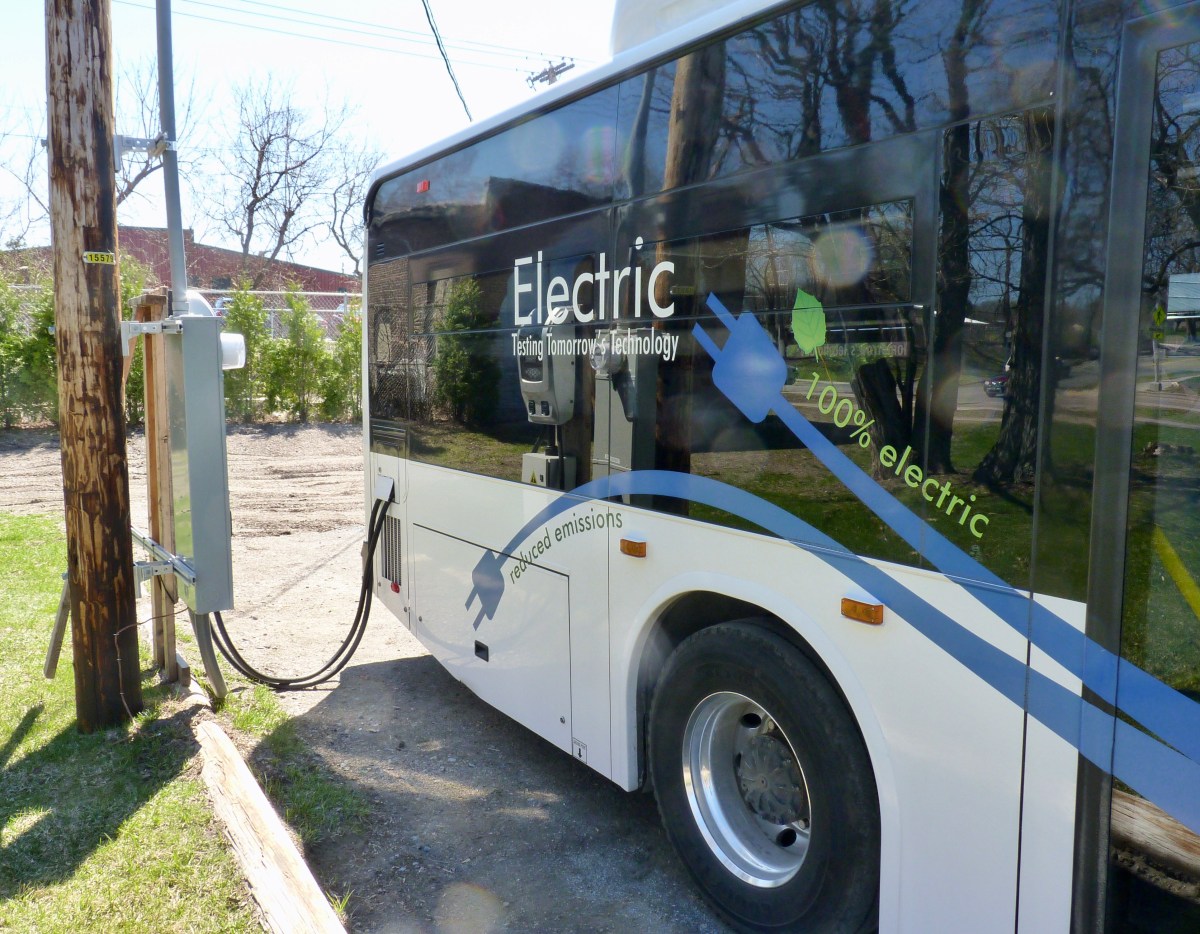
Vermont’s largest public transit provider has been planning to roll out a fleet of new electric buses. Now, it’s set to get buses powered partly by diesel instead — after the Trump administration said it wouldn’t help pay for those fully electric vehicles.
At issue is a $22.5 million federal grant the state was awarded in 2023 on behalf of Green Mountain Transit, the Burlington-based bus provider. Green Mountain Transit runs local buses and on-demand transit for older adults and people with disabilities, with most of its service concentrated in Chittenden County, the state’s population center.
The award, part of the U.S. Department of Transportation’s Low or No Emission Grant Program, was set to pay for 17 electric buses and the infrastructure to charge them.
But in May 2025, the Vermont Agency of Transportation learned that the grant was being subjected to extra scrutiny by federal transit officials in Washington, D.C., said Ross MacDonald, head of the state’s public transit program. Then, this month, the agency got a call from a U.S. Department of Transportation office in Boston.
The feds were no longer going to disburse the grant funding to Vermont as planned, according to MacDonald. Vermont could still access its award, though — if it changed the power source of the buses it wanted to something other than, solely, electricity.
MacDonald said the agency wasn’t given an explanation for the change in the grant terms, and he declined to speculate about the feds’ motivations in an interview.
The impact has been swift: Over the past two weeks, state and local transit officials have scrambled to revise their application for federal funding. As of Thursday, plans were in place that would see Green Mountain Transit getting a similar number of buses, albeit hybrids powered with both a battery and diesel fuel.
Hybrid buses can produce up to 75% fewer harmful emissions than conventional diesel buses, depending on the driving conditions, according to the Environmental and Energy Study Institute. Fully electric buses, meanwhile, are the most “green,” producing zero tailpipe emissions.
“I like our chances” of getting federal approval for the revised plan, MacDonald said.
Clayton Clark, Green Mountain Transit’s general manager, said in a letter to Vermont’s congressional delegation Tuesday that he was most concerned by the feds’ “abrupt change” in posture over the grant award, combined with a lack of information made available to his staff about the change. He was less concerned, he suggested, about the fact the provider was getting hybrid buses.
“This clear lack of transparency is unbecoming for a process which carries such a profound impact on recipients of these funds, who were offered no opportunity to communicate the real life consequences of these decisions,” Clark wrote.
The Trump administration has put up hurdles to electric bus projects in other instances. Last month, ecoRI News reported that the administration has held up funding for new electric buses that would be operated by the Rhode Island Public Transit Authority.
And the president has repeatedly bashed EVs himself, at one point writing on social media that promoting EVs was “the idea of the Radical Left Fascists, Marxists, & Communists.”
In a statement Thursday about Vermont’s bus grant, a spokesperson for the U.S. Department of Transportation said the Trump administration’s position is to promote “low-emision technology over no-emission technology” as much as possible.
“Under President Trump and Secretary (Sean) Duffy, USDOT is getting back to basics to build safe transit systems to move American families,” the spokesperson said in an email. “We slashed Biden-era requirements that tied critical infrastructure funding to Green New Deal climate initiatives and took away from the Department’s core mission.”
To be sure, Green Mountain Transit has had challenges with the battery propulsion systems of five of the seven electric buses already in its fleet, according to Clark.
Using funding from an earlier round of “Low or No Emission” federal grants, the transit provider bought five e-buses that arrived last year and, at first, operated well, he said. However, the bus’s batteries were later recalled by the manufacturer, he said, and only three of the five have been able to safely get back on the road so far.
Of the 17 fully electric buses set to be funded by Vermont’s award, two were already far enough along in production that pulling the plug would have forced the state to pay the manufacturer a penalty, MacDonald said. He estimated that penalty at up to $2 million.
“Talk about waste,” he remarked — to pay such an amount and receive no buses at all.
The state still plans to get those electric buses, though, but will pay for them partly using money it received from a 2017 settlement with the auto manufacturer Volkswagen and its subsidiaries over claims that the companies violated Vermont’s clean air laws by selling certain diesel vehicles.
MacDonald said one positive outcome of the grant change is that the state will likely be able to afford one or two more buses than it would if all of them were fully electric. He framed the shift as a positive for Green Mountain Transit.
The hybrid buses represent “a pretty good pickup, you know?” he said. “Extra miles of range — and tailpipe emissions better than regular diesel.”
