


A Vermont Senate committee has prepared a $100 million broadband bill that would establish a new government board to oversee expansion of internet service throughout the state.
The bill, H.360, which originated in the House, would benefit from a windfall of federal Covid-19 relief money that legislative leaders and Gov. Phil Scott have pledged to use, in part, for broadband buildout.
On Wednesday, the Senate Committee on Finance modified and then endorsed the broadband bill.
Under the House’s bill, only the state’s communications union districts could directly receive funding to expand broadband networks. CUDs, community-owned fiber-optic networks that serve multiple towns, are dedicated to expanding internet access to areas that lack it. An estimated 60,000 Vermonters have poor internet access, or none at all.
House members said they didn’t want to steer federal funds to private providers that, up to this point, have avoided extending high-speed fiber to sparsely populated regions of the state, where homes and businesses are so far apart that the buildout wouldn’t be profitable.
But the Senate bill would allow small private providers to receive grant money, too, for internet expansion. Senators noted that some areas of the state aren’t covered by CUDs, and they wanted financial flexibility to help private providers extend service to unserved or underserved areas.
“When we brought the small telecoms in, we said, ‘You have to be under contract, and committed to universal service.’ In other words, you can’t cherry-pick parts of town; you have to deliver to the edges of your territory,” said Sen. Chris Pearson, P/D Chittenden, a member of the finance committee.

The bill defines a small telecommunications carrier as a company that operates in no more than three Vermont counties. Larger companies such as Consolidated Communications and Comcast couldn’t receive funding.
In addition, the bill would establish a Vermont Community Broadband Board, a three-member panel appointed by the governor, House and Senate, to manage the broadband funding, provide resources for the CUDS, and promote access to affordable internet service.
The new board would be similar to the Vermont Community Broadband Authority that the House bill proposed.
The House bill included $150 million for broadband buildout — $50 million more than the Senate. But in its state budget bill, the Senate said it intends to spend an additional $50 million on broadband expansion in the coming years.
The Senate committee rejected a proposal by Sen. Randy Brock, R-Franklin, to spend $5 million to connect Vermont households by expanding internet subsidies for low-income residents. The proposal was backed by Tom Evslin of Stowe, who was once Vermont’s chief technology officer and is co-founder of Broadband Equity NOW!, an organization that has been pushing for internet subsidies.
Brock’s plan would create a Digital Equity and Affordability Program to help low-income families learn about the importance of high-speed internet connections and to obtain the low-income broadband services for which they already qualify.
And where assistance wasn’t available, the program would boost subsidies to help Vermonters install internet equipment and pay for service at a rate that doesn’t exceed $25 per month.
More than 50,000 families in the state would be eligible for the program, according to Evslin.
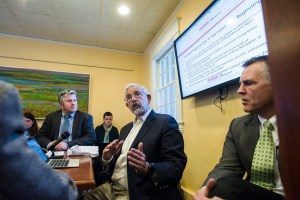
Evslin said that the Senate Finance Commission version would mean some Vermonters might have to wait four or five years before CUDs build fiber to their homes.
“It was a disappointment to have the bill come out of committee without affordability being in it in any way,” Evslin said.
Pearson, who opposed the affordability proposal, said the plan could hurt the CUD business model in the long run.
By helping private providers offer subsidized service, the state would divert customers away from the CUDS and toward the companies that historically have avoided building out in rural areas, Pearson said.
“The problem is that that could easily undermine the CUD model, which is essential if we’re going to get broadband to the outskirts, to the very far end of the dirt road, and you can’t undermine their business model, so it’s a real balance,” Pearson said.
Lawmakers also noted that a federal subsidy for broadband services is being offered this year.
Evslin argues the affordability plan wouldn’t hurt CUDs, predicting that the subsidies would be phased out and would be available only to providers that offered the cheapest service.
“So if the CUDs get there with their fiber, then those families are going to cut over to the fiber. There’s no real reason that that’s a threat; what it does do is let the families get connected in the meantime,” he said.
The full Senate is expected to vote next week on the broadband bill, which would then head back to the House to consider the differences between the two versions of the bill.

