Even by the standards of the pandemic, the action happened quickly Thursday. After a two-hour meeting, the Legislature’s Joint Fiscal Committee approved $33 million in spending that had been proposed the day before by the Scott administration, so the money wouldn’t end up being returned to the federal government.
The remaining $85 million of the $118 million proposal — money from the federal Coronavirus Relief Fund that hasn’t been allocated to any of the dozens of state grants programs — will get another look from the committee Monday, said Sen. Ann Cummings, chair of the Senate Finance Committee and ex officio of the Joint Fiscal Committee.
The long and diverse list of spending requests approved Thursday included $4.5 million for Efficiency Vermont, $4 million in payments to child care providers; $8 million in additional hazard pay for workers; $15,000 for the Vermont Donor Milk Center, a breast milk bank; and $3.2 million to reimburse independent colleges for Covid testing.
Still waiting to be approved are $75 million in additional grants for the Agency of Commerce and Community Development, which has been granting millions of dollars to businesses affected by Covid; $750,000 to the Agency of Administration to continue paying a consultant who is helping disburse the money; and $2.4 million for the Agency of Agriculture’s Buy Local campaign and for expanded meat processing.
The committee approved 23 of 30 proposals Thursday. Vermont lawmakers and the Scott administration have worked for months to allocate the state’s $1.25 billion share of federal CARES Act coronavirus money.
“I wish we had received this information earlier,” said Senate President Pro Tem Tim Ashe as the meeting ended Thursday. “This is a pretty remarkable process; $33 million in 24 hours is a new record for the Legislature.”
Adam Greshin, commissioner of the Department of Finance and Management, presented the spending plan to the committee, which met on YouTube. The money was left over after the allocations because, in some cases, the need had been met without it; in others, the guidelines set by the federal government didn’t allow the recipient to spend it, Greshin said.
The states have until the end of the year to allocate all the money, or they must repay the remainder to the federal government.
The lawmakers questioned Greshin closely about the administration’s spending priorities.
“I am delighted to see there are some funds for the water/sewer arrearages,” Sen. Mary Hooper said of the proposal, which includes $500,000 in assistance for people having trouble paying those utility bills. She thinks about $2 million is needed.
“The reason we’re seeing arrearages here relates to people’s incomes,” said Hooper, D-Washington. “I’m making a pitch to put more money in here so we make sure those utilities are stable.”
Asked about the additional payment to Guidehouse, the consulting firm Vermont is using to help manage its CRF grant programs, Greshin said the consultant will make it easier for Vermont to go through the federal auditing that lies ahead.

“It’s a small amount of money considering the amount we are spending and the amount of work that will go into a single audit,” Greshin said. “The downside of not performing on that single audit would be substantial.”
Sen. Richard Westman, R-Lamoille, said he’s concerned about the state’s unemployment trust fund, which has been spent down from about $500 million at the beginning of the year to about $234 million now.
“If we have a second round of Covid — and all the states around us seem to be having a second round now — and it affects employment, I want to make sure we’re able to put money into that fund that will directly help businesses and will help our unemployed,” Westman said. “If we have to extend the length of time that people are on benefits, has anyone done an analysis of what, in a worst-case scenario, we might need? I want to make sure if we reallocate money that’s near the top of the priority list.”
The business grants program is clearly at the top of that list now. Economic Development Commissioner Joan Goldstein said applications for the latest set of grants show that there’s at least $300 million of unmet economic need among small businesses. The administration proposal would apply $75 million of the unspent CRF money to the grant programs, which are administered by the Agency of Commerce and Community Development and the Department of Taxes.
“So the $75 million doesn’t even begin to touch the scope of the problem,” said Sen. Dick Sears, D-Bennington.
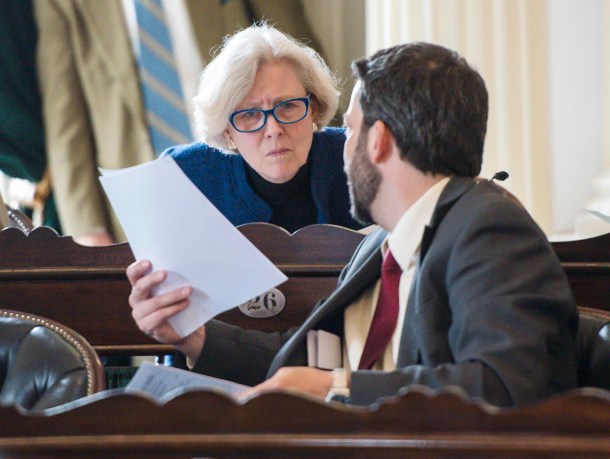
The Joint Fiscal Committee has a lot of work ahead. The panel has 10 calendar days from Wednesday, when it received the proposal, to make a decision on the separate items; if it rejects any of them, it has five more days to return with a proposed revision, Greshin said.
The panel needs more time, said Sen. Jane Kitchel, who wants other lawmakers to weigh in on the administration’s proposals.
“Like everything, in so many areas, what we have for available funding is not in any way adequate to meet all the needs as they have been presented to us,” said Kitchel, D-Caledonia. “Many of our colleagues are very sensitive about what Joint Fiscal is being asked to do. To ask people to give us that input within 24 hours is not really reasonable nor fair.”