

An aid program to help Vermonters pay their utility bills during the pandemic has a big hole: It excludes most water utilities whose customers are getting behind on payments.
“It is unfortunate that aid is primarily benefiting large commercial utilities like GMP (Green Mountain Power) and large municipal utilities,” said Michael Inners, treasurer of Grand Isle Consolidated Water District. His standalone district provides water for about 800 homes and businesses; Green Mountain Power has about 266,000 customers.
Since the pandemic, unpaid bills have swelled to five times the typical number, according to Inners. With 25 accounts now overdue because of Covid, the utility is under financial stress. Some people owe up to $1,000, and utilities are concerned about how they’ll be able catch up without help.
The Grand Isle water utility is not alone. “We know our neighboring systems are seeing the same large increase in unpaid accounts,” Inners said.
A recent report from the Vermont Rural Water Association confirms the problem, as 53% of the water systems surveyed reported more unpaid bills than usual, and half reported “a loss of revenue due to unpaid bills since the pandemic started.” These losses ranged from as little as $500 up to $112,000.
The report points out the serious consequences for water utilities left out of the aid program.
“With no payment coming in from customers,” one respondent wrote, “we cannot continue to provide water without having issues to pay vendors.” Another wrote, “Municipal utilities desperately need financial assistance due to unpaid customer bills.” Assistance would help these utilities pay their own bills so they can continue providing an essential service.
When infrequent billing cycles are taken into consideration, the Vermont Rural Water Association expects that the true impact of the pandemic is even greater than the report reflects.
Why were most water utilities excluded from the aid program, Liz Royer, executive director of the Vermont Rural Water Association, isn’t sure.
“I think there’s a lot of confusion in general,” she said. “I see this a lot with the Legislature. They don’t understand the universe of what a public water system is. The majority are not municipal in terms of being town-owned or city-owned or village-owned, and that is different from other states.”
Royer described Vermont’s water utility situation as fairly unique. In Vermont, there are about 400 community water districts, which serve at least 25 year-round residents or provide 15 service connections. Community water districts in Vermont include towns, fire districts, and homeowner associations, among other, smaller designations.
Of the 400 districts, only around 20, or 5% of all water districts, were eligible for the aid program. Both Royer and Inners said that those eligible were primarily ski resorts, plus a few housing developments.
“Those aren’t really the systems that are going to have the problem,” Royer said.
The aid program was directed toward utilities affected by a moratorium on service shutoffs. It was issued by the state Public Utility Commission on March 18, when it became clear that the pandemic would impede Vermonters’ ability to pay their utility bills.
The PUC’s moratorium affects only the utilities that it regulates — and only 20 water utilities.
All other Vermont water utilities were affected by another moratorium — issued on March 30 and subsequently signed into law by Gov. Phil Scott. Those water utilities can’t be part of the aid program because they’re not regulated by the PUC. As a group, they’re called “unregulated utilities,” a term that is confusing, considering that all public water utilities are, in fact, regulated by the Department of Environmental Conservation.
“The term ‘unregulated’ makes it sound like we’re out there on our own,” Inners said. “That’s pretty far from the truth. We’re pretty heavily regulated on the water quality side,” particularly by Agency of Natural Resources rules on water quality and water treatment.
When lawmakers designed the relief funding in H.966, they included only those utilities that had been affected by the first moratorium.
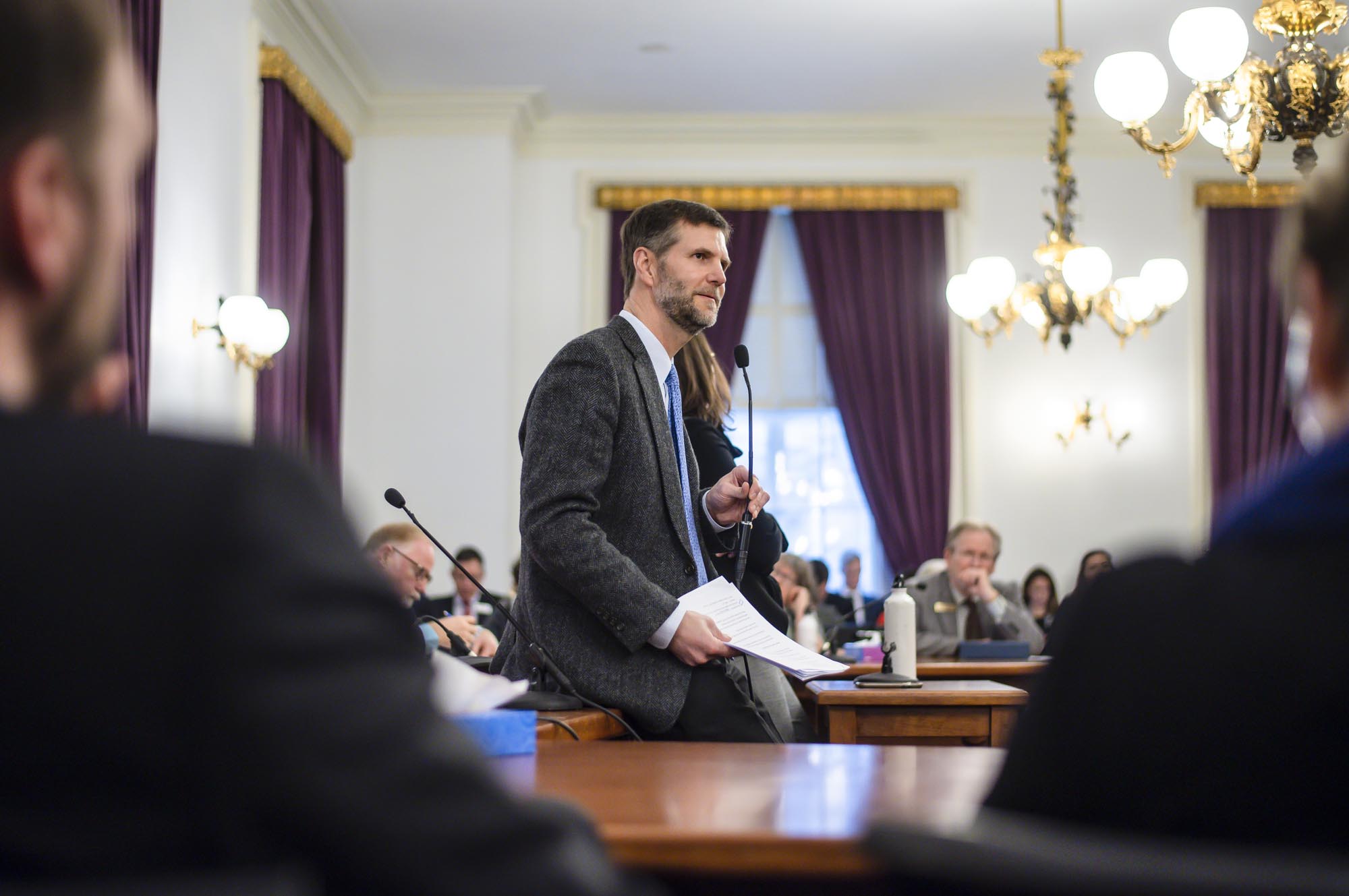
Rep. Timothy Briglin, D-Thetford, was involved in creating the aid programs for utilities. He said the focus was on electric utilities because late payments would result in increased rates, ultimately affecting all Vermonters.
In the two years Briglin has served on the Energy and Technology Committee, he said it had never dealt with water utilities, although he added that H.966 was “not meant to exclude.”
“Even if they don’t usually work with us, it doesn’t mean they can’t,” said Inners, who thought the exclusion might have been an oversight.
“These issues in the water space did not come to our attention,” Briglin confirmed.
Rep. Laura Sibilia, I-West Dover, who;s also on the Energy and Technology Committee, agreed. “It was not intentional,” she said, and she called the exclusion “unfortunate.”
With the federal CARES Act funding set to expire at the end of the year, Briglin said it might be possible to steer money to the “unregulated utilities” funds through the Legislature’s Joint Fiscal Committee. “Obviously the Legislature hasn’t appropriated money to support this area, but there is a path for money to be directed there if there is money in the CARES Act,” he said.
Sibilia said communication is key. “If folks are having a hard time,” she said, “it’s good to let us know. Let your legislators know.”

